
Searching for where to find weed sellers in Sion can lead you toward unreliable listings, scams, or activity that may breach Swiss law. Instead of pointing readers to unlicensed dealers, this guide explains the legal cannabis options available in Sion, how to check a product or provider, and what to do if you are seeking cannabis for medical reasons.
The rules depend on the product, its THC content, the reason for use, and whether it is supplied through an authorized program. If you are looking for weed in Sion, the safest approach is to distinguish regulated CBD products, prescribed medicines, and approved pilot projects from informal street sales.
What to know before looking for cannabis in Sion
Switzerland does not have a general recreational cannabis retail market. Cannabis containing more than 1% THC is generally subject to narcotics controls, although the legal consequences can vary according to the circumstances. Certain scientific pilot projects allow registered adults to obtain cannabis through approved channels, but these projects are limited and do not operate like ordinary shops.
Products containing no more than 1% THC may be sold under Swiss rules, provided they meet the applicable product and consumer-protection requirements. These products are often marketed as CBD, but “CBD” does not automatically mean that every item is lawful, accurately labelled, or suitable for consumption. Flower, oils, food products, vapes, and cosmetics can be governed by different requirements.
For the current wording of Swiss narcotics legislation, consult the official Swiss Narcotics Act on Fedlex. Rules and enforcement can change, so current official information is more reliable than social-media posts or old travel forums.
Where to find weed sellers in Sion legally
There is no responsible answer that involves naming illicit sellers or directing visitors to street dealers. However, there are several lawful routes worth checking depending on what you need.
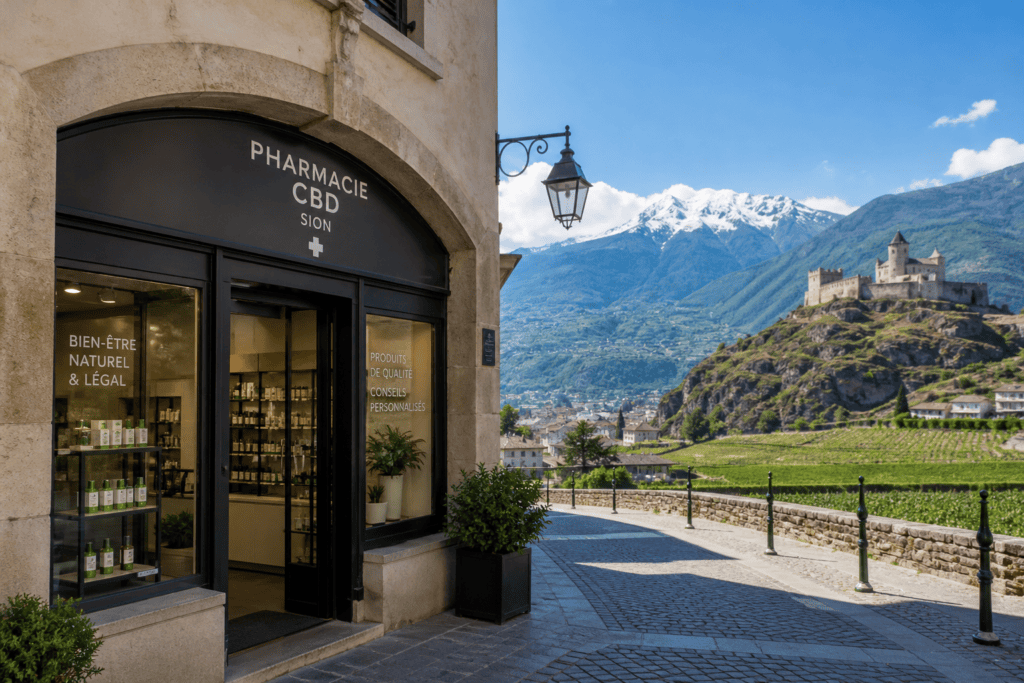
Licensed CBD retailers and pharmacies
For low-THC products, start with established CBD retailers, pharmacies, or other businesses that clearly identify the manufacturer, ingredients, THC level, batch information, and applicable warnings. A legitimate business should be willing to explain what it sells without promising an intoxicating effect from a product that is legally limited in THC.
Before buying, check whether the business has a physical location, transparent contact details, clear returns information, and product documentation. Search results alone are not proof that a seller is licensed. If a website advertises high-THC cannabis for immediate delivery without asking any questions, treat that as a warning sign rather than a convenience.
Medical routes through a healthcare professional
People seeking medical cannabis in Sion should speak with a doctor or qualified healthcare professional. A clinician can assess symptoms, existing medicines, possible interactions, and whether a cannabis-based treatment is appropriate. Depending on the product, a prescription and pharmacy supply may be required.
Do not rely on an anonymous seller for a medical condition. Unregulated products may contain a different level of THC or CBD than advertised, and contamination or interactions may go unnoticed. A healthcare professional can also discuss non-cannabis treatments and explain how to use an authorized medicine safely.
Approved cannabis pilot projects
Swiss pilot projects are designed to study controlled access to non-medical cannabis among registered participants. Availability is limited by the project’s location, eligibility rules, and supply arrangements. A project may not be based in Sion, and visitors generally cannot assume they can join simply because they are adults or have found a project mentioned online.
Check the project’s official information, eligibility criteria, and registration process. Never pay an intermediary who claims to secure a place in a study without verification from the organizing institution.
Cannabis laws in Sion: practical points for residents and visitors
The cannabis laws in Sion are primarily shaped by Swiss federal law, alongside local enforcement and public-order rules. Visitors should not assume that a rule from another country applies in Valais. In particular, crossing borders with cannabis can create additional legal risks even when a product was purchased lawfully elsewhere.
- Do not buy from street dealers. The product may be illegal, mislabelled, stolen, contaminated, or connected to other criminal activity.
- Do not carry cannabis across an international border. Import and export rules can be stricter than possession rules within Switzerland.
- Do not drive after using cannabis. Impairment and drug-driving rules can apply even when the product was obtained legally or prescribed.
- Keep products away from children and animals. Edibles and concentrated products can be especially difficult to assess by appearance.
- Respect smoke-free and public-space rules. Legal status does not mean consumption is allowed everywhere.
For public-health guidance and current information on cannabis policy, use the official website of the Swiss Federal Office of Public Health. If you are unsure about a specific situation, ask a local lawyer, pharmacist, doctor, or the relevant authority rather than relying on a seller’s interpretation.
How to recognize risky or fraudulent sellers
Online marketplaces and messaging apps can make illicit sellers appear professional. A polished logo, customer reviews, or a delivery promise does not establish legality. In Sion, as elsewhere, informal sellers may change phone numbers frequently and may request payment before showing any verifiable business information.
Warning signs include unusually low prices, pressure to pay in cryptocurrency or gift cards, claims that a product is “100% legal” without stating its THC level, and advertisements for prescription cannabis without a prescription process. Be cautious when a seller refuses to provide a business address, ingredient list, batch number, or basic safety information.
A seller who asks for identity documents through an unsecured chat, sends unsolicited messages, or offers delivery to a hotel should also be treated carefully. Do not share passport details, banking information, or intimate photographs to obtain cannabis. If you believe you have encountered fraud, preserve messages and payment records and report the incident through the appropriate Swiss channels.
Choosing a safer legal product
If you are considering a lawful CBD product, read the packaging before making a decision. Look for the exact cannabinoid content, recommended use, manufacturer or importer, batch details, expiry information, and warnings. Avoid products with unclear labels or exaggerated claims about treating serious illnesses.
CBD can interact with medicines, and people who are pregnant, breastfeeding, living with liver disease, or taking multiple prescriptions should seek medical advice before using it. A product sold as a food, cosmetic, vape liquid, or supplement may not be interchangeable with a medicine. The safest choice is to use the product only as labelled and ask a pharmacist about potential interactions.
Do not judge potency by appearance, smell, or a seller’s description. With illicit cannabis, the actual THC concentration and presence of contaminants may be unknown. Mixing cannabis with alcohol or other psychoactive substances increases risk, and first-time users should avoid driving, swimming, climbing, or other activities where impaired judgment could cause harm.
What to do if you have already bought an unknown product
If a product appears contaminated, has an unusual chemical smell, causes unexpected symptoms, or is packaged without useful information, do not use more of it. Keep the packaging if possible and seek advice from a pharmacist or healthcare professional. In an emergency involving severe confusion, chest pain, breathing difficulties, loss of consciousness, or a serious reaction, contact emergency services immediately.
Do not attempt to identify an unknown substance by tasting it or combining it with another product. Edibles may take longer to produce effects than inhaled products, so taking more because the first dose seems inactive can increase the chance of an unpleasant or dangerous reaction.
A sensible answer to “where can I buy cannabis in Sion?”
The practical answer depends on what “cannabis” means. For a low-THC CBD product, use a transparent, established retailer or pharmacy and inspect the label. For a medical need, begin with a healthcare professional and obtain products through the appropriate prescription or pharmacy route. For recreational high-THC cannabis, do not use unlicensed sellers; check whether an officially approved pilot project is available and whether you meet its requirements.
This approach may feel less direct than responding to a message advertising same-day delivery, but it reduces the risks of arrest, fraud, contaminated products, privacy loss, and accidental exposure to a stronger substance than expected. It is also the most reliable way to understand cannabis in Sion without confusing online claims with legal authorization.
Conclusion
People searching for where to find weed sellers in Sion should avoid street dealers, anonymous delivery accounts, and unverified online listings. Switzerland’s framework distinguishes between low-THC products, medical cannabis, restricted pilot projects, and illicit high-THC sales. Checking official rules, using healthcare channels for medical needs, and buying only from transparent lawful businesses are safer choices.
If you are visiting Sion, remember that local availability does not override federal law, border restrictions, driving rules, or public-consumption limits. When in doubt, ask a pharmacist, doctor, or official authority before buying or using any cannabis product.

The Ziklane Editorial Team is dedicated to providing accurate, well-researched, and up-to-date information on cannabis laws and regulations around the world. Our content is created through careful research of publicly available legal sources, government publications, and reputable references to help readers better understand local cannabis legislation. We are committed to delivering educational, factual, and regularly updated content while encouraging readers to comply with the laws of their respective countries and regions.