
Finding trusted weed sellers in La Chaux-de-Fonds requires more than choosing the first shop shown in a map search. Swiss rules differ according to the product’s THC content, intended use and sales channel. A reputable retailer should be transparent about what it sells, who may buy it and how the product was tested.
This guide does not invent a ranking of local businesses or endorse sellers whose licences and product ranges may change. Instead, it explains nine reliable routes for checking cannabis-related products in the city, with a focus on lawful purchasing, product quality and personal safety. The same approach is useful whether you are researching weed in La Chaux-de-Fonds, CBD products or regulated medical treatment.
What to know about cannabis laws in La Chaux-de-Fonds
La Chaux-de-Fonds follows Swiss federal cannabis law, alongside any applicable cantonal and municipal requirements. Cannabis containing less than 1% THC is generally treated differently from cannabis above that threshold, but individual products can still be subject to rules on labelling, food safety, cosmetics, tobacco substitutes or medicines.
Adult recreational cannabis with higher THC is not generally available through ordinary retail shops. Switzerland has authorised limited scientific pilot projects in certain locations. These projects have specific participation rules and are not the same as unrestricted commercial sales. Medical cannabis is also a separate category and should be obtained through an appropriate healthcare professional and lawful pharmacy channel.
For a current overview, consult the Swiss government information on cannabis and the Federal Office of Public Health cannabis guidance. These sources are more reliable than social-media posts or anonymous marketplace listings.
9 ways to identify trusted weed sellers in La Chaux-de-Fonds
1. Established CBD retailers with a physical address
A shop with a verifiable street address, published opening hours and clear contact details is usually easier to assess than an anonymous online account. Look for a business name, legal notice, return policy and staff who can explain the difference between CBD, THC and other cannabinoids without making exaggerated health claims.
A physical store is not automatically proof of compliance, so treat its presence as a starting point rather than a guarantee. Ask to see product information before paying and avoid any seller who refuses to identify the manufacturer or importer.
2. Pharmacies offering compliant cannabinoid products
Some pharmacies may stock lawful CBD products or handle prescribed cannabis medicines, depending on the product and their professional policy. A pharmacy can be a useful option when you need help understanding dosage forms, possible interactions or whether a product is appropriate for you.
Do not assume that every cannabis-labelled item in a pharmacy is a medicine. Ask whether the product is a regulated medicinal product, a low-THC consumer product or another category. Those distinctions affect how it should be used and what claims may legally be made.
3. Authorised medical cannabis channels
People seeking medical cannabis in La Chaux-de-Fonds should begin with a doctor, not an informal seller. A healthcare professional can assess the condition, review other medicines and determine whether a cannabis-based treatment is suitable. If a prescription is issued, use the pharmacy or dispensing route specified by the healthcare provider.
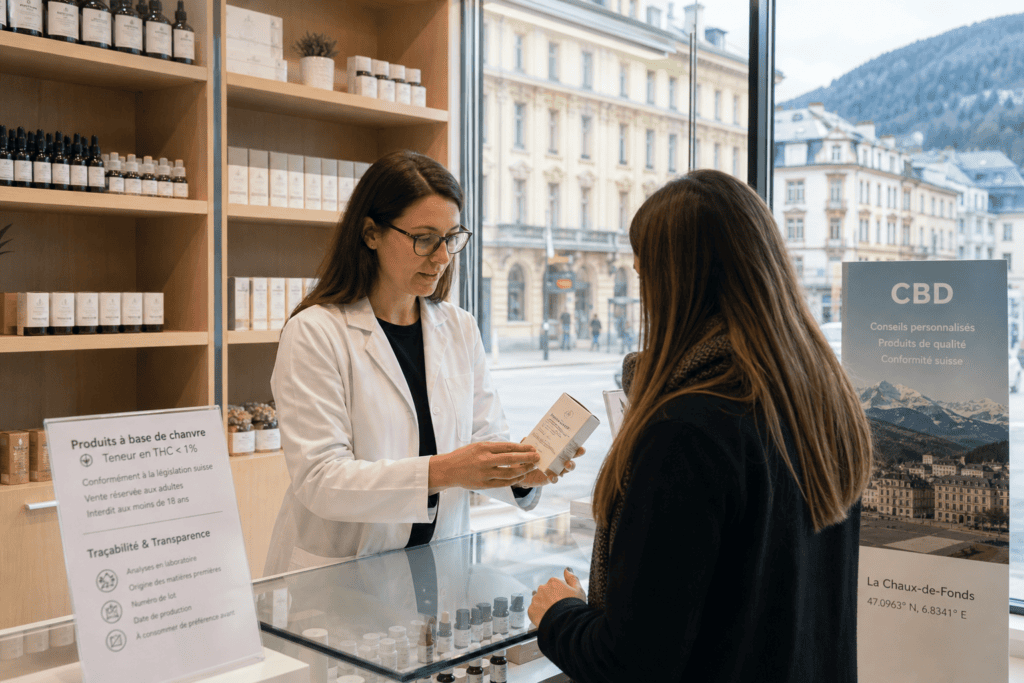
Be particularly cautious of websites promising to treat cancer, anxiety, chronic pain or neurological conditions with one unverified product. Strong medical promises, guaranteed results and pressure to stop prescribed treatment are warning signs.
4. Officially documented pilot-project access
Swiss cannabis pilot projects operate under defined scientific and legal conditions. If a project is available to you, verify its name, organiser, participation requirements and approved point of distribution through official information. A seller claiming to provide “pilot access” without registration, consent procedures or clear project documentation should not be trusted.
Pilot participation is not a general loophole for buying high-THC cannabis. Do not share another participant’s product, identification or access credentials.
5. Sellers that provide batch-level information
Reliable products should have a batch or lot number that allows the item to be traced. Packaging should identify the producer or responsible company, net quantity, cannabinoid content and relevant warnings. Depending on the product category, you may also see information about ingredients, allergens, storage or expiry.
Ask whether a certificate of analysis is available for the specific batch rather than a generic laboratory document for an unrelated product. A credible report should identify the tested sample and show cannabinoid results. It should also indicate whether screening was performed for contaminants such as pesticides, heavy metals, solvents or microbes where appropriate.
6. Transparent online retailers
An online shop can be legitimate, but it should not be treated as trustworthy simply because its website looks professional. Check the company’s legal identity, physical address, terms and conditions, delivery restrictions and customer-service contact. The product page should state the cannabinoid content and avoid claims that conflict with medical or consumer-protection rules.
Do not buy from a seller that accepts only untraceable payment, hides its ownership or asks customers to move the conversation to an encrypted messaging app. A low price is not a substitute for traceability, lawful labelling and independent testing.
7. Local businesses willing to explain product categories
Good retailers distinguish clearly between flowers, oils, capsules, cosmetics, food products and vaping items. These products can have different safety considerations and legal requirements. A knowledgeable seller should explain how the product is intended to be used, how it should be stored and what age restrictions or warnings apply.
Be wary of anyone who describes every product as “strong,” “pure” or “100% safe.” Cannabis products can affect people differently, and CBD can interact with some medicines. If you take regular medication, speak with a pharmacist or doctor before using a cannabinoid product.
8. Retailers with a clear returns and complaint process
Responsible sellers explain what happens if packaging is damaged, a product is recalled or a customer suspects a quality problem. Keep your receipt, batch number and packaging until you are satisfied with the purchase. These details help a retailer investigate a complaint and help you avoid buying the same problematic batch again.
Never use a product if the seal is broken, the label is missing, the liquid has changed unexpectedly or the contents do not match the description. Contact the seller and, where necessary, seek advice from a pharmacist or relevant authority.
9. Businesses that respect age, identity and purchase rules
A retailer that checks age where required and refuses suspicious transactions is demonstrating basic compliance. Sellers who encourage customers to bypass age checks, exceed legal limits or conceal products from authorities are not trustworthy.
Do not carry cannabis across national borders without checking the rules in both countries. Products that are lawful in Switzerland may not be lawful elsewhere, including in neighbouring France. Border controls and foreign drug laws can apply even when the product was purchased legally in Switzerland.
How to compare cannabis products before buying
- Check the label: Confirm the THC and CBD content, ingredients, quantity, batch number and expiry or best-before information.
- Check the claims: Avoid products promising guaranteed medical results or claiming to cure serious conditions.
- Check the packaging: Look for intact seals, a responsible company and instructions appropriate to the product type.
- Check the test evidence: Prefer batch-specific laboratory documentation from an identifiable laboratory.
- Check the seller: Make sure the business provides a real address, customer support and a clear complaint process.
Do not judge quality by appearance, smell or a retailer’s marketing alone. These features cannot confirm THC content, contamination risks or legal compliance.
Red flags when searching for cannabis in La Chaux-de-Fonds
Anonymous social-media sellers, street offers and unsolicited direct messages create avoidable risks. You may not know what is in the product, whether it contains more THC than claimed or whether it has been contaminated. Sellers who advertise delivery of any strength cannabis without asking questions about age or legality should be treated with particular caution.
Other warning signs include missing batch details, copied laboratory reports, unusually aggressive discounts, pressure to pay immediately and claims that a product is exempt from all Swiss rules. A seller who cannot answer basic questions about origin and contents is not a safe choice, regardless of reviews or follower counts.
Using cannabis more safely
No cannabis product is risk-free. Do not drive, cycle in traffic or operate machinery while impaired. Avoid combining cannabis with alcohol or other sedating substances. If you are pregnant, breastfeeding, underage or managing a mental-health condition, discuss cannabis use with a qualified healthcare professional before considering a product.
Keep products in their original packaging and out of reach of children and pets. Start cautiously with any unfamiliar product, especially edible or oral products, because effects can take longer to appear and may last longer than expected. If someone experiences severe confusion, chest pain, difficulty breathing, loss of consciousness or another emergency, contact emergency services immediately.
Final checklist for choosing a seller
- Confirm that the product category is lawful in Switzerland.
- Verify the seller’s identity and physical or registered business details.
- Read the complete label before paying.
- Ask for batch-specific testing where relevant.
- Check the THC content and intended use.
- Keep the receipt and original packaging.
- Ask a pharmacist or doctor about interactions and medical concerns.
Conclusion
The safest way to find trusted weed sellers in La Chaux-de-Fonds is to assess legality, traceability and responsible retail behaviour rather than rely on popularity or informal recommendations. Reputable CBD retailers, pharmacies, authorised medical channels and documented pilot projects can each serve different needs, but none should be treated as interchangeable.
Take time to verify the product, the seller and the applicable Swiss rules. When a business is vague about its identity, testing or legal basis, walking away is the most reliable decision.

The Ziklane Editorial Team is dedicated to providing accurate, well-researched, and up-to-date information on cannabis laws and regulations around the world. Our content is created through careful research of publicly available legal sources, government publications, and reputable references to help readers better understand local cannabis legislation. We are committed to delivering educational, factual, and regularly updated content while encouraging readers to comply with the laws of their respective countries and regions.