
Searching for weed vendors in Iquitos can expose visitors and residents to legal, financial, and personal-safety risks. Peru does not operate a broad recreational cannabis retail system comparable to a licensed dispensary market, so online advertisements, street contacts, social-media accounts, and informal introductions should not be treated as proof that a seller is legitimate.
This guide explains how to research weed in Iquitos without directing you to illegal sellers. It covers Peru’s medical framework, questions to ask health professionals, warning signs of scams, and practical steps for staying safe. Rules and enforcement can change, so confirm current requirements with official Peruvian authorities before making any decision.
Understand the legal situation before looking for cannabis in Iquitos
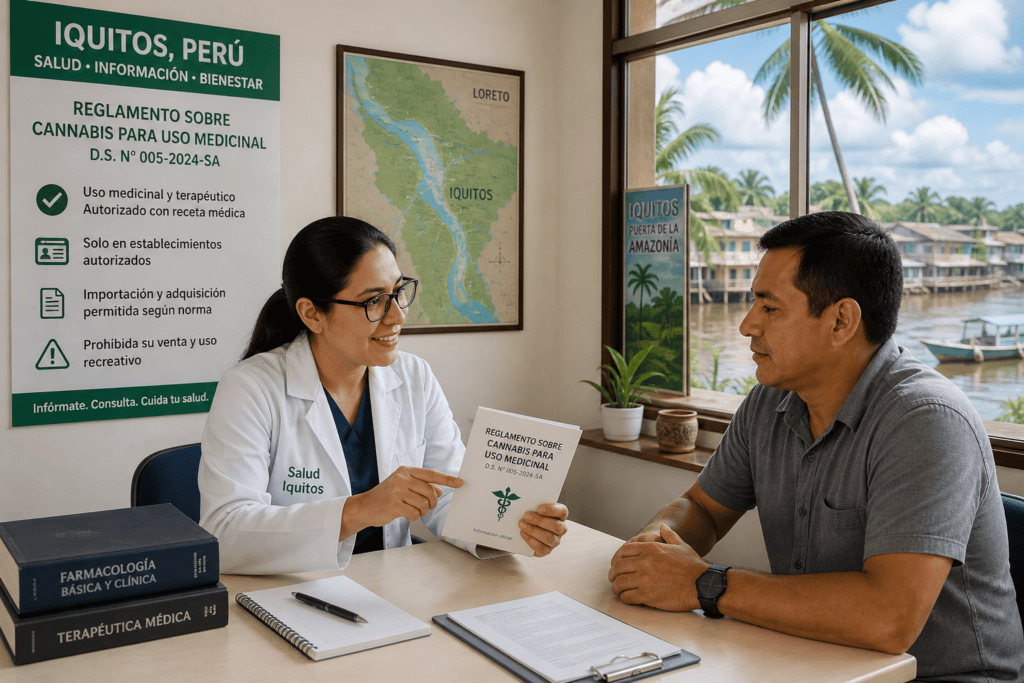
Peru has a regulated framework for medical cannabis, but that is different from unrestricted recreational sales. A person who wants cannabis for a health condition should begin with a qualified medical professional rather than a vendor. A clinician can discuss whether cannabis is appropriate, review possible interactions, and explain what documentation or lawful access route may apply.
The legal status of a product depends on factors such as its intended use, composition, source, labeling, and the authorization of the business supplying it. A social-media profile or a product described as “medicinal” does not establish that the seller is licensed. Products offered outside a verifiable health or pharmacy channel may also have unknown strength, contamination risks, or inaccurate labels.
For current public-health information, consult the Peruvian Ministry of Health. You can also review current legal and regulatory information through the Ministry of Health’s official legal-notices section. These sources are more reliable than anonymous posts, messaging groups, or travel forums.
How to research weed vendors in Iquitos without taking unnecessary risks
Start with a licensed medical conversation
If your interest is medical, arrange an appointment with a licensed doctor or an established healthcare provider in Iquitos. Explain your symptoms, current medication, allergies, and treatment history honestly. Cannabis may not be suitable for everyone, and a professional can help distinguish medical care from an unverified product sale.
Ask the provider what lawful options are available in Peru, whether a prescription or registration requirement applies, and how to identify an authorized source. If a person immediately offers a product without asking about your health or explaining the legal process, that is a strong reason to stop the conversation.
Verify the business, not just the product
A credible medical supplier should be able to identify its legal business name, physical location, responsible professional, and authorization or registration details where applicable. Information should be consistent across the business website, official records, packaging, and invoices. Be cautious when a seller refuses to provide basic documentation or insists that all communication remain anonymous.
Do not assume that a brightly designed website, many followers, positive comments, or a delivery service proves legitimacy. Accounts can be copied, reviews can be manufactured, and temporary delivery operations can disappear after taking payment. Verification should come from official or professional sources rather than from the seller’s own claims.
Use local knowledge carefully
Hotels, hostels, taxi drivers, nightlife venues, and informal tour contacts may receive questions about cannabis in Iquitos, but they are not reliable authorities on medical licensing or Peruvian law. A recommendation based on personal experience may still lead to an illegal transaction, an unsafe product, or a scam.
If you ask a local organization for information, limit your request to lawful medical services, licensed pharmacies, or healthcare facilities. Do not ask staff to connect you with a street seller, arrange a secret delivery, or identify a hidden marketplace.
Warning signs of illegal sellers and cannabis scams
Informal cannabis markets often rely on urgency and secrecy. The following signs do not prove a transaction is illegal by themselves, but several together should be treated as a clear warning:
- The seller promises guaranteed effects or describes the product as risk-free.
- There is no verifiable business identity, address, professional contact, or invoice.
- The seller demands cryptocurrency, gift cards, unusual transfer methods, or full payment before any verification.
- The product has no batch information, ingredients, testing details, or clear labeling.
- The seller pressures you to meet in an isolated location or change meeting places repeatedly.
- The person asks for passport photographs, banking credentials, intimate images, or unnecessary personal information.
- The seller claims that police, customs, or health rules do not apply to tourists.
- The advertisement offers shipping across borders or encourages you to carry cannabis on a flight.
Do not send money or personal documents to a contact who cannot establish a lawful business identity. If you have already paid and suspect fraud, preserve messages, receipts, account details, and delivery information. Contact your bank or payment provider promptly and report the incident to the appropriate local authorities.
Medical cannabis in Iquitos: questions to ask a healthcare provider
People researching medical cannabis in Iquitos should prepare practical questions before an appointment. Useful questions include:
- Is cannabis medically appropriate for my condition and treatment goals?
- Could it interact with my current medicines, alcohol use, or other substances?
- What side effects or warning symptoms should I monitor?
- What type of product, route of administration, and dosage information are legally relevant?
- How can I verify that a source is authorized and that the product is properly labeled?
- What should I do if the product causes severe anxiety, confusion, vomiting, chest symptoms, or an allergic reaction?
Never change a prescribed medicine or combine cannabis with sedatives, alcohol, or other substances without professional advice. Children, pregnant people, people with certain psychiatric conditions, and those with cardiovascular or medication-related risks may need particular caution. A doctor or pharmacist can assess those issues more responsibly than an anonymous vendor.
What visitors should know about weed in Iquitos
Travelers often search for weed in Iquitos because they are unfamiliar with local rules or believe a tourist destination has an open market. That assumption can be costly. Being a visitor does not remove local laws, and a product purchased informally can create problems with police, accommodation providers, airlines, border officials, or customs.
Do not carry cannabis through airports, across regional or international borders, or into another country based on a seller’s assurance. Do not place cannabis in checked luggage or ask someone else to transport it for you. Even when a product was obtained for medical reasons, travel rules may involve separate documentation and restrictions.
For broader context, readers comparing local information may also find it useful to review this safer guide to weed vendors in Lima and the related overview of cannabis-related questions in Cusco. These comparisons should not be interpreted as endorsements of informal sellers; the same verification and legal cautions apply throughout Peru.
How to evaluate online cannabis information
Search results and social-media posts can help you understand the language people use, but they are not reliable evidence that a vendor is lawful. Treat claims about potency, therapeutic benefits, customer reviews, and delivery as unverified until they can be checked against official or professional information.
When reading a page, look for a named organization, a traceable physical address, responsible contact details, transparent terms, and references to current Peruvian requirements. Be skeptical of pages that use copied photographs, anonymous testimonials, countdown discounts, or claims that their service is “secret” or “police-proof.” Genuine healthcare information normally explains limitations and risks instead of promising certainty.
Also distinguish hemp-derived consumer products from products containing intoxicating THC. Similar packaging or the word “cannabis” does not mean that two products have the same legal status or health effects. Ask a qualified pharmacist or doctor to explain the difference before purchasing or using anything.
Safer alternatives when no lawful option is clear
If you cannot verify a legal source in Iquitos, the safest choice is not to buy from an informal vendor. Ask a healthcare professional about non-cannabis treatments, local mental-health or pain-management services, physical therapy, sleep support, or other evidence-based options relevant to your condition.
If your concern is recreational rather than medical, remember that avoiding an unverified product is still the lowest-risk option. Do not allow strangers to pressure you into possession, consumption, transport, or delivery. Meet no one in an isolated place for a drug transaction, and do not accept a product whose contents and strength are unknown.
Final checklist before making any decision
- Confirm the current Peruvian rules through official sources.
- Speak with a licensed healthcare professional if the reason is medical.
- Verify the legal identity and authorization of any proposed supplier.
- Reject products without reliable labeling, provenance, or safety information.
- Do not send payment or personal documents to anonymous contacts.
- Never carry cannabis across airports, borders, or into another country.
- Seek urgent medical help for severe or unexpected symptoms.
Conclusion
Finding weed vendors in Iquitos should not mean relying on secret contacts, street sellers, or unverified delivery accounts. Peru’s medical framework makes it especially important to separate lawful healthcare access from informal recreational sales. Start with official information and a qualified medical professional, verify any business carefully, and walk away from pressure, secrecy, missing documentation, or suspicious payment requests.
When the legal status or product safety is unclear, choosing not to buy is the most responsible decision. Reliable information, professional advice, and careful travel practices can help you avoid scams, legal trouble, and preventable health risks.

The Ziklane Editorial Team is dedicated to providing accurate, well-researched, and up-to-date information on cannabis laws and regulations around the world. Our content is created through careful research of publicly available legal sources, government publications, and reputable references to help readers better understand local cannabis legislation. We are committed to delivering educational, factual, and regularly updated content while encouraging readers to comply with the laws of their respective countries and regions.