
Searching for weed retailers in Trujillo, Peru requires more caution than opening a map and choosing the nearest listing. Peru does not have a broad, clearly established recreational cannabis retail market like the regulated adult-use markets found in some other countries. Cannabis access is instead shaped by medical rules, product registration, prescription requirements, and enforcement risks.
That distinction matters in Trujillo, whether you are a resident, a visitor, or someone exploring cannabis for a health condition. Online advertisements, social-media accounts, messaging groups, and informal sellers may describe themselves as dispensaries without showing evidence of authorization. This guide explains how to research lawful options, assess claims, protect your personal information, and recognize when walking away is the safest choice.
Understand cannabis laws in Trujillo before searching
The rules that apply in Trujillo come from Peru’s national framework rather than a separate city-level retail licensing system. In practical terms, you should not assume that a storefront, delivery service, or online account is legally permitted simply because it operates openly or uses the words “dispensary” or “cannabis clinic.”
Peru has established a legal framework for medical and therapeutic cannabis, but that is not the same as legal recreational retail. The exact status of a product can depend on its composition, intended use, registration, seller, and the documentation supporting its sale. For current official information, consult the Peru Ministry of Health and check whether any provider directs you to verifiable health-authority requirements.
Rules and administrative procedures can change. Before paying for a product, confirm the current requirements with a qualified Peruvian health professional or the relevant government authority. Do not rely solely on an old blog post, a forum comment, or a seller’s interpretation of the law.
What “weed in Trujillo” may mean in practice
People use the phrase weed in Trujillo to describe several different things: a medical product obtained through a health professional, hemp-derived merchandise, informal cannabis flower, or an unverified online offer. These categories should not be treated as interchangeable.
A lawful medical product may come with information about its active ingredients, formulation, manufacturer, instructions, and authorized supply chain. An informal product may have none of those safeguards. Even when a seller claims that a product is “natural,” “strong,” or “medical grade,” those descriptions do not prove quality, legality, or accurate labeling.
Medical access is different from recreational purchasing
If your purpose is therapeutic, begin with a licensed doctor or established healthcare provider rather than a seller. Discuss your symptoms, existing diagnoses, current medicines, allergies, and treatment goals. A clinician can explain whether cannabis is appropriate, whether another treatment should be considered first, and what follow-up may be needed.
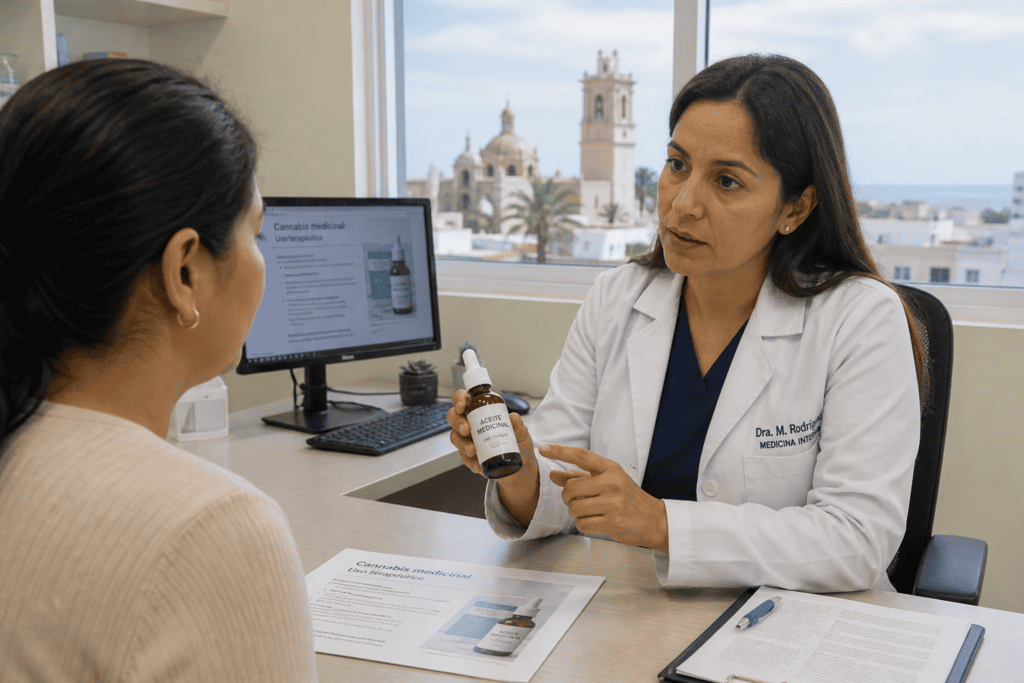
Do not purchase a product merely because an account promises relief for pain, anxiety, insomnia, epilepsy, or another condition. Health claims made in advertisements are not a substitute for clinical evaluation. Cannabis can also cause unwanted effects and may interact with medicines or worsen some mental-health symptoms.
How to research cannabis providers in Trujillo
There may not be a reliable public directory of every lawful cannabis-related provider in Trujillo. Instead of searching for a seller by neighborhood, use a verification process that starts with healthcare and official information.
- Define the legal category. Decide whether you are asking about a medical product, a hemp-derived item, or something else. If the request concerns recreational cannabis flower, recognize that an advertised seller may be operating outside the regulated medical framework.
- Start with a healthcare channel. Ask a licensed doctor or established clinic whether they can explain lawful medical options and the documentation involved. A provider should be willing to discuss risks and alternatives, not just promote a product.
- Check the seller’s identity. Look for a registered business name, physical address, contact details, and clear information about who is responsible for the product. A profile with only a nickname and a private messaging account is difficult to verify.
- Request product documentation. For a packaged medical or hemp-related product, look for the manufacturer, batch information, ingredients, concentration, expiry date, and instructions. Missing or inconsistent labels are warning signs.
- Verify regulatory claims independently. If a seller says it is licensed, registered, or authorized, ask for the relevant details and confirm them through an official government or health channel. Screenshots and logos can be copied.
- Compare information, not just prices. A very low price, urgent promotion, or promise of unusually high potency should not outweigh concerns about legality and safety.
For a broader comparison of how location-based cannabis searches should be approached in Peru, see our guide to weed vendors in Lima. The legal principles are national, although local healthcare access and business information can differ.
How to evaluate online listings without exposing yourself
Search engines and social platforms can surface businesses that appear professional but provide little evidence of lawful operation. Treat online presence as an initial lead, not proof of authorization.
Signs that deserve closer scrutiny
- Claims that recreational cannabis is fully legal for anyone to buy in Peru.
- Requests for full payment before providing basic business or product information.
- Pressure to move immediately to an encrypted chat or to delete messages.
- No ingredient list, batch details, health warnings, or explanation of intended use.
- Promises to cure serious illnesses or replace prescribed treatment.
- Unwillingness to identify the responsible company, clinician, or manufacturer.
- Delivery instructions designed to conceal the transaction or avoid ordinary business records.
A legitimate health-related provider should be able to answer reasonable questions clearly. You should not need to provide a passport scan, banking password, unrelated personal documents, or intimate medical details to an unverified account. If a seller demands sensitive information before establishing its identity, stop communicating.
Product safety questions to ask
Even where a cannabis product may be legally available, quality control is important. Ask what the product contains, how it was made, how it was tested, and how it should be stored. A responsible provider should distinguish between cannabinoids such as THC and CBD rather than using “cannabis” as a vague label.
Be especially careful with products described as extracts, oils, edibles, concentrates, or vape liquids. Their effects and risks can differ from dried plant material, and inaccurate concentrations can make dosing unpredictable. Products without reliable labeling may also contain contaminants or ingredients that are not disclosed.
Do not drive, ride a motorcycle, or operate machinery after using an intoxicating product. Avoid combining cannabis with alcohol or sedating medicines unless a qualified professional has specifically advised you. Keep any product away from children and pets, and follow storage instructions.
Travel and privacy considerations in Trujillo
Visitors often search for cannabis in Trujillo without realizing that travel can create additional legal and practical risks. Do not carry cannabis across international borders, even if you believe it was obtained legally elsewhere. A product purchased in another country may not be lawful to import into Peru.
Within Peru, keep any lawful medical product in its original packaging and retain relevant documentation. That does not guarantee that every situation will be straightforward, so confirm current requirements before traveling between regions or using an unfamiliar transport service.
Protect your privacy when researching. Use a secure connection, avoid posting your passport or prescription publicly, and be cautious with sellers who collect personal data without explaining why. Scammers may use cannabis searches to obtain deposits, identity documents, or access to financial accounts.
What to do if no verified retailer is available
If you cannot confirm that a provider is lawful and properly identified, do not treat the absence of alternatives as a reason to buy from an informal seller. Speak with a doctor, pharmacist, or established clinic about other treatments. A healthcare professional may also explain whether a medical cannabis pathway is relevant to your situation and what documentation would be necessary.
If you have already purchased an unknown product and experience severe anxiety, confusion, chest pain, breathing difficulty, fainting, or other alarming symptoms, seek urgent medical assistance. Do not take more of the product to counteract an unwanted effect, and tell medical staff what you used if you can do so safely.
For official medicine and health-product information, the Peruvian Directorate General of Medicines, Supplies and Drugs is a more reliable starting point than an anonymous listing or promotional account. Use official channels to confirm current procedures instead of relying on claims copied across social media.
Common mistakes when looking for weed retailers in Trujillo, Peru
The most common mistake is assuming that visibility equals legality. A business can have reviews, branded packaging, and a polished website while still failing to demonstrate authorization. Another mistake is treating a medical recommendation as permission to buy any cannabis product from any seller.
It is also risky to focus only on price or potency. The cheapest product may have uncertain contents, while the strongest product may be unsuitable for a first-time or medically vulnerable user. A safer approach prioritizes verified identity, lawful access, transparent labeling, professional guidance, and responsible use.
Conclusion
Finding weed retailers in Trujillo, Peru is not simply a matter of locating a nearby shop. Peru’s cannabis framework is more limited and medical-focused than a general recreational retail model, so online claims require careful verification. Start with official health information and a qualified professional, confirm the provider and product independently, and avoid sellers who promise instant access, make unsupported health claims, or request sensitive information.
If no option can be verified, the safest decision is not to buy. A cautious, health-centered approach can help residents and visitors understand medical cannabis in Trujillo without exposing themselves to unnecessary legal, financial, or health risks.

The Ziklane Editorial Team is dedicated to providing accurate, well-researched, and up-to-date information on cannabis laws and regulations around the world. Our content is created through careful research of publicly available legal sources, government publications, and reputable references to help readers better understand local cannabis legislation. We are committed to delivering educational, factual, and regularly updated content while encouraging readers to comply with the laws of their respective countries and regions.