
Searching for popular marketplaces to buy weed in Emmen can quickly lead to confusing results. Search engines, social media and messaging apps may display sellers that look professional but have no clear legal status, product testing or customer protection. In the Netherlands, cannabis policy is based on tolerance rather than unrestricted legality, so the source of a product matters.
This guide does not recommend illegal sellers or provide contact details for unverified marketplaces. Instead, it explains the 14 types of cannabis source or listing you may encounter, how they differ, and which warning signs deserve attention. The goal is to help adults understand weed in Emmen, make safer decisions and avoid scams, contaminated products and legal trouble.
What to know before looking for weed in Emmen
Dutch coffeeshops may sell small amounts of cannabis under strict conditions, but that does not make every cannabis transaction legal. Rules can differ by municipality, and enforcement, age requirements, identification rules and membership policies may affect access. Online sales, delivery adverts and anonymous social-media offers should not automatically be treated as equivalent to a licensed coffeeshop.
Emmen is a municipality in Drenthe, not a separate legal jurisdiction for cannabis. Anyone researching cannabis laws in Emmen should check current national guidance and local information rather than relying on an old blog post, map listing or forum comment. The Dutch government’s official information on soft drugs and cannabis rules is a useful starting point.
14 marketplace types people may encounter in Emmen
The following list describes common categories, not endorsements. Some are regulated or potentially lawful in limited circumstances; others are unverified, illegal or especially risky.
1. Licensed coffeeshops
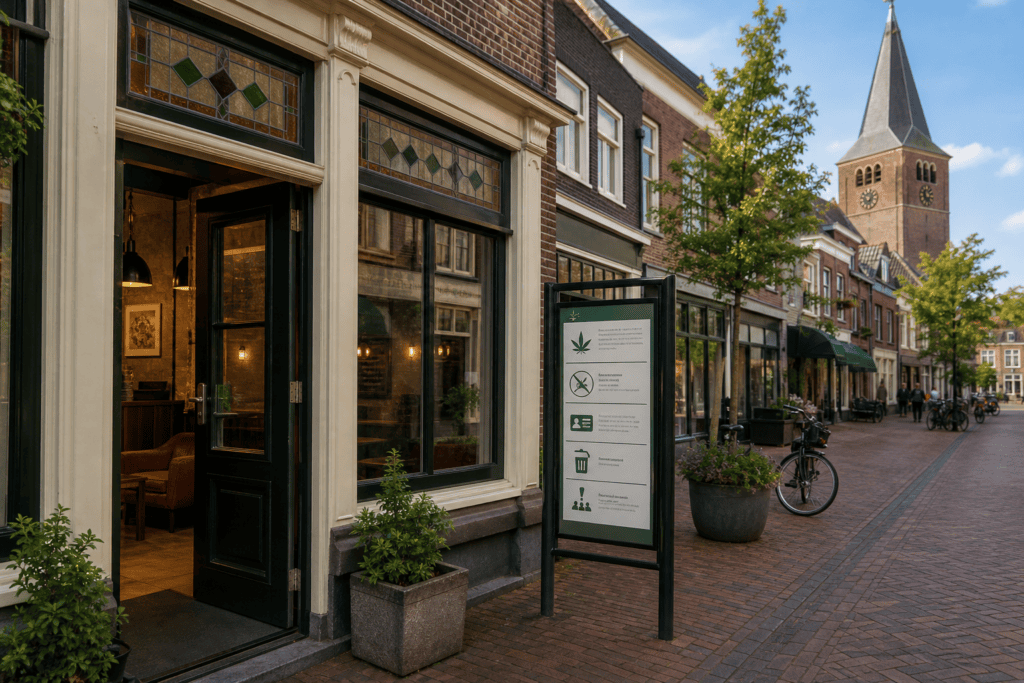
A coffeeshop is the main legal-tolerance model most people associate with recreational cannabis in the Netherlands. A legitimate shop should have a physical location, visible operating details and rules for age and identification. Check the municipality’s current information before travelling, because listings and opening arrangements can change.
2. Search-engine map listings
Map results can help identify physical businesses, but a map profile is not proof of a current licence or legal status. Check whether the listing has a verifiable address, consistent opening information and a real-world presence. Treat unexplained redirects, newly created profiles and requests to move immediately to private chat as warning signs.
3. Official business websites
A website can explain a shop’s opening hours, house rules and accepted identification. It should not be confused with proof that online ordering or delivery is permitted. Be cautious when a site demands cryptocurrency, asks for unusual identity documents or makes medical claims about ordinary recreational products.
4. Online delivery adverts
Delivery offers are widely advertised, but an online menu does not establish that a seller is authorised. Risks include non-delivery, theft of payment details, unexpected products and involvement in unlawful supply. Do not assume that a professional-looking checkout makes a transaction legitimate.
5. Social-media storefronts
Instagram, Facebook and similar platforms may show product photographs and customer comments. These accounts are easy to create and difficult to verify. Reviews can be fabricated, and accounts can disappear after taking payment. Social proof should never replace confirmation of a legitimate physical business.
6. Telegram and encrypted-chat channels
Private channels often promote fast delivery, discounts or unusually broad product ranges. Their anonymity makes disputes and accountability difficult. A seller who insists on encrypted messaging, advance payment or a meeting at an isolated location presents a substantially higher risk than a transparent, established business.
7. Messaging-app contacts
Direct messages on WhatsApp or other apps may come from personal recommendations. Even if the contact is known to someone you trust, the source, storage conditions and contents may be impossible to verify. Avoid sharing unnecessary personal data, identity documents or your home address with unverified sellers.
8. Street or festival sellers
Informal sellers near nightlife areas, transport hubs or events may describe products as premium, strong or imported. There is no reliable guarantee of composition, weight or hygiene. Buying in public places can also expose you to theft, intimidation or police attention.
9. Tourist forums and travel groups
Travel discussions can contain useful general information about Dutch cannabis policy, but old recommendations are common. A post may refer to another city, a business that has closed or rules that have changed. Use forums for background only, then confirm details through current official or business sources.
10. CBD and wellness shops
CBD retailers are not automatically recreational cannabis retailers. CBD products may follow different rules and normally should not be assumed to contain the same intoxicating compounds as high-THC cannabis. Read labels carefully and ask a qualified professional if you are unsure what a product contains.
11. Smartshops
Smartshops sell products that are distinct from ordinary cannabis. Their presence in a search result does not mean they sell weed, and products marketed as natural or legal are not necessarily risk-free. Avoid combining unfamiliar substances with alcohol, prescription medicines or other drugs.
12. Medical cannabis through a pharmacy
Medical cannabis in Emmen is a healthcare matter, not a substitute for an unverified recreational marketplace. Patients should discuss symptoms and treatment options with a doctor or pharmacist. Pharmacy-dispensed products, when prescribed, follow a different process from coffeeshop purchases and should not be sourced through social media.
13. Home-growing and private exchanges
Private cultivation and informal sharing can create legal and safety issues. Cannabis grown without quality controls may contain mould, pesticides or excessive potency. A private exchange also offers no dependable way to verify what the product is or how it was stored.
14. Dark-web and anonymous marketplaces
Anonymous marketplaces combine legal uncertainty with serious fraud, privacy and personal-safety risks. Product descriptions and ratings may be unreliable, and payment disputes are difficult to resolve. This is not a safer alternative to a transparent, physical business.
How to assess cannabis in Emmen responsibly
When researching cannabis in Emmen, separate three questions: Is the seller identifiable? Is the transaction permitted under current rules? Can the product be traced or discussed with a responsible professional? If the answer to any of these is unclear, do not treat the offer as trustworthy.
- Verify the business: Look for a real address, consistent details and a current presence outside one social-media account.
- Check age and identification rules: A seller that ignores basic requirements may also ignore product safety.
- Be wary of guarantees: Claims such as “100% safe,” “strongest in town” or guaranteed medical benefits are not evidence.
- Avoid advance payments to strangers: Especially where the seller refuses a receipt or transparent business information.
- Protect personal data: Do not send passport images, banking credentials or unnecessary health information to unverified contacts.
- Do not drive after using cannabis: Impairment can last longer than expected and may affect driving ability even when the user feels normal.
Choosing between recreational and medical routes
People sometimes search for recreational products when they are actually trying to manage pain, sleep problems, anxiety or another health concern. Cannabis is not automatically an appropriate treatment, and self-medicating can interact with existing conditions or medicines. Discuss persistent symptoms with a healthcare professional rather than relying on a seller’s product description.
For general public-health information, the Trimbos Institute’s official website provides research and education about substance use and related risks. Its information should complement, not replace, advice from a doctor, pharmacist or emergency service.
Common warning signs of an unsafe marketplace
The following signs should make you stop and reassess the offer:
- No verifiable physical address or business identity.
- Pressure to pay immediately or use cryptocurrency, gift cards or unusual payment methods.
- Promises of delivery without clear terms, receipts or customer support.
- Products described only with exaggerated potency claims.
- No basic information about age restrictions or responsible use.
- Requests to meet in isolated areas or enter private premises.
- Packaging that is damaged, unlabelled or visibly contaminated.
If you feel threatened, have been defrauded or believe a product has caused harm, prioritise your safety. Contact the relevant emergency or police service when necessary, preserve payment and message records, and seek medical assistance for serious symptoms.
How to keep this information current
Cannabis policy and local business arrangements can change. Before visiting a shop, check current municipal information and the business’s own verified channels. Do not rely solely on cached search results, old directory pages or comments posted by anonymous users.
It is also useful to distinguish a search phrase from a legal category. “Popular marketplaces” may describe what appears online, not what is authorised. For residents and visitors, the safer approach is to identify a transparent, compliant source and avoid any seller that cannot explain its status.
Conclusion
There are not necessarily 14 lawful cannabis marketplaces operating in Emmen, and online popularity is not proof of legitimacy. The 14 categories above show why search results can be misleading: a licensed coffeeshop, a CBD shop, a private chat seller and an anonymous website may all appear in the same search, even though their legal status and risks are very different.
For anyone researching popular marketplaces to buy weed in Emmen, the most responsible approach is to verify current local rules, use transparent and lawful channels where available, protect personal information and avoid unverified delivery or social-media offers. If your interest is health-related, choose medical advice over informal product recommendations.

The Ziklane Editorial Team is dedicated to providing accurate, well-researched, and up-to-date information on cannabis laws and regulations around the world. Our content is created through careful research of publicly available legal sources, government publications, and reputable references to help readers better understand local cannabis legislation. We are committed to delivering educational, factual, and regularly updated content while encouraging readers to comply with the laws of their respective countries and regions.