
Searching for online retailers selling weed in Catacaos requires more than comparing prices or browsing social-media posts. In Peru, cannabis access depends on the product, its intended medical use, and whether the seller operates within the country’s regulatory framework. A website, chat account, or delivery offer is not automatically proof that a business is authorized.
This guide explains how residents and visitors can evaluate online cannabis claims in Catacaos without relying on unverified vendors. It focuses on legal awareness, medical-use safeguards, scam prevention, privacy, and practical questions to ask before considering any purchase. It does not provide a list of illicit sellers or instructions for bypassing Peruvian law.
What to know about cannabis in Catacaos
Catacaos is in Piura, so national Peruvian rules apply rather than a separate city-level cannabis market. Local online advertisements may use terms such as “weed,” “CBD,” “flowers,” “extracts,” or “medicinal cannabis,” but these labels can describe very different products. The name used in an advertisement does not establish its ingredients, quality, or legal status.
Peru has created a framework for medicinal and therapeutic cannabis, but that should not be confused with unrestricted recreational sales. Anyone considering cannabis for a health condition should begin with a qualified healthcare professional and confirm the applicable requirements for the specific product. For regulatory information, consult the official DIGEMID website, Peru’s medicines and health-products authority.
Rules and administrative requirements can change. A responsible buyer should verify current information directly with official authorities instead of relying only on an online shop, a messaging group, or an old blog post. If a seller claims that every cannabis product is legal in Peru, treats medical authorization as unnecessary, or refuses to identify the product’s legal basis, that is a serious warning sign.
How to evaluate online retailers selling weed in Catacaos
Start with the seller’s identity
A credible business should provide a consistent legal name, physical business details, customer-service channels, and clear information about the products it offers. A seller that communicates only through a temporary social-media account or insists on moving immediately to an anonymous messaging service is harder to verify.
Check whether the business name, payment recipient, contact details, and delivery information match. Inconsistencies do not prove criminal activity, but they make the transaction riskier. Be particularly cautious when a seller uses several unrelated names, avoids written terms, or refuses to provide an invoice or receipt where one would normally be expected.
Ask for product and compliance information
Before considering a medicinal cannabis product, ask what it contains and how the stated contents were verified. Useful information may include the product type, cannabinoid profile, batch or lot number, expiry date, storage instructions, manufacturer, and an independent laboratory report. A photograph of a label is not the same as reliable testing, especially when the image is copied from another website.
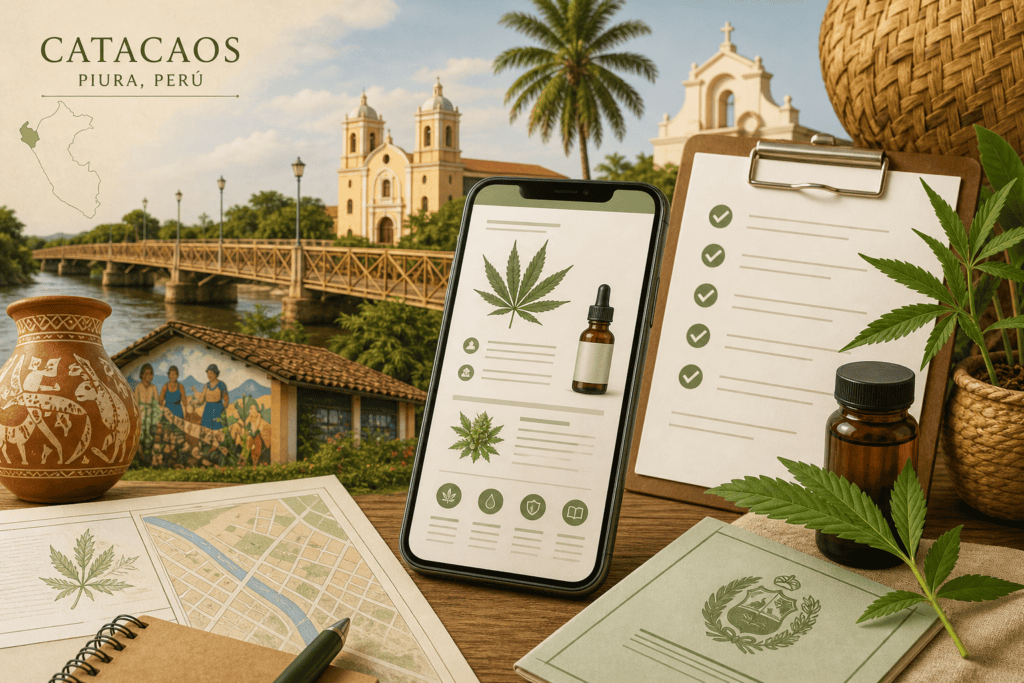
Be cautious of promises that a product treats serious diseases, works for everyone, or has no possible side effects. Cannabis products can vary in strength and composition, and unsuitable use may create health risks or interact with medicines. The World Health Organization’s cannabis information provides general health context, but it does not replace advice from a Peruvian clinician.
Review payment and delivery practices
Online fraud often relies on urgency. A seller may say that stock is almost gone, demand immediate payment, or offer a large discount for sending money through an irreversible method. Take time to verify the business before paying. Keep copies of product descriptions, invoices, messages, and delivery terms.
A legitimate-looking delivery service does not make an unlawful product lawful. Ask how the order is packaged, what information appears on the receipt, how personal data is handled, and what happens if the product arrives damaged or differs from the description. Avoid sharing unnecessary identity documents or sensitive health information through unsecured channels.
Medical cannabis in Catacaos: a safer decision process
People looking for medical cannabis in Catacaos should treat the process as a healthcare decision, not simply an online shopping task. Begin by discussing the condition, current medicines, allergies, pregnancy status, and treatment goals with a qualified professional. This is especially important for people with a history of mental-health conditions, cardiovascular problems, liver disease, or medication interactions.
A clinician can help determine whether cannabis is appropriate, identify a suitable formulation, and explain how to monitor effects. Do not assume that a product described as CBD is risk-free, or that a product with a familiar brand name has the same formulation in every country. If symptoms worsen or unexpected effects occur, stop and seek medical guidance rather than increasing the amount independently.
Questions to ask before buying
- Is the product intended for a permitted medical or therapeutic use?
- Can the seller identify the manufacturer and provide complete labeling?
- Is there credible evidence of batch testing and product consistency?
- Does the seller explain storage, expiry, dosage information, and warnings?
- Will the seller provide a receipt and clear terms for returns or complaints?
- Does the purchase comply with current Peruvian requirements?
If the answer to several of these questions is no, do not treat a low price or fast delivery as compensation for the uncertainty. A product with unknown strength or contaminants may cost more through adverse effects, wasted money, or delayed medical care.
Understanding cannabis laws in Catacaos
The phrase cannabis laws in Catacaos can be misleading because the key rules are national. Local police, customs, health authorities, and delivery companies may also apply procedures that affect possession, transport, and distribution. The legal status of one product does not automatically transfer to another: oils, dried plant material, pharmaceutical preparations, and supplements may be treated differently.
Do not rely on claims such as “small quantities are always allowed,” “online orders are private,” or “CBD products are never regulated.” Such statements can omit important distinctions and may be wrong for the product, quantity, origin, or intended use involved. If you are traveling, also consider rules for carrying cannabis across regional or international borders. An item purchased legally in one place may not be lawful to transport elsewhere.
When an online retailer refuses to explain its authorization, suggests hiding the product from authorities, or offers to mislabel a package, end the conversation. Requests to falsify customs or shipping information can create additional legal problems and are strong indicators of an unsafe transaction.
Common warning signs in online cannabis listings
- Guaranteed results: Medical outcomes cannot be promised for every customer.
- No ingredient information: Vague descriptions make it impossible to assess strength or suitability.
- Pressure to pay: Countdown offers and threats to cancel an order discourage careful verification.
- Untraceable payment: Requests for gift cards, cryptocurrency only, or transfers to unrelated names reduce consumer protection.
- Copied images and reviews: Attractive photographs or testimonials do not prove that the product exists.
- Unusually broad product claims: A seller offering every type of cannabis product without compliance information deserves extra scrutiny.
- No complaint process: A business that cannot explain how customers can report a problem is difficult to hold accountable.
Safer alternatives to unverified online sellers
If your goal is treatment, ask a healthcare professional or licensed pharmacy about lawful options and the documentation required. Keep the consultation focused on your symptoms and treatment history rather than on finding a particular brand. A clinician may also suggest non-cannabis therapies that are better supported or more suitable for your situation.
For general research, compare information from official health and medicines authorities rather than relying on anonymous reviews. When reading online discussions, treat personal experiences as anecdotes, not proof of safety, legality, or effectiveness. Local marketplace posts can be useful for understanding what people are claiming, but they should never be the sole basis for sending money or using a health product.
Readers researching nearby cities may also encounter similar questions in guides about online cannabis retailers in Sullana and information about online discussions about cannabis in Paita. These pages should likewise be read as general safety guidance, not as confirmation that any named seller is authorized.
Protecting your privacy and personal safety
Cannabis inquiries can involve sensitive medical and identity information. Use strong, unique passwords for shopping accounts, avoid sending identity documents until the recipient and purpose are verified, and review the privacy policy before submitting health details. Do not share another person’s medical information without permission.
For an in-person collection or consultation, choose a legitimate professional setting and tell someone you trust where you are going. Never meet an unknown seller in an isolated location or carry a large amount of cash. If a person threatens you, demands extra payment, or attempts to blackmail you using private messages, preserve evidence and contact appropriate local authorities.
A practical checklist for Catacaos buyers
- Identify whether the product is for a lawful medical or therapeutic purpose.
- Check current requirements through official Peruvian health authorities.
- Verify the seller’s business identity and contact information.
- Request complete labeling, batch details, and credible testing information.
- Confirm the total price, delivery terms, receipt, and complaint process in writing.
- Avoid pressure, secrecy, false declarations, and irreversible payments.
- Speak with a healthcare professional before using cannabis for a health condition.
- Keep records of the listing, payment, communications, and product packaging.
Conclusion
Finding trustworthy online retailers selling weed in Catacaos is not simply a matter of locating a delivery account. The central questions are whether the product is lawful, whether the seller can be verified, whether the contents are documented, and whether the purchase is appropriate for the user’s health needs.
Because cannabis rules and product requirements can change, confirm current information with Peruvian authorities and qualified healthcare professionals. Avoid unverified vendors, exaggerated medical claims, pressure to pay, and offers to conceal the shipment. A cautious approach may take longer, but it reduces the risk of fraud, unsafe products, privacy problems, and legal complications.

The Ziklane Editorial Team is dedicated to providing accurate, well-researched, and up-to-date information on cannabis laws and regulations around the world. Our content is created through careful research of publicly available legal sources, government publications, and reputable references to help readers better understand local cannabis legislation. We are committed to delivering educational, factual, and regularly updated content while encouraging readers to comply with the laws of their respective countries and regions.