
People searching for how to buy weed online in Chincha Alta may find social-media accounts, chat groups, websites, and delivery offers that appear convenient. However, an online listing is not proof that a seller is licensed, that a product is authentic, or that a delivery is lawful. In Peru, cannabis access is closely connected to the medical framework, and local buyers should verify the rules before sharing personal details or paying anyone.
This guide explains how to research cannabis in Chincha Alta without directing readers to illegal sellers. It focuses on legal status, medical access, product verification, scam avoidance, privacy, and responsible use. Because regulations and enforcement can change, confirm current requirements with official Peruvian authorities or a qualified health professional before making a decision.
What online cannabis buying means in Chincha Alta
Online cannabis purchasing can describe several different activities: finding a licensed medical provider, contacting a pharmacy or authorized distributor, requesting information about a prescribed product, or ordering an item from an unverified account. These activities do not have the same legal or safety status.
A page that advertises cannabis for delivery in Chincha Alta could be selling a regulated medical product, a hemp-derived item, an inaccurately labeled product, or an illegal substance. Product photos and customer reviews are easy to copy or fabricate. A professional-looking checkout page also does not establish that a business is authorized to sell cannabis in Peru.
Before considering any online option, ask three basic questions:
- Is the product permitted under current Peruvian law?
- Is the seller or provider authorized to offer it?
- Can the product’s identity, ingredients, and handling be independently verified?
If the answer to any of these questions is unclear, do not proceed with payment or provide identification documents.
Understand cannabis laws in Chincha Alta before ordering
Chincha Alta follows Peru’s national legal framework; the city does not create a separate recreational cannabis market. Peru has established rules for medical and therapeutic cannabis, but that does not mean every cannabis product advertised online is legal or that recreational delivery is authorized.
Start with the current information published by the Peruvian Ministry of Health. The Ministry of Health and other competent authorities can clarify medical access, registration, health requirements, and changes to applicable rules. For information related to medicines and pharmaceutical oversight, consult the General Directorate of Medicines, Supplies and Drugs, known as DIGEMID.
Do not assume that a prescription, medical condition, or online consultation automatically makes any purchase lawful. Requirements may depend on the product, its ingredients, the supplier, and the documentation involved. A health professional can explain whether a cannabis-based treatment is appropriate and what legal route applies.
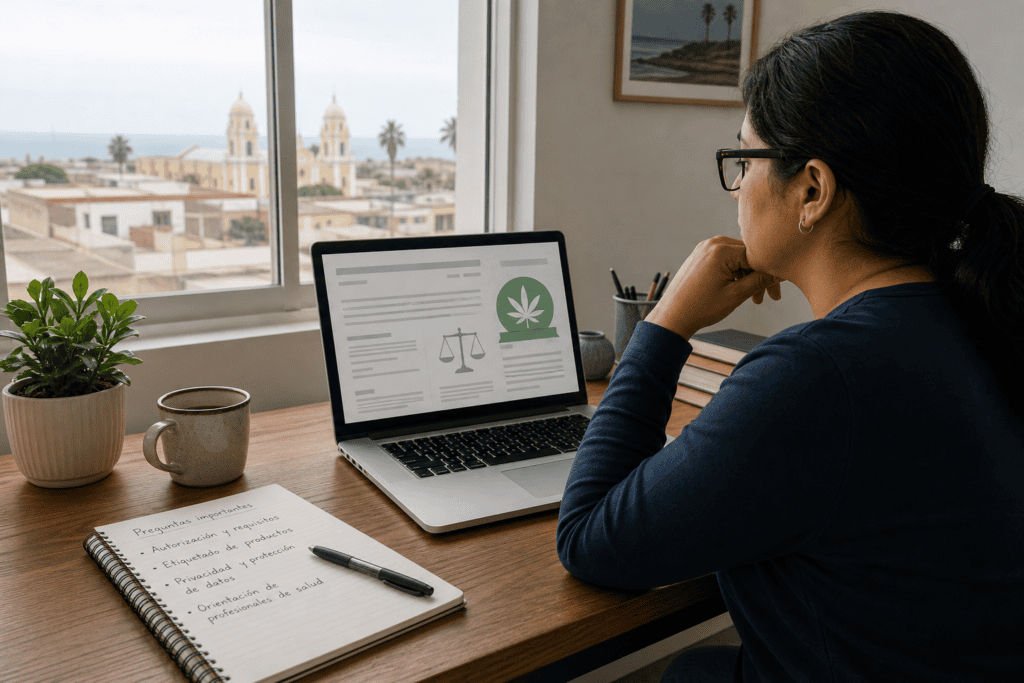
Medical access is different from recreational delivery
Medical cannabis in Chincha Alta should be approached through a licensed healthcare pathway rather than an anonymous seller. A clinician can review symptoms, existing medicines, allergies, and possible interactions. They can also discuss treatments that may have stronger evidence for the condition in question.
A medical recommendation does not justify purchasing unregistered oils, flowers, edibles, or cartridges from an account that cannot demonstrate authorization. It is also risky to use another person’s prescription or to assume that a product sold in another country can be imported or delivered legally into Peru.
How to evaluate an online cannabis provider
If you are researching a possible legal provider, evaluate the business before discussing payment or delivery. The goal is not simply to find the lowest price. It is to establish whether the organization is identifiable, accountable, and operating within the applicable rules.
Check the provider’s identity
- Look for a complete legal business name, physical address, telephone number, and customer-service channel.
- Ask which authority regulates the business and what type of authorization it holds.
- Confirm that the provider can explain whether the product is medical, pharmaceutical, hemp-derived, or another category.
- Be cautious when a seller uses only a nickname, encrypted chat account, temporary website, or personal bank account.
- Check whether the website uses clear terms, privacy information, refund conditions, and a transparent complaints process.
A legitimate provider should be able to explain its compliance process without pressuring you to move immediately to a private chat. Refusal to answer basic questions is a strong reason to stop communicating.
Review product information carefully
Legal product information should be specific enough for a buyer and healthcare professional to understand what is being offered. Look for the product name, manufacturer, batch or lot information, ingredients, concentration, expiry date, storage guidance, and any required authorization or registration details.
Be especially skeptical of promises such as “guaranteed relief,” “100 percent safe,” or “stronger than prescription medicine.” Cannabis products can vary substantially in cannabinoid content and may cause side effects or interact with other medicines. A certificate of analysis can be useful, but a document displayed online is not automatically genuine. If testing information cannot be traced to a credible laboratory or matching batch, treat it as unverified.
Warning signs of unsafe online sellers
Searches for weed in Chincha Alta can expose users to scams and unsafe products. The following warning signs do not prove a specific crime, but several together should make you leave the site or end the conversation:
- The seller claims that all cannabis is legal or that no documentation is ever needed.
- The offer promises discreet delivery that bypasses all checks or uses coded language to avoid describing the product.
- The seller demands cryptocurrency, gift cards, unusual transfers, or full payment before answering questions.
- The price is dramatically lower than comparable regulated medical products without a clear explanation.
- Photos, certificates, reviews, and stock images appear copied from unrelated websites.
- The seller asks for unnecessary scans of identity documents, banking details, passwords, or access codes.
- The product arrives without a sealed package, label, batch information, or clear ingredients.
- The account creates urgency by claiming that supplies will disappear unless you pay immediately.
Do not attempt to test an unknown product by taking a small amount. Contaminants, unexpected potency, synthetic cannabinoids, and mislabeled ingredients can create serious risks even when the product looks normal.
Safer steps for researching cannabis in Chincha Alta
- Define the purpose. Decide whether you are seeking medical information, discussing symptoms with a clinician, or researching a regulated product. Avoid treating an online listing as medical advice.
- Check official information first. Review current guidance from Peruvian health authorities before contacting a provider.
- Speak with a qualified professional. Explain your condition, medicines, allergies, pregnancy status if relevant, and previous treatment experiences.
- Verify the supply channel. Ask how the product is authorized, stored, dispensed, and delivered. If the provider cannot answer clearly, do not buy.
- Protect your personal information. Share only information required for a legitimate service and avoid sending identity documents through informal messaging accounts.
- Keep records. Save invoices, packaging, product details, and provider communications. These records can help with a complaint or adverse-reaction report.
- Stop if anything changes. If the package differs from the order, arrives damaged, lacks labeling, or produces unexpected effects, do not use it and seek professional advice.
Delivery, privacy, and payment considerations
An online order involves more than selecting a product. Delivery may raise questions about age checks, medical documentation, storage conditions, and whether the carrier is authorized to transport the item. A seller’s promise of same-day delivery does not resolve these legal or safety issues.
Use caution with websites that collect excessive personal data. A trustworthy service should explain why it needs information, how it stores it, and who receives it. Avoid reusing passwords and never share one-time verification codes or banking credentials with a seller.
Payment protection also matters. A request for an irreversible payment method can leave you with no practical way to recover money after a scam. Keep written confirmation of the business name, total price, shipping terms, and refund policy. Do not make repeated payments because a seller claims that customs, insurance, or verification requires an additional fee.
Health and responsible-use considerations
Cannabis may cause drowsiness, impaired attention, dizziness, anxiety, or other unwanted effects. Risks can be greater for inexperienced users and for people taking medicines that affect the nervous system or heart. Avoid driving, operating machinery, or combining cannabis with alcohol or other intoxicating substances.
Do not rely on online cannabis sellers to diagnose a condition or recommend a dose. A clinician or pharmacist can help you understand possible interactions and whether a product is appropriate. Seek urgent medical help for severe confusion, chest pain, trouble breathing, loss of consciousness, or other serious symptoms.
Keep any authorized medicine in its original packaging and away from children, visitors, and pets. Edible products can be particularly easy to mistake for ordinary food. Do not share prescribed or medically supplied cannabis with another person.
How to use related research without trusting every forum
Local discussions can reveal the kinds of scams and misleading claims people encounter, but forums are not regulatory authorities. Posts may be outdated, anonymous, sponsored, or written by someone who has not verified the product. Use them to identify questions to investigate, not as proof that a seller is safe.
For broader context, compare local research with guides about online cannabis discussions in Ica and information about cannabis vendors in Lima. These articles should also be treated as general research rather than authorization to purchase from any particular seller. The final check should always come from current official information and a qualified professional.
What to do if an online transaction goes wrong
If you suspect a scam, stop sending money and preserve screenshots, receipts, usernames, phone numbers, website addresses, and delivery details. Contact your payment provider promptly to ask what protective steps are available. If you received an unknown or contaminated product, avoid using it and seek medical advice if you feel unwell.
Where appropriate, report suspected fraud, unsafe medicines, or misleading health claims to the relevant Peruvian authorities. A clear record can help investigators identify repeated scams and protect other people in Chincha Alta.
Conclusion
Learning how to buy weed online in Chincha Alta should begin with legality and safety, not with finding an anonymous delivery account. Peru’s medical cannabis framework does not make every online cannabis offer lawful, authentic, or suitable for personal use. Verify the legal category, consult a qualified health professional, check the provider’s identity and authorization, protect your personal data, and walk away from pressure or unexplained payment demands.
When a seller cannot provide clear information about its authorization, product contents, testing, and handling, the safest decision is not to order. Reliable health guidance and current official information are more valuable than a fast but unverified online purchase.

The Ziklane Editorial Team is dedicated to providing accurate, well-researched, and up-to-date information on cannabis laws and regulations around the world. Our content is created through careful research of publicly available legal sources, government publications, and reputable references to help readers better understand local cannabis legislation. We are committed to delivering educational, factual, and regularly updated content while encouraging readers to comply with the laws of their respective countries and regions.