
Searching for the best deals on weed in Tarapoto can lead visitors and residents toward informal sellers, unverified social-media accounts, or websites making promises they cannot support. That route carries legal, financial, and health risks. A safer approach is to understand Peru’s cannabis framework, distinguish medical products from unregulated marijuana, and verify any provider before discussing a purchase.
This guide does not identify street dealers, private sellers, hidden marketplaces, or sources for recreational cannabis. Instead, it explains how to research weed in Tarapoto responsibly, what questions to ask, how to recognize common scams, and when professional medical advice is appropriate. Rules and enforcement can change, so confirm current information with Peruvian authorities before acting.
What “the best deal” should mean in Tarapoto
The lowest advertised price is not necessarily the best value. With unregulated cannabis, a cheap offer may involve unknown potency, contamination, inaccurate product descriptions, advance-payment fraud, or legal exposure. A responsible comparison considers the complete transaction rather than the headline price.
- Legality: Can the provider explain which authorization or medical pathway applies?
- Traceability: Is there a named business, physical location, receipt, product information, and a way to contact the provider afterward?
- Quality information: Are ingredients, concentration, batch details, and expiration information available where relevant?
- Medical suitability: Has a qualified clinician assessed whether cannabis is appropriate for the intended condition?
- Total cost: Include consultation fees, transport, delivery charges, and any required documentation.
If a seller avoids basic questions or insists on secrecy, a discount should not outweigh the risks. This is particularly important in Tarapoto, where informal online listings may be difficult to verify and products may be represented inaccurately.
Understand cannabis laws in Tarapoto before comparing prices
Cannabis laws in Tarapoto are part of Peru’s national legal framework; a local advertisement does not create a legal exception. Medical and therapeutic cannabis should not be confused with unrestricted recreational retail. The legal status of a product can depend on its purpose, formulation, authorization, prescription or professional guidance, and the identity of the supplier.
For current information, consult the Peruvian Ministry of Health and ask a licensed health professional or competent authority about the rules that apply to your situation. Avoid relying only on old blog posts, anonymous forum comments, translated screenshots, or claims such as “everyone buys here” and “police do not care.”
Travelers should be especially cautious. Carrying cannabis across borders, transporting it between regions, or bringing it through an airport may create separate legal problems even if the product was obtained for personal use. Do not assume that a product legally available in another country is legal to import into Peru.
Medical and recreational products are not interchangeable
A person seeking treatment should ask about a lawful medical pathway rather than trying to obtain ordinary flower through informal channels. Medical cannabis in Tarapoto may involve a clinician’s evaluation, a specific product type, and an authorized supply route. The correct process can vary according to the patient’s diagnosis, age, medications, and treatment goals.
Do not treat a seller’s recommendation as medical advice. Cannabis can cause unwanted effects and may interact with medicines or aggravate some conditions. A clinician should be told about pregnancy, heart problems, mental-health history, liver disease, current medications, and any previous reaction to cannabis.
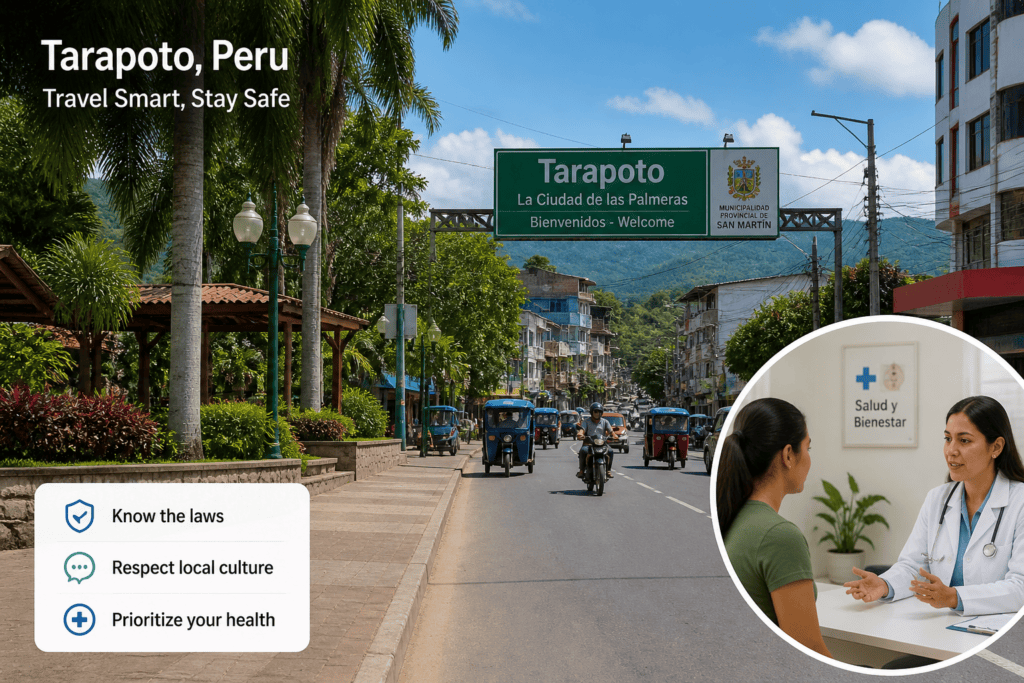
Safer ways to research cannabis in Tarapoto
Start with licensed medical guidance
If cannabis is being considered for a health condition, begin with a doctor, pharmacist, or established clinic. Ask whether there is evidence for the proposed use, what non-cannabis treatments are available, which formulation is appropriate, and how side effects would be monitored. A professional may also explain whether a product is lawful and where it can be obtained through an authorized route.
Bring a list of current medicines and supplements to the appointment. Ask for written instructions covering dose, timing, storage, driving restrictions, and what to do if symptoms worsen. Products containing THC can affect attention, reaction time, coordination, and judgment. Do not drive or operate machinery if impaired.
Verify the provider independently
Do not use a phone number, address, or social-media account supplied only by the seller as proof of legitimacy. Search for the business through independent, reputable sources and compare its details across multiple channels. A legitimate provider should not object to reasonable verification questions.
Before paying, ask for:
- The provider’s complete legal name and business details.
- The address of the establishment, if a physical location is claimed.
- Information about the product’s ingredients, concentration, origin, and expiration.
- A receipt or other transaction record.
- The name and credentials of the health professional, where medical advice is offered.
- Clear information about refunds, returns, and complaints.
Be careful with accounts that repeatedly change names, use stock photographs, hide all prices until payment, or claim to deliver “anywhere in Peru” without explaining the legal basis for the service.
Compare products, not just gram prices
When a lawful medical product is available, compare the amount of active ingredient, formulation, and instructions rather than simply comparing the price per gram. Flower, oils, capsules, and other preparations are not automatically equivalent. A product with an attractive sticker price may be unsuitable for the intended use or impossible to verify.
Ask whether laboratory or batch information is available and whether the packaging is intact. Avoid products in unmarked bags, improvised containers, or packaging with missing labels. Do not rely on color, smell, or a seller’s description to judge potency or safety.
Red flags when looking for weed in Tarapoto
Informal cannabis offers often rely on urgency and trust-building rather than verifiable information. The following warning signs should end the conversation:
- A request for full payment before any identity or product details are provided.
- Pressure to move immediately to an encrypted chat or disappearing-message account.
- Promises of unusually low prices, guaranteed effects, or exceptionally high potency.
- Claims that a product is “legal everywhere” without naming the relevant authorization.
- Requests for passport photographs, banking passwords, one-time codes, or unnecessary personal information.
- Delivery instructions that involve abandoned locations, third-party accounts, or concealed packages.
- Offers to send cannabis across borders or through airports.
- Refusal to provide a receipt, ingredients, dosage information, or a complaint process.
Scammers may copy the logos, photographs, and reviews of real businesses. Reverse-image searches and independent contact details can help, but no online check is a guarantee. If an offer seems too good to be true, do not send money or personal documents.
What visitors to Tarapoto should know
Tourists sometimes assume that local familiarity makes an informal purchase safe. It does not. A hotel employee, taxi driver, online contact, or stranger may have no authority to sell cannabis and may expose the buyer to theft, extortion, arrest, or an unsafe product. Do not ask accommodation staff to arrange an illegal purchase, and do not invite unknown people to a hotel room.
Keep travel documents and personal information private. Avoid carrying any unverified substance in luggage, especially when taking domestic flights or crossing checkpoints. If you are already carrying a product and are uncertain about its status, seek advice from a qualified local authority rather than relying on a seller’s assurances.
For broader context on evaluating cannabis risks, the World Health Organization’s cannabis information is a useful starting point. It discusses health considerations but should not replace an examination or individualized advice from a Peruvian clinician.
How to handle online research responsibly
Search results can be useful for learning terminology and locating official institutions, but they are not proof that a seller is licensed. Use several independent checks, record the date you verified information, and treat anonymous reviews as unconfirmed claims. Never publish or share another person’s private details when asking for recommendations.
For comparisons with safety-focused cannabis research in other Peruvian cities, you can also review this guide to researching cannabis sellers in Pucallpa and this safer research guide for Iquitos. These articles should be treated as general educational material, not as endorsements or proof that any particular vendor is authorized.
A useful research checklist is simple:
- Identify whether your purpose is medical, legal, or purely informational.
- Check current official guidance before contacting a provider.
- Confirm the provider’s identity independently.
- Ask about ingredients, formulation, documentation, and total cost.
- Do not prepay an unverified seller or share sensitive documents.
- Stop if the seller uses pressure, secrecy, or implausible promises.
What to do if something goes wrong
If you paid a suspected scammer, preserve messages, receipts, account details, and delivery information. Contact your bank or payment service promptly and report the incident through the appropriate local channels. Do not threaten the seller or arrange a private confrontation.
If someone experiences severe confusion, chest pain, difficulty breathing, loss of consciousness, extreme agitation, or a suspected poisoning after using cannabis, seek emergency medical help immediately. Do not let the person drive. Tell medical staff what was taken and when, if that information is available.
Conclusion
The safest answer to the search for the best deals on weed in Tarapoto is not a secret seller or a bargain listing. It is a verified, lawful pathway that provides clear product information, appropriate medical oversight when needed, and a transaction record. Research cannabis in Tarapoto through official sources, question unsupported claims, avoid unregulated street purchases, and remember that a low price cannot compensate for unknown contents or legal risk.
Anyone considering medical cannabis in Tarapoto should begin with a qualified professional and confirm the current Peruvian requirements before purchasing, transporting, or using any product.

The Ziklane Editorial Team is dedicated to providing accurate, well-researched, and up-to-date information on cannabis laws and regulations around the world. Our content is created through careful research of publicly available legal sources, government publications, and reputable references to help readers better understand local cannabis legislation. We are committed to delivering educational, factual, and regularly updated content while encouraging readers to comply with the laws of their respective countries and regions.