
If you are asking where can I purchase weed in Juanjuí, Peru, the first step is to distinguish between regulated medical cannabis and unlicensed recreational sales. Juanjuí is a relatively small city in the San Martín region, so openly advertised, legally verified cannabis retailers may be limited or unavailable. Buying from informal contacts, social-media accounts, or street sellers can expose you to legal, financial, and health risks.
This guide explains how to approach weed in Juanjuí responsibly without directing you to illegal sellers. It covers the legal questions to check, how a medical-cannabis pathway generally works, how to assess a seller’s claims, and what to do if no suitable local option exists.
Where can I purchase weed in Juanjuí, Peru?
There may not be a reliable, publicly listed dispensary in Juanjuí that you can safely verify online. Instead of treating an unverified listing as a retailer, look for a lawful medical route through a licensed health professional and an authorized pharmacy or supplier. Availability can change, and a business that advertises cannabis does not automatically have permission to sell it.
For current public-sector guidance, consult the Peruvian Ministry of Health. Its official information can help you identify the relevant health authorities and confirm whether requirements, registrations, or permitted products have changed. If a seller refuses to provide documentation or tells you that no rules apply, that is a strong reason not to proceed.
Why local availability may be difficult
Smaller cities often have fewer specialized pharmacies and clinics than Lima or other major regional centers. A product may therefore need to be obtained through a pharmacy in another city, subject to applicable prescription, registration, delivery, and transport rules. Do not assume that a courier, bus driver, private driver, or informal “delivery service” is authorized to transport cannabis.
Online searches can also be misleading. A page may be inactive, use a copied address, display products that are not legally available in Peru, or collect personal information without supplying anything. Treat search results as leads for verification rather than proof that a seller is legitimate.
Understanding cannabis laws in Juanjuí
Cannabis laws in Juanjuí are primarily determined by Peru’s national legal and health framework, not by a separate city-level retail system. The practical question is whether the product, seller, prescription or authorization, and distribution channel comply with current national requirements.
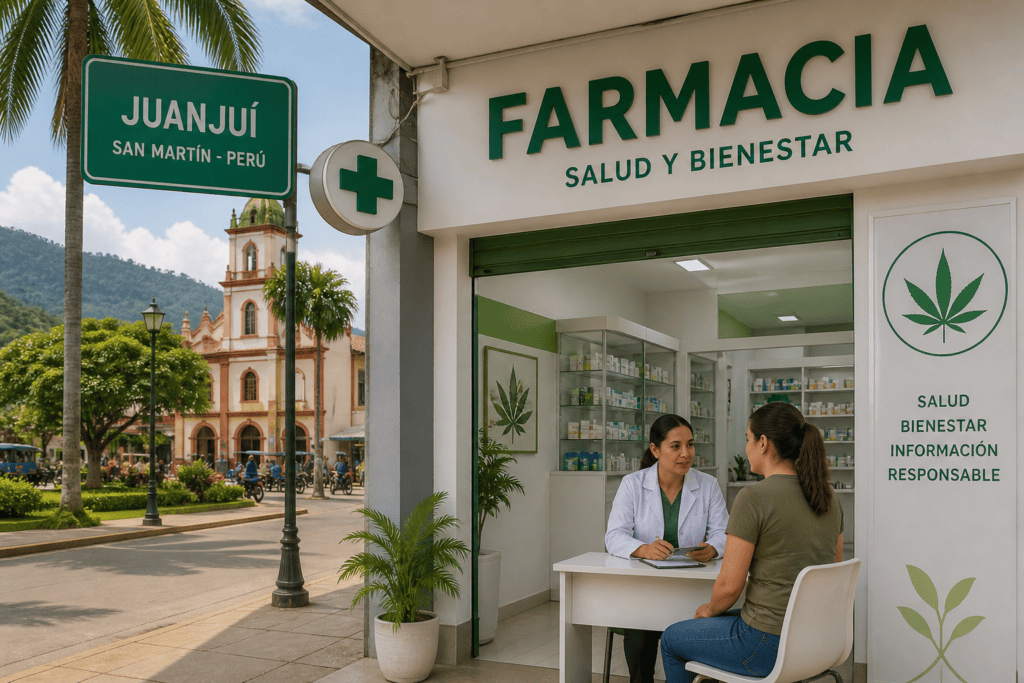
Rules can distinguish between medical use, personal possession, cultivation, manufacture, importation, and commercial sale. Those categories should not be treated as interchangeable. A person’s belief that cannabis is “for personal use” does not by itself prove that a purchase from an unknown seller is lawful.
Before making any purchase, confirm the current position with a Peruvian health authority, a licensed physician, or a properly established pharmacy. Avoid relying on old social-media posts, forum comments, or advice copied from another country. The legal treatment of cannabis products can also differ according to form, such as dried flower, oils, capsules, extracts, or products containing different cannabinoid levels.
Medical cannabis in Juanjuí: the safer legal pathway
For people seeking medical cannabis in Juanjuí, the most defensible starting point is a consultation with a qualified healthcare professional. Explain your symptoms, diagnosis, current medicines, previous treatments, and any history of anxiety, psychosis, heart problems, pregnancy, or substance-use concerns. Cannabis may not be appropriate for everyone, and a clinician can discuss alternatives and possible interactions.
- Arrange a medical consultation. Ask whether cannabis has a reasonable role in your situation and what form, dose, and monitoring would be appropriate.
- Request clear documentation. If a product is recommended, make sure you understand the prescription or authorization requirements and whether the product is legally available in Peru.
- Use an authorized source. Ask the clinic or health authority how to identify a legitimate pharmacy or supplier rather than accepting a private referral from an unknown account.
- Keep purchase records. Save receipts, packaging, batch information, instructions, and any prescription documentation.
- Follow up with the prescriber. Report side effects and do not increase the dose simply because the first effect is weaker or slower than expected.
A medical recommendation is not a guarantee that every cannabis product advertised online is safe. It should lead to a product that can be identified, labeled, and traced through a lawful supply chain.
Questions to ask a clinic or pharmacy
- Is the business licensed to provide the relevant medical product?
- What documentation is required before purchase?
- What are the product’s active ingredients and concentration?
- Is there a batch number, expiry date, manufacturer, and storage information?
- Can the pharmacy provide a receipt and written usage instructions?
- How should the product be stored and transported?
- Who should the patient contact if the product causes an adverse reaction?
How to evaluate a cannabis seller or online listing
If you encounter a business claiming to serve Juanjuí, assess it before sharing identification, paying, or arranging delivery. A legitimate seller should be willing to explain its legal status and product information without pressuring you to move the conversation to an encrypted app immediately.
Signs that deserve caution
- Guaranteed delivery with no prescription, screening, or legal explanation.
- Requests for cryptocurrency, gift cards, advance transfers, or payment to an unrelated individual.
- No physical business details, receipt, refund policy, or customer-service channel.
- Products described only as “premium,” “strong,” or “100% safe” without ingredients or testing information.
- Photos of packaging that cannot be matched to a manufacturer or official product information.
- Pressure to send a copy of your identity document before the seller establishes who it is.
- Promises to conceal the product, bypass authorities, or avoid all delivery records.
These signs do not prove that a seller is committing a crime, but they make the transaction difficult to verify and increase the risk of fraud or unsafe products. Do not meet unknown sellers alone, carry large amounts of cash, or enter private locations to complete a transaction.
Health risks of unverified cannabis products
Products from informal sources may contain an inaccurate cannabinoid concentration, contaminants, pesticides, mold, or other substances. Edibles and oils can be especially difficult to assess when the label is incomplete or false. Effects may also be delayed, which can lead someone to take more before the initial dose has taken effect.
The World Health Organization’s cannabis information describes health considerations associated with cannabis use, including impairment and possible mental-health effects. Do not drive, operate machinery, or make safety-sensitive decisions after using cannabis. Combining it with alcohol, sedatives, or other intoxicating substances can increase impairment.
Seek urgent medical help if someone experiences severe confusion, chest pain, difficulty breathing, loss of consciousness, a seizure, or extreme agitation. Keep cannabis products away from children and pets, and store them in their original, clearly labeled packaging when possible.
What to do if Juanjuí has no verified retailer
If you cannot identify a lawful local source, the safest response is not to substitute an informal seller. Ask a clinician whether an approved alternative treatment is available, or ask an authorized pharmacy whether it can explain the legal process for obtaining a permitted product from another location.
Do not arrange cross-border purchases or ask acquaintances to carry cannabis through airports, checkpoints, or regional transport routes without first confirming the applicable rules. Importation and transport may involve requirements that are separate from possession or medical use. A product legally sold in another country may not be legal to bring into Peru.
For broader context, you can compare the verification principles in guides about ordering cannabis in Moyobamba and evaluating online cannabis retailers in Yurimaguas. These articles should not be treated as endorsements of particular sellers; use them only as reminders to check licensing, documentation, product labeling, and safety.
Practical checklist before any purchase
- Confirm that your intended use is lawful under current Peruvian rules.
- Speak with a qualified healthcare professional if you are seeking cannabis for a medical condition.
- Verify the seller’s legal identity, authorization, address, and contact details.
- Check that the product has a complete label, batch information, expiry date, and clear ingredients.
- Obtain a receipt and retain prescription or authorization documents.
- Never rely on claims that a product is risk-free or stronger because it is untested.
- Protect your identity and do not send unnecessary personal or banking information.
- Do not drive or mix cannabis with alcohol or sedating medicines.
Conclusion
The answer to “where can I purchase weed in Juanjuí, Peru” is not a recommendation to use an informal vendor. Because local availability and national requirements can change, the safer approach is to begin with a healthcare professional, confirm current guidance through official Peruvian health authorities, and use only a verifiable, authorized supply channel.
If no lawful retailer is available in Juanjuí, pause rather than accepting an anonymous delivery or untested product. Careful verification, accurate medical advice, complete product information, and proper records are more important than convenience when considering cannabis in Juanjuí.

The Ziklane Editorial Team is dedicated to providing accurate, well-researched, and up-to-date information on cannabis laws and regulations around the world. Our content is created through careful research of publicly available legal sources, government publications, and reputable references to help readers better understand local cannabis legislation. We are committed to delivering educational, factual, and regularly updated content while encouraging readers to comply with the laws of their respective countries and regions.