
Searching for weed retailers in Vsevolozhsk requires more than checking map listings or social media. In Russia, cannabis and products containing controlled cannabis substances are subject to strict legal restrictions. A business that advertises cannabis for recreational use may be operating illegally, misrepresenting its products, or exposing customers to serious legal and personal-safety risks.
This guide explains how to research weed in Vsevolozhsk responsibly, identify legitimate alternatives, check product claims, and avoid common traps. It does not provide directions to illicit sellers or methods for purchasing controlled substances. Laws and enforcement can change, so confirm current information with official Russian sources before making any decision.
Are there legal weed retailers in Vsevolozhsk?
There is no reliable basis for treating recreational cannabis shops in Vsevolozhsk as lawful businesses. Cannabis containing prohibited or controlled substances cannot be assumed legal simply because a seller uses terms such as “natural,” “premium,” “herbal,” or “CBD.” Product names and packaging do not override Russian legislation.
Online advertisements can also be misleading. A listing may use cannabis imagery while selling ordinary industrial hemp goods, or it may be promoting an illicit product through a constantly changing account. Some sellers ask customers to pay in advance, communicate only through anonymous messaging services, or use delivery arrangements that provide no verifiable business information. These are warning signs, not evidence of a legitimate retail operation.
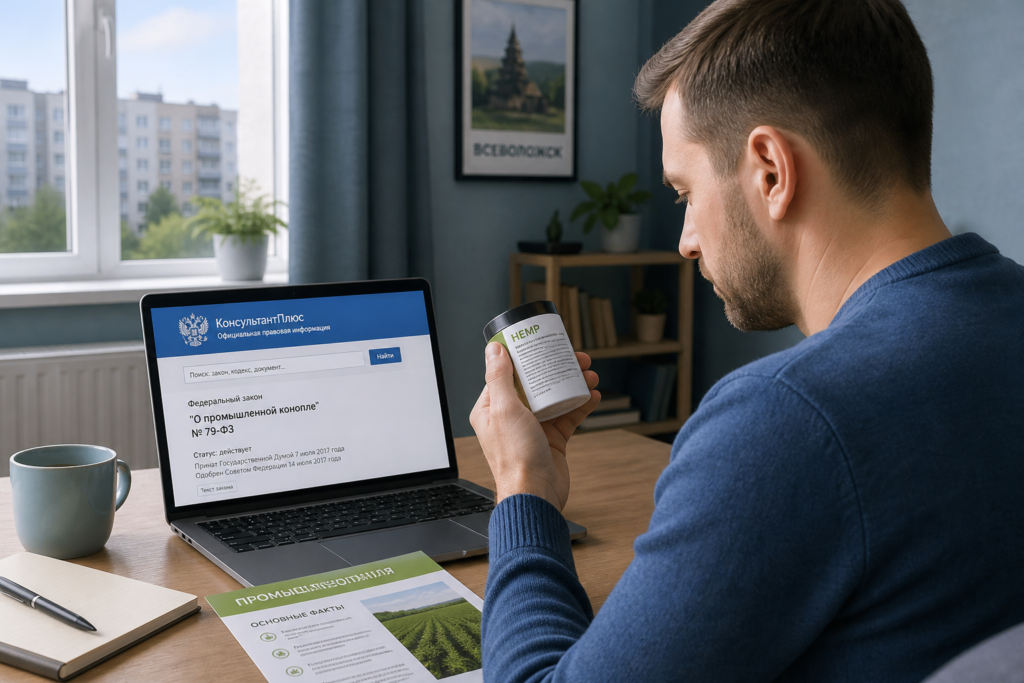
For current legal documents and official regulations, consult the official Russian legal information portal. If a seller’s claims conflict with official rules, treat the seller’s claims as unreliable.
How to research weed in Vsevolozhsk without taking legal risks
A safe search begins with the legal status of the product, not with the seller’s marketing. Before visiting a shop, responding to an advertisement, or placing an order, use the following process.
- Identify the exact product. Determine whether the listing refers to cannabis flower, an extract, an edible, a vape liquid, a medicine, or an industrial hemp item. These categories may have different rules, and vague descriptions are a reason to stop rather than proceed.
- Check the active ingredients. Look for a complete ingredient list, laboratory documentation, and a clearly identified manufacturer. Avoid products with no batch number, no concentration information, or no verifiable packaging.
- Verify the seller. A genuine business should provide a legal name, physical address, customer support details, and documentation appropriate to the product category. Anonymous accounts and cash-only arrangements are especially risky.
- Compare claims with official information. Do not rely on search snippets, influencer posts, or customer comments to determine whether a product is legal. Confirm the rule through a government or public-health source.
- Do not test uncertainty in person. If the product’s status is unclear, do not arrange a meeting, accept a parcel, or carry it across a border or into another city.
Why map listings and social media are unreliable
Search platforms may display a business name without confirming what it sells or whether it has the necessary authorization. Reviews can be fabricated, old, or posted by people who have not verified the product. Social media accounts may disappear quickly, making it difficult to resolve a complaint or prove what was advertised.
A polished logo, professional photographs, or claims of “laboratory testing” are not substitutes for independently verifiable documentation. Treat online visibility as advertising, not as proof of legality.
Understanding cannabis laws in Vsevolozhsk
Cannabis laws in Vsevolozhsk are based primarily on Russian federal law rather than a separate municipal retail system. Local geography does not create a legal market for recreational cannabis. Rules can cover possession, distribution, cultivation, importation, advertising, and products containing controlled substances.
The consequences of a transaction may affect both the buyer and the seller. A person who believes they are purchasing a small amount of an ordinary consumer product may still face problems if the item contains a prohibited substance or if its documentation is false. Bringing cannabis-related products into Russia from another country can create additional customs and criminal-law concerns.
Because legal categories can depend on composition, quantity, intended use, and documentation, avoid relying on simplified statements such as “CBD is always legal” or “hemp products are unrestricted.” Those statements may be incomplete or wrong for a particular item. Use current legal guidance and ask a qualified lawyer when the consequences could be significant.
Safer legal alternatives to searching for cannabis retailers
Industrial hemp products
Some businesses sell hemp-based goods such as textiles, food products, cosmetics, or seed products. These are not automatically equivalent to cannabis, and their legality depends on the product, ingredients, labeling, and applicable regulations. Before buying, check the package, manufacturer, conformity information, and intended use.
Do not assume that a product made from hemp is suitable for ingestion or medical use. Cosmetic hemp oil, food ingredients, and extracts can have very different compositions. A product sold online may also be imported or mislabeled.
Medical concerns
People often search for medical cannabis in Russia because of chronic pain, sleep problems, anxiety, epilepsy, or another health condition. Self-medicating with an unverified product can cause side effects, interactions, delayed diagnosis, or legal difficulties. A local doctor can discuss lawful treatment options, referrals, and approved medicines for the condition being treated.
For reliable public-health information, start with the official website of Russia’s Ministry of Health. Do not treat a seller’s medical claims as a diagnosis or prescription.
Licensed pharmacies and ordinary healthcare services
If the goal is symptom relief, ask a doctor or pharmacist about approved treatments that are legally available in Russia. Bring a list of current medicines and supplements, since interactions may matter. A pharmacist can also explain whether a product is registered, how it should be used, and whether a prescription is required.
Red flags when evaluating a cannabis-related listing
Whether a listing appears in Vsevolozhsk, Saint Petersburg, or another nearby location, the following signs should prompt you to leave the page and avoid contact:
- Promises of guaranteed effects, instant cures, or treatment for multiple unrelated diseases.
- No full ingredient list, manufacturer, batch number, or independent documentation.
- Instructions to hide the product, use coded language, or move the conversation to an anonymous channel.
- Pressure to pay immediately, send cryptocurrency, or transfer money to an unrelated person.
- Claims that local law does not apply because the seller operates online.
- Unusually strong products offered without dosage, warning, or age information.
- Requests for passport details, bank credentials, or unnecessary personal photographs.
- Delivery instructions that involve unattended packages, concealed locations, or third-party collection.
These warning signs are relevant even if the seller appears friendly or has positive reviews. Do not confront a suspected seller. Save only the information needed for a complaint and contact an appropriate authority if you believe a listing involves fraud, threats, or illegal distribution.
How to verify a product before buying a legal hemp item
If you are considering an ordinary hemp product rather than a controlled cannabis product, use a cautious checklist. Confirm that the packaging is in Russian where required, the manufacturer can be identified, and the product has a traceable batch or lot number. Check whether the item is intended for food, cosmetics, or another specific purpose.
Read the storage instructions and warnings. Be skeptical of products that claim to be both a powerful medicine and a consumer wellness item without presenting credible documentation. A certificate shown in a messaging app may be altered or belong to a different product.
When buying from a physical shop, request a receipt and inspect the packaging before paying. When buying online, check the seller’s legal details, return policy, delivery terms, and privacy policy. If basic information is missing, choose not to buy.
What to do if you have already bought a questionable product
Do not consume an unknown product simply because another person recommended it. Keep the packaging and receipt if doing so is safe, and avoid opening or transferring the contents. If you experience symptoms such as confusion, severe anxiety, chest pain, breathing difficulty, loss of consciousness, or repeated vomiting, seek urgent medical help and explain what you may have taken.
If you suspect fraud, identity theft, or illegal distribution, document the advertisement, payment details, and communications without arranging another meeting. Contact your bank promptly if payment information may be compromised. For legal advice about your specific situation, consult a qualified Russian lawyer rather than relying on anonymous online comments.
A practical conclusion for people searching in Vsevolozhsk
Finding weed retailers in Vsevolozhsk is not the same as finding a lawful, regulated cannabis shop. In the current Russian context, anonymous cannabis listings should be treated as a legal and safety risk. The most responsible approach is to verify the exact product, consult official information, avoid illicit sellers, and use licensed healthcare or ordinary legal retail channels for legitimate needs.
Searches for cannabis in Vsevolozhsk may lead to hemp products, medical claims, or illegal offers that look similar online. Slow down, check the source, and do not make a purchase when the product or its legal status cannot be independently verified.

The Ziklane Editorial Team is dedicated to providing accurate, well-researched, and up-to-date information on cannabis laws and regulations around the world. Our content is created through careful research of publicly available legal sources, government publications, and reputable references to help readers better understand local cannabis legislation. We are committed to delivering educational, factual, and regularly updated content while encouraging readers to comply with the laws of their respective countries and regions.