
Finding trustworthy weed retailers in Beit She’an requires more than choosing the nearest shop or responding to an online advertisement. In Israel, cannabis access is regulated, and legal purchasing generally depends on having the required medical authorization and using an approved pharmacy or retailer. That means the safest approach is to verify the seller, confirm the product, and understand the rules before paying.
This guide explains how to evaluate weed in Beit She’an responsibly, what to ask a medical cannabis pharmacy, how to spot unreliable sellers, and what to do if local stock is limited. It is intended for adults seeking legal medical cannabis, not for arranging unlicensed or recreational purchases.
What legal cannabis access means in Beit She’an
In Israel, medical cannabis is supplied through a regulated system. Patients must follow the requirements set by the health authorities, and the exact process can depend on their medical circumstances, authorization, prescription or permit status, and the dispensing arrangement used by their healthcare provider.
For that reason, a business selling cannabis without checking eligibility, providing product information, or issuing proper documentation should not be treated as a legitimate retailer. A trustworthy provider will explain what it can dispense, confirm the customer’s authorization, and provide a receipt and product details.
Before searching for cannabis in Beit She’an, review the official information from the Israeli Ministry of Health. Rules and procedures may change, so official guidance is more reliable than social media posts, informal recommendations, or old forum discussions.
How to identify trustworthy weed retailers in Beit She’an
Verify that the retailer operates legally
A reputable pharmacy or dispensing point should be identifiable as a real healthcare business with a physical location, published contact details, and clear operating hours. It should not insist on cash-only arrangements, anonymous delivery, or communication exclusively through disappearing messages.
Ask whether the location is authorized to dispense medical cannabis and whether it can process your specific authorization. Staff should answer directly rather than promising access without documentation. If a seller avoids questions about licensing or eligibility, consider that a serious warning sign.
Look for transparent product information
Legal products should come in sealed, labeled packaging. The label should provide information such as the product name, manufacturer, batch or lot details, expiry information, cannabinoid content, and storage guidance. The packaging should not appear tampered with, handwritten, or transferred into an unmarked container.
Retailers should also explain whether a product is a flower, oil, capsule, or another approved formulation. They should not make exaggerated claims that cannabis will cure a disease, replace all other treatment, or produce guaranteed results. Responsible staff describe products accurately and encourage patients to follow their physician’s or pharmacist’s instructions.
Assess the quality of customer service
Good service is especially important for medical cannabis because patients may need help with product availability, administration instructions, storage, and interactions with their existing treatment. A professional pharmacy should protect privacy, communicate clearly, and avoid pressuring customers to buy more than authorized.
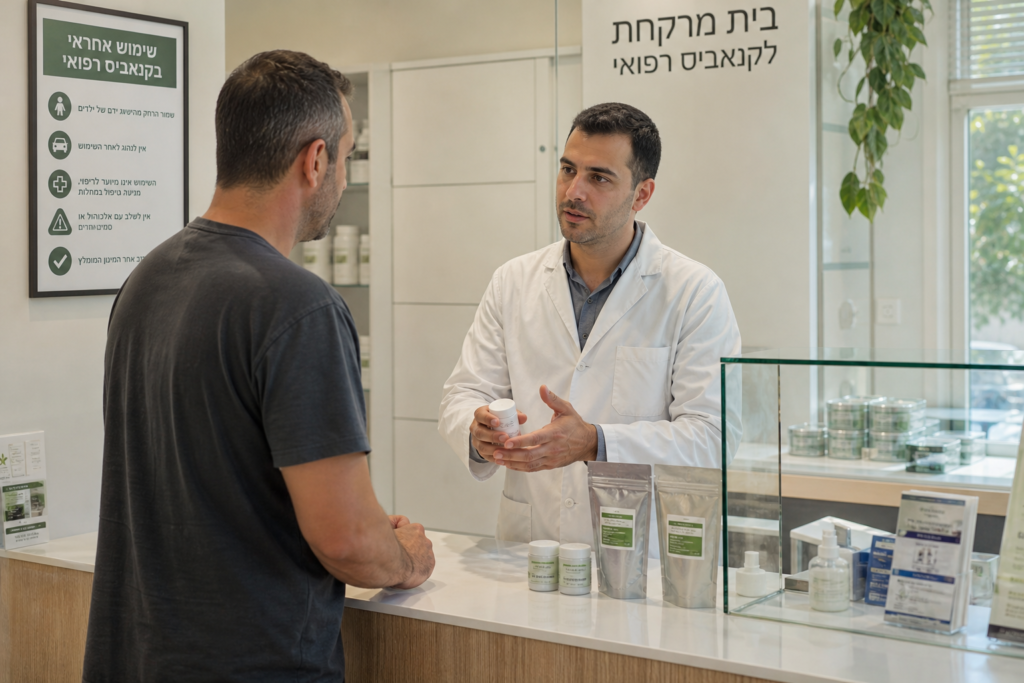
Staff do not need to diagnose a condition or change a patient’s treatment plan. However, they should know when to refer a medical question to a physician or pharmacist. Be cautious if employees recommend unusually high amounts, dismiss side effects, or encourage you to ignore professional advice.
Choosing between local pickup and delivery
A local pharmacy in Beit She’an may be convenient when you want to inspect the premises, speak with staff, and resolve a problem in person. Pickup can also make it easier to confirm that the product and quantity match your authorization before leaving.
Delivery may be useful for patients with limited mobility or when a particular product is not available locally. However, delivery should still come from a verifiable, authorized provider. Confirm the delivery area, fees, expected timing, packaging conditions, and the identification or documentation required at handover.
Do not assume that a website offering delivery is legitimate simply because it displays product photographs or customer reviews. Check that the business has a real address, a working telephone number, clear terms, and a process for handling complaints. Avoid sellers who promise delivery without checking medical eligibility or who offer products described as “stronger than legal stock” without proper labeling.
Questions to ask a medical cannabis pharmacy
Preparing a few questions can help you compare retailers without focusing only on price. Consider asking:
- Are you authorized to dispense medical cannabis in Israel?
- Can you verify and process my current authorization?
- Which products are currently available, and what are their labeled cannabinoid levels?
- What are the product expiry date and storage requirements?
- Is the package sealed and supplied with a receipt?
- What should I do if the product is unavailable, damaged, or inconsistent with the order?
- Can a pharmacist explain administration or direct medical questions to my healthcare provider?
- What identification and documentation are required for pickup or delivery?
A dependable retailer will not be offended by these questions. Clear answers are a useful sign that the business takes compliance and patient safety seriously.
Red flags when looking for weed in Beit She’an
Some warning signs are obvious, while others appear as small inconsistencies. Treat the following as reasons to stop and verify the seller before continuing:
- Sales offered to anyone regardless of medical authorization or age requirements.
- Unusually urgent offers, pressure to transfer money immediately, or claims of limited stock designed to rush a decision.
- Products sold in plain bags, jars, or containers without manufacturer and batch information.
- Promises of guaranteed medical outcomes or advice to stop prescribed medication.
- No receipt, no physical business details, or refusal to provide a clear return or complaint process.
- Prices that are presented as proof of quality without supporting product information.
- Requests for sensitive identity or payment information through an unverified account or private message.
- Reviews that all use identical wording, make medical promises, or cannot be connected to a real business.
These problems are not limited to illegal sellers. A poorly managed business may also mishandle storage, orders, or customer data. Verification matters even when a retailer appears polished online.
Comparing retailers beyond price
Price can matter, but it should not be the only comparison. A slightly cheaper product is not a good value if the retailer has unreliable stock, poor communication, or questionable storage practices. Compare the total experience, including product availability, professional support, delivery charges, and the ease of resolving an incorrect order.
Patients may also benefit from keeping a simple record of the product purchased, the date, the batch information, and any problems noticed. This record can help when discussing effects with a healthcare professional and may make it easier to report a quality concern.
Be cautious when interpreting online reviews. Look for specific comments about accurate orders, staff communication, packaging, and delivery reliability rather than reviews that merely say a product is “powerful.” Medical response varies between people, so another customer’s experience is not a substitute for professional guidance.
Safe storage, transport, and use
After purchasing medical cannabis, follow the label and pharmacist’s instructions for storage. Keep products in their original packaging, away from children and pets, and avoid exposing them to unsuitable heat, light, or moisture. Do not share medical cannabis with another person, even if that person reports similar symptoms.
Transport the product in its original labeled packaging together with any required documentation. Do not repackage it for convenience. If you are unsure about carrying cannabis across municipal, regional, or national borders, ask the relevant authority or healthcare professional before traveling. Rules outside Israel may differ substantially.
Cannabis can affect alertness, coordination, and judgment. Avoid driving or operating machinery if your treatment or product instructions advise against it, or if you feel impaired. Alcohol and other substances may increase unwanted effects. Report troubling or unexpected symptoms to a healthcare professional rather than changing treatment without advice.
Understanding cannabis laws in Beit She’an
There are no separate retail rules that make Beit She’an a recreational cannabis market. Local convenience does not replace national regulation. The key distinction is between authorized medical supply and unlicensed sales, and that distinction affects eligibility, product packaging, possession, transport, and use.
Because policies and administrative procedures can change, check current information before making a purchase. The World Health Organization’s cannabis health information can provide broader public-health context, but it does not replace Israeli legal guidance or advice from your physician and pharmacist.
If a retailer tells you that a medical authorization is unnecessary, or that local rules do not apply in Beit She’an, do not rely on that claim. Pause the transaction and confirm the position through an official source or qualified professional.
What to do if a product or retailer seems unsafe
Keep the receipt, packaging, batch information, order messages, and photographs of any issue. Do not continue using a product that appears contaminated, damaged, incorrectly labeled, or materially different from what was supplied. Contact the dispensing pharmacy first and ask for its formal complaints process.
For a suspected medical reaction, seek medical advice promptly. For suspected fraud, unlicensed supply, or a serious product concern, consider reporting the matter to the appropriate Israeli authority. Avoid publicly sharing personal medical information while describing the problem online.
A practical checklist before buying
- Confirm that you are eligible to obtain medical cannabis under current Israeli requirements.
- Choose a pharmacy or retailer with a verifiable physical presence and professional contact details.
- Ask whether the business can dispense your authorized product and quantity.
- Check the packaging, label, batch information, expiry date, and storage instructions.
- Obtain a receipt and retain your documentation.
- Store and transport the product as directed.
- Contact a healthcare professional about side effects, interactions, or changes in treatment.
Conclusion
The safest way to find trustworthy weed retailers in Beit She’an is to treat the purchase as a regulated medical transaction, not as an informal retail search. Verify authorization, choose a transparent pharmacy, inspect the packaging, ask practical questions, and avoid any seller that promises shortcuts or guaranteed medical results.
Whether you search for medical cannabis in Beit She’an locally or arrange an authorized delivery, reliable service should be based on legality, clear information, patient privacy, and responsible professional support. When in doubt, confirm the current rules with official authorities and discuss treatment decisions with a qualified healthcare professional.

The Ziklane Editorial Team is dedicated to providing accurate, well-researched, and up-to-date information on cannabis laws and regulations around the world. Our content is created through careful research of publicly available legal sources, government publications, and reputable references to help readers better understand local cannabis legislation. We are committed to delivering educational, factual, and regularly updated content while encouraging readers to comply with the laws of their respective countries and regions.