
Finding Trusted weed sellers in Supe, Peru is not as simple as choosing a social-media account, messaging a stranger, or meeting someone who promises discreet delivery. In a smaller coastal city such as Supe, informal sellers may offer little information about product origin, strength, contamination, or legal status. A safer approach is to understand Peru’s rules first, verify whether a product is part of a lawful medical pathway, and avoid transactions that create unnecessary legal or health risks.
This guide does not identify or promote unlicensed sellers. Instead, it explains how to evaluate cannabis information, recognize warning signs, and find reliable guidance when researching weed in Supe. Laws and enforcement can change, so readers should confirm current requirements with official Peruvian authorities before making decisions.
What to know before searching for cannabis in Supe
The phrase cannabis in Supe can refer to very different things: medical products obtained through an authorized route, informal recreational cannabis, CBD products, or online advertisements with unclear origins. These categories should not be treated as interchangeable. A listing that uses professional language is not necessarily licensed, tested, or safe.
Supe is in the Barranca Province of the Lima region. Local availability does not determine legality. National rules, product authorization, prescriptions, registration requirements, and local enforcement may all matter. Before contacting any seller, establish what type of product you are considering and whether there is a lawful way to obtain it.
Why online recommendations can be unreliable
Seller recommendations in messaging groups and social networks often lack verifiable business details. Reviews may be copied, paid for, or posted by accounts connected to the seller. Photos can also be taken from other websites and may not represent the product being offered.
Claims such as “100% safe,” “government approved,” “strongest in Supe,” or “no questions asked” should be treated cautiously unless they can be supported by official documentation. A responsible source should be willing to explain its legal status, product source, labeling, and return or complaint process without pressuring a customer.
Understanding cannabis laws in Supe and Peru
There is no separate Supe cannabis market with its own independent legalization framework. Questions about possession, sale, cultivation, transport, medical use, and importation are generally connected to Peruvian national law. The details can depend on the substance, quantity, purpose, documentation, and circumstances.
Medical cannabis is a distinct area from informal recreational sales. Patients should seek current guidance from Peru’s Ministry of Health and discuss treatment with a qualified healthcare professional. The Peru Ministry of Health information portal is an appropriate starting point for official health guidance and current public information.
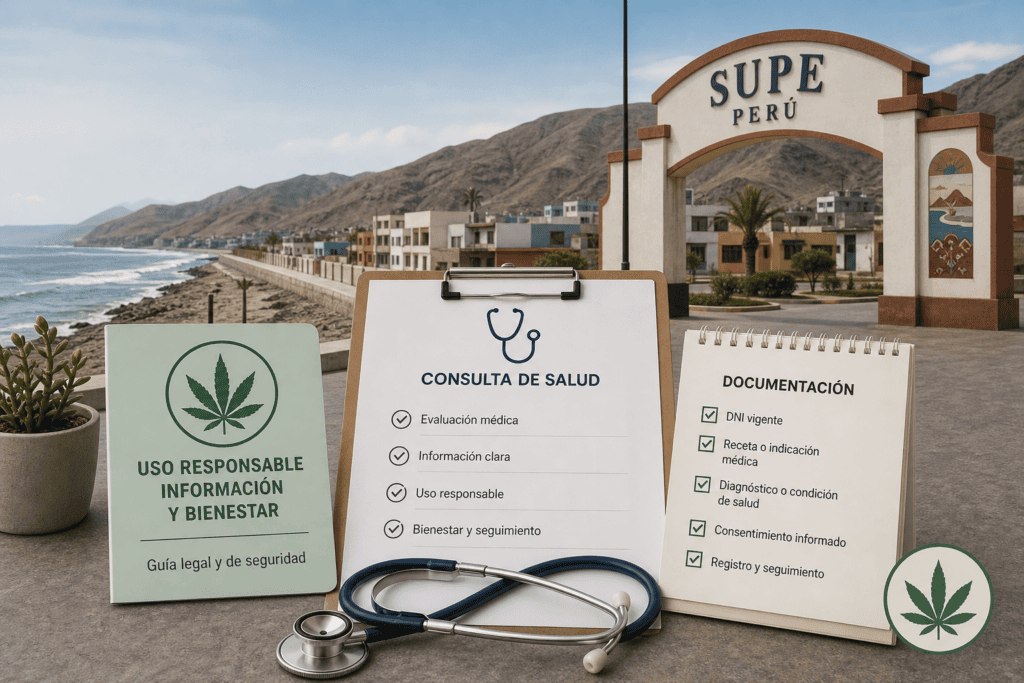
Rules concerning cannabis products can also involve regulators, pharmacies, prescriptions, and product authorization. Do not assume that a product described as CBD, hemp, extract, oil, or medicinal is automatically legal or free from restrictions. Labels and marketing terms do not replace regulatory approval.
For broader health context, the World Health Organization’s cannabis information explains known health concerns and why product strength, age, frequency of use, and individual health conditions matter.
Questions to verify before considering any provider
- Is the provider a legally identifiable business or healthcare-related establishment?
- Can it provide a physical address, tax or registration information, and a clear contact method?
- Does it explain whether the product is intended for medical use and what documentation is required?
- Are ingredients, concentration, batch details, expiry date, and storage instructions available?
- Is there evidence of independent laboratory testing from a credible and verifiable source?
- Does the provider avoid promises of guaranteed effects or claims that cannabis cures serious diseases?
- Does it respect age, privacy, and medical-safety requirements?
How to recognize a risky weed seller in Supe
People searching for weed in Supe may encounter offers through social networks, classified listings, chat applications, or informal referrals. The following warning signs do not prove that a seller is illegal, but several together indicate that you should stop and reconsider.
- No verifiable identity: The seller uses only a nickname, temporary account, or changing phone numbers.
- Pressure to pay immediately: Requests for deposits through untraceable methods, cryptocurrency, gift cards, or transfers to unrelated names are serious warning signs.
- Unrealistic medical claims: Promises to cure cancer, anxiety, epilepsy, pain, or addiction without clinical oversight are not responsible health advice.
- No product information: The seller cannot identify the source, ingredients, potency, testing, expiry date, or storage conditions.
- Unsafe meeting arrangements: A provider insists on isolated locations, refuses a receipt, or changes the meeting place repeatedly.
- Discreet delivery promises: Secrecy may be presented as a benefit, but it can also conceal counterfeit products, scams, or legal exposure.
Never share unnecessary identity documents, banking information, passwords, or private medical records with an unverified contact. If a person threatens, blackmails, or harasses you after a conversation, preserve the messages and seek assistance from local authorities or a trusted legal service.
Medical cannabis in Supe: a safer legal pathway
People researching medical cannabis in Supe should begin with a clinician rather than a seller. A medical consultation can help determine whether cannabis is appropriate, identify possible interactions, and discuss better-established treatments. This is especially important for people who are pregnant, underage, living with a heart or psychiatric condition, or taking medicines that affect the nervous system.
What a responsible medical process should include
- Clinical assessment: A qualified professional reviews symptoms, diagnosis, current medicines, allergies, and treatment goals.
- Clear product information: The patient receives information about ingredients, concentration, administration, expected effects, and possible adverse reactions.
- Legal verification: The patient confirms whether the provider and product are authorized under current Peruvian requirements.
- Follow-up: Treatment is monitored rather than treated as a one-time purchase with guaranteed results.
- Secure storage: Products are kept away from children, visitors, and anyone who could consume them accidentally.
A seller who recommends a dose without asking about your age, health, medicines, or reason for use is not providing meaningful medical guidance. Similarly, a product with no label or batch information should not be treated as a dependable medicine.
Practical safety advice for evaluating local offers
If you encounter a cannabis offer in Supe, slow the process down. Search the provider’s name across more than one source, compare the address and contact details, and look for consistent information rather than isolated testimonials. Do not rely on follower counts or polished product photographs.
Ask for documentation before discussing payment. A legitimate operation should not object to basic questions about authorization, labeling, and complaints. If the answers are vague, aggressive, or contradictory, end the conversation. Walking away from an uncertain offer is safer than trying to recover money or resolve a health problem later.
Do not transport cannabis across provincial or national borders based on an informal seller’s assurance. Travel, delivery, and possession can create additional legal issues, especially when the product is not properly documented. Avoid carrying products for another person, even if the package appears sealed.
Readers comparing information from other parts of Peru may also find it useful to review our guides on weed vendors in Yauri and weed sellers in Ferreñafe. These articles address the same central principle: local searches should begin with legality, verification, and personal safety rather than unconfirmed seller claims.
What to do if you already bought an unknown product
If you have purchased cannabis from an unverified source, do not assume that its appearance or smell proves what it contains. Avoid combining it with alcohol, sedatives, stimulants, or other drugs. Do not drive, operate machinery, or give it to another person. Keep the packaging and messages if you need to report a scam or provide information to a healthcare professional.
Seek urgent medical help if someone experiences chest pain, difficulty breathing, loss of consciousness, severe confusion, seizures, extreme agitation, or repeated vomiting. Children and pets require particular caution because even a small amount may be dangerous. Tell medical staff honestly what may have been consumed, when, and approximately how much.
Frequently asked questions about trusted weed sellers in Supe
Can you recommend a specific seller in Supe?
No. A seller cannot be responsibly called trusted without current, verifiable evidence of legal authorization, product testing, and safe operating practices. Informal recommendations may expose readers to scams, unsafe products, or legal consequences.
Is every cannabis product marketed as medicinal legal?
No. “Medicinal” is a marketing description unless the product and provider meet applicable regulatory requirements. Confirm the current rules through official Peruvian health authorities and consult a qualified clinician.
Are CBD products automatically safe?
No. CBD products can vary in purity and concentration, may contain other cannabinoids or contaminants, and may interact with medicines. Product labeling and legal status should be verified before use.
What is the safest first step?
Start by identifying your purpose, checking current Peruvian rules, and speaking with a healthcare professional if the goal is medical. Avoid anonymous sellers, rushed payments, and products without clear documentation.
Conclusion
The safest way to search for Trusted weed sellers in Supe, Peru is to question the premise that an anonymous seller can be trusted without verification. Focus on lawful access, official health information, transparent product details, and professional advice. For medical needs, use a qualified healthcare pathway; for any informal offer, treat missing documentation, pressure, and exaggerated claims as reasons to walk away. Careful research will not eliminate every risk, but it can reduce exposure to scams, unsafe products, and avoidable legal problems.

The Ziklane Editorial Team is dedicated to providing accurate, well-researched, and up-to-date information on cannabis laws and regulations around the world. Our content is created through careful research of publicly available legal sources, government publications, and reputable references to help readers better understand local cannabis legislation. We are committed to delivering educational, factual, and regularly updated content while encouraging readers to comply with the laws of their respective countries and regions.