
Finding Trusted weed sellers in Caleta Olivia requires more than choosing a social-media account or accepting a recommendation from a stranger. Cannabis rules in Argentina are complex, and the legal route depends on the purpose of use, the product, and the documentation involved. A seller who refuses to explain product contents, offers no reliable records, or pressures customers into a private transfer may expose buyers to legal, financial, and health risks.
This guide does not identify informal dealers or help arrange an illegal purchase. Instead, it explains how to assess legitimate options, understand the difference between medical access and recreational sales, recognize warning signs, and protect your privacy. If you are researching weed in Caleta Olivia, start by checking the current rules and speaking with a qualified healthcare professional rather than relying on anonymous online claims.
What “trusted” should mean in Caleta Olivia
In a regulated market, trust is supported by verifiable licensing, clear labeling, accountable staff, and a lawful way to resolve problems. In an informal market, a polished profile, a local phone number, or positive comments is not enough. Those signals can be copied easily and do not confirm the quality or origin of a product.
For anyone comparing cannabis in Caleta Olivia, a responsible provider should be willing to explain what is being offered, whether it is legal for the intended use, and what documentation applies. A credible medical pathway should also involve a registered clinician and appropriate records, not simply a promise that a product will treat a condition.
Basic signs of a more accountable provider
- Uses a verifiable business identity rather than only an anonymous messaging account.
- Provides clear information about product type, ingredients, cannabinoid content, and intended use.
- Does not make guaranteed claims about curing cancer, anxiety, epilepsy, pain, or other conditions.
- Explains age, prescription, registration, or other requirements before taking payment.
- Offers a receipt or another lawful record of the transaction when applicable.
- Respects questions about testing, contamination, storage, and packaging.
These points do not automatically prove that a seller is authorized. They are screening questions that can help you avoid the most obvious scams and unsafe products.
Understanding cannabis laws in Caleta Olivia
The legal situation in Caleta Olivia is shaped by national Argentine rules as well as the practical requirements of healthcare and local authorities. Argentina has a legal framework for medicinal cannabis, but that does not mean that all cannabis products can be openly sold for any purpose. Medical access, personal cultivation, research, and general recreational commerce may be treated differently.
Before making a decision, consult the official information from the Argentine Ministry of Health’s medicinal cannabis information. The official guidance can help clarify current registration procedures, medical requirements, and the role of REPROCANN. Because regulations and administrative procedures may change, confirm the position that applies to your circumstances rather than relying on an old post or a seller’s explanation.
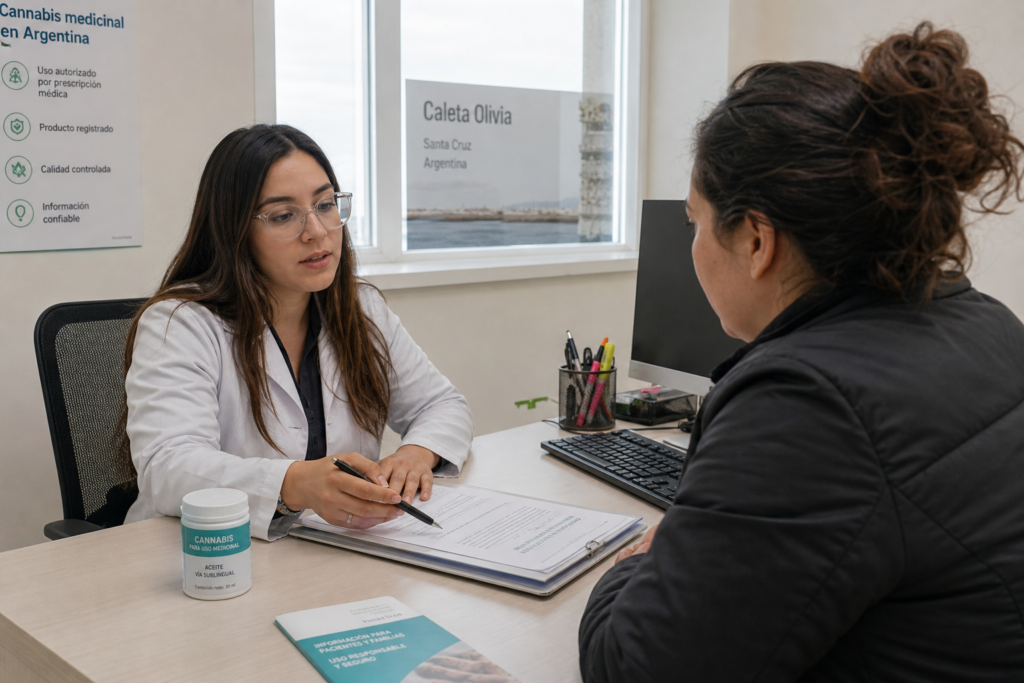
In practical terms, cannabis laws in Caleta Olivia should be understood as part of Argentina’s broader legal system. A local seller cannot make an otherwise unlawful transaction legal simply by operating within the city. Likewise, a product described as “medicinal” is not automatically approved, tested, or appropriate for self-treatment.
Medical cannabis in Caleta Olivia: safer legal steps
People looking for medical cannabis in Caleta Olivia should begin with a consultation with a licensed healthcare professional. A clinician can discuss symptoms, existing treatments, possible interactions, and whether cannabis-based treatment has a reasonable place in the care plan. This is particularly important for people who are pregnant, under 18, taking sedatives or blood thinners, or managing a condition that affects concentration or breathing.
A practical pathway
- Write down your symptoms, previous treatments, current medicines, and the outcome you hope to achieve.
- Speak with a qualified healthcare professional who can assess whether cannabis-based treatment is appropriate.
- Ask which legal authorization, registration, prescription, or documentation may apply.
- Use official government information to verify the current process instead of paying an intermediary who promises guaranteed approval.
- Keep records of recommendations, product details, receipts, and any side effects.
Medical advice should include a plan for dosage, timing, follow-up, and stopping treatment if problems occur. Do not assume that a higher concentration is better, and do not combine cannabis with alcohol or other sedating substances without professional advice.
How to identify scams and unsafe products
Online cannabis scams often rely on urgency and secrecy. A seller may claim that stock is almost gone, request full payment before answering basic questions, or offer a discount for moving the conversation to an encrypted app. None of these behaviors proves criminal activity, but together they are strong reasons to stop and verify.
Warning signs to take seriously
- Requests for cryptocurrency, gift cards, or unusual payment methods with no accountable business record.
- Promises of guaranteed medical results or claims that a product replaces professional care.
- No ingredient list, no cannabinoid information, and no explanation of how the product was tested.
- Unlabeled oils, flowers, edibles, or extracts supplied in ordinary bags or household containers.
- Pressure to share identity documents, banking details, or intimate personal information unnecessarily.
- Offers to ship across borders or instructions for concealing a package.
- Refusal to discuss contamination risks, storage conditions, or age restrictions.
Products from an unknown source may contain pesticides, heavy metals, mould, synthetic cannabinoids, excessive THC, or substances that are not listed. Edibles create an additional risk because effects can be delayed, leading some people to take more before the first dose has fully taken effect.
Questions to ask before considering any provider
Whether you are reviewing a clinic, pharmacy-related service, or another regulated option, ask direct questions and give yourself time to verify the answers. A responsible provider should not object to reasonable questions about legality and safety.
- What is the legal status of this product and service in Argentina?
- Who is the responsible professional or business entity?
- What are the ingredients and cannabinoid concentrations?
- Is there independent laboratory testing or another reliable quality-control record?
- How should the product be stored, used, and kept away from children and pets?
- What side effects and drug interactions should be discussed with a clinician?
- What documentation will I receive, and who handles complaints or adverse reactions?
If the answers are vague, contradictory, or based only on testimonials, do not proceed. A trustworthy option should make informed decision-making easier, not discourage questions.
Privacy and personal safety when researching cannabis
Privacy matters, especially when contacting unfamiliar accounts. Avoid sending photographs of identity documents, medical records, home addresses, or payment information until you have verified the organization and established that the information is legally required. Use a secure connection, review the privacy policy where available, and be cautious about downloading files or clicking shortened links.
Never meet an unknown person alone to collect an unverified product. More importantly, do not place yourself in a situation where you feel pressured to complete a transaction. If a conversation becomes threatening or someone attempts blackmail, preserve the messages, stop responding, and contact local authorities or a trusted support person.
Health considerations before using cannabis
Cannabis can affect attention, memory, coordination, mood, and reaction time. Avoid driving, operating machinery, or performing safety-sensitive work after use. Products with THC may cause anxiety, paranoia, dizziness, or impaired judgment, while CBD products can still interact with medicines and may not contain the amount stated on the label.
Public-health information from the World Health Organization’s cannabis questions and answers can provide general background, but it is not a substitute for personal medical advice. Seek urgent medical help for chest pain, severe confusion, trouble breathing, loss of consciousness, or a serious allergic reaction.
Keep all cannabis products locked away from children and pets. Do not share prescribed or medically authorized products with another person, even if they report similar symptoms. Different health conditions and medicines can produce very different risks.
What to do if you cannot verify a seller
The safest decision is to pause. Do not send money simply because someone claims to be the only trusted contact in town. Check official government guidance, ask a healthcare professional about lawful options, and compare information from more than one reliable source. If your need is medical and urgent, use established healthcare services rather than an informal seller.
For residents searching for Trusted weed sellers in Caleta Olivia, the most useful standard is not popularity. It is verifiability: a lawful purpose, accountable people, transparent product information, appropriate medical oversight, and a clear way to address problems. If those elements are missing, the source should not be treated as trusted.
Conclusion
Finding safe cannabis options in Caleta Olivia means separating legal medical access from unverified informal sales. Research the current rules, consult a qualified professional, check product information, protect your personal data, and walk away from pressure or unsupported health promises. No seller’s convenience is worth exposing yourself to an unknown product, a scam, or avoidable legal and health consequences. When legality or safety is unclear, choosing not to buy is the responsible choice.

The Ziklane Editorial Team is dedicated to providing accurate, well-researched, and up-to-date information on cannabis laws and regulations around the world. Our content is created through careful research of publicly available legal sources, government publications, and reputable references to help readers better understand local cannabis legislation. We are committed to delivering educational, factual, and regularly updated content while encouraging readers to comply with the laws of their respective countries and regions.