
Finding trusted weed sellers in Baar requires more than choosing the first online listing or social-media account that appears in search results. In Switzerland, the legal status of cannabis depends on factors such as THC content, the purpose of use, the buyer’s age, and whether a product is supplied through an approved medical or research framework.
This guide explains how to evaluate legal cannabis options in Baar without endorsing unverified sellers. It covers pharmacies, regulated CBD retailers, authorised pilot projects, product checks, warning signs, and the key questions to ask before making a purchase. Rules can change, so readers should confirm current information through official Swiss sources before acting.
What “trusted” means when looking for cannabis in Baar
A trustworthy seller should be transparent about what it sells, who may buy it, and how its products are tested. A professional retailer does not make vague promises about “strongest” products or suggest that all cannabis is legal. Instead, it provides clear information about THC and CBD content, ingredients, batch identification, dosage, storage, and returns.
Trust also depends on the sales channel. A licensed pharmacy, an established CBD retailer with a physical business presence, or an officially recognised cannabis pilot project is generally easier to verify than an anonymous messaging account. A seller that refuses to identify its business, avoids questions about laboratory testing, or asks for payment through unusual methods should be treated with caution.
Why anonymous listings are risky
Unverified listings may involve counterfeit products, inaccurate potency claims, contaminated cannabis, phishing attempts, or scams in which goods are never delivered. They may also expose buyers to legal problems. A polished website is not proof that a supplier is authorised, and customer reviews alone cannot confirm product quality or legality.
Legal routes for weed in Baar
People searching for weed in Baar should first identify which type of product or access route they mean. Low-THC CBD products, prescribed medical cannabis, and THC-containing cannabis supplied through an approved pilot project are not interchangeable. Each route has different rules and restrictions.
CBD and low-THC products
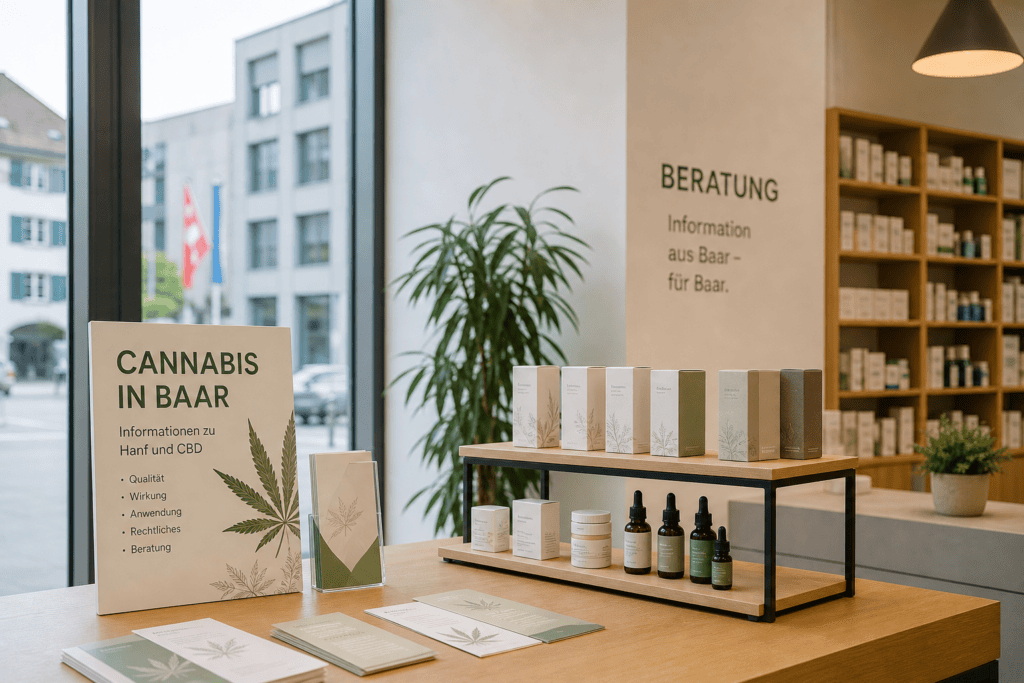
Some cannabis products with very low THC levels can be sold legally in Switzerland when they meet applicable requirements. These may include flowers, oils, cosmetics, or other formats, although the rules can vary by product category. A responsible retailer should show the product’s cannabinoid profile and explain any age or use restrictions.
Buyers should not assume that a product labelled “CBD” is automatically suitable for driving, employment-related testing, pregnancy, or use alongside medication. Even products marketed as non-intoxicating can create practical risks if their contents are unclear or if trace THC is present.
Medical cannabis
Medical cannabis in Baar should be discussed with a qualified healthcare professional rather than sourced through an informal seller. A doctor or pharmacist can assess whether a cannabis-based medicine is appropriate, explain possible side effects and interactions, and provide advice on dosage and follow-up care.
Do not rely on a seller’s claim that a product treats pain, anxiety, insomnia, cancer, or another condition. Medical claims require appropriate evidence and regulatory oversight. Anyone already taking prescription medicines should ask a doctor or pharmacist about potential interactions before using cannabis products.
Approved pilot projects
Switzerland permits certain scientific pilot projects involving non-medical cannabis under defined conditions. Participation is limited to eligible people and approved programmes; it is not the same as walking into any shop and buying recreational cannabis. Availability, enrolment, product range, and location can change.
If a Baar resident is considering a pilot project, the safest approach is to verify the programme directly through its official organiser and read its participation requirements. Do not pay an intermediary who claims to provide guaranteed access or asks for personal documents without a clear, verifiable reason.
How to check a cannabis seller before buying
Whether you are comparing a local shop, pharmacy, or online retailer, use a consistent verification process. These checks can help separate a professional business from an unverified marketplace listing.
- Confirm the business identity: Look for a real business name, physical address, customer-service contact, and clear terms of sale.
- Check the product category: The seller should explain whether the item is a CBD product, a prescribed medicine, or part of an authorised programme.
- Request laboratory information: A credible product should have batch-level information or a certificate of analysis covering cannabinoids and relevant contaminants.
- Review the label: Packaging should identify ingredients, cannabinoid content, batch details, net quantity, and appropriate warnings.
- Assess health claims: Be wary of promises to cure diseases, replace medical treatment, or deliver guaranteed effects.
- Check age and delivery rules: A responsible retailer explains who can buy the product and where it can legally be delivered.
- Use ordinary payment methods: Requests for cryptocurrency, gift cards, or urgent bank transfers can be warning signs, particularly when combined with anonymity.
Understanding cannabis laws in Baar
Cannabis laws in Baar follow Swiss federal law, while local enforcement and practical rules may involve the canton and municipality. The legal position can depend on THC concentration, possession, consumption, cultivation, supply, and whether the product is intended for medical or research use.
Do not assume that buying a product in another municipality makes it legal to possess or use it in Baar. Public consumption can create additional issues involving nuisance, public order, minors, workplaces, transport, and driving. Cannabis can impair reaction time and attention, so driving after use is unsafe and may have serious legal consequences.
For a current overview, consult the Swiss Federal Office of Public Health cannabis information and the official Swiss cannabis and law guidance. These sources are more reliable than seller blogs or anonymous forum posts.
Why product type matters
A label such as “hemp,” “natural,” or “legal cannabis” does not by itself establish legality. The relevant details may include the THC level, the formulation, intended use, and whether the product is regulated as food, cosmetics, medicine, or another category. If a seller cannot explain these distinctions, consider that a significant warning sign.
Red flags to avoid when searching for cannabis in Baar
Search results for cannabis in Baar may include legitimate businesses alongside misleading advertisements. Be especially cautious when a listing displays several of the following characteristics:
- It promises discreet delivery of products that appear to contain high levels of THC without explaining the legal basis.
- It has no company details, privacy policy, terms of sale, or verifiable customer-support channel.
- It uses stock photographs instead of showing identifiable packaging and batch information.
- It advertises unusually low prices, guaranteed effects, or “no questions asked” service.
- It asks for a copy of an identity document before explaining why it is needed or how it will be stored.
- It pressures customers to make immediate payment or move the conversation to an encrypted messaging account.
- It makes medical claims that are not supported by a doctor, pharmacist, or recognised health authority.
Safer shopping questions to ask
Before purchasing, ask the seller what the product contains, whether the batch has been tested, which legal category applies, and what age restrictions exist. Ask how the item should be stored and whether the seller can provide an invoice or receipt. For a medical product, ask a healthcare professional rather than a shop employee about suitability and dosage.
If the answers are incomplete, contradictory, or delivered with pressure to buy, walk away. A trustworthy business should be comfortable with reasonable questions and should not treat basic safety checks as an inconvenience.
Health and practical considerations
Cannabis affects people differently. Possible effects can include drowsiness, impaired attention, anxiety, dizziness, and changes in coordination. Mixing cannabis with alcohol or other sedating substances can increase risks. Young people, pregnant individuals, and people with a history of psychosis or certain heart conditions should seek medical advice before using cannabis products.
Keep all cannabis products in their original packaging and out of reach of children and pets. Do not share prescribed products, and do not consume an unknown product simply because it is described as “natural” or “organic.” If someone experiences severe confusion, chest pain, difficulty breathing, or an extreme reaction after using cannabis, seek urgent medical help.
A practical checklist for Baar residents
- Identify whether you are looking for a CBD product, a prescribed medicine, or access through an approved study.
- Check the current Swiss and cantonal rules before purchasing.
- Choose a business with a verifiable identity and transparent contact details.
- Review the label, THC and CBD information, batch data, and testing documentation.
- Avoid sellers making guaranteed health or potency claims.
- Consider how the product may affect driving, work, medication, and other responsibilities.
- Keep receipts and packaging in case you need to confirm what was purchased.
Conclusion
The best way to find trusted weed sellers in Baar is not to rely on a list of unverified names. Instead, evaluate the legal route, confirm the seller’s identity, inspect product information, and use official guidance when rules are unclear. Pharmacies, transparent CBD retailers, healthcare professionals, and authorised pilot projects offer more reliable starting points than anonymous advertisements.
Approaching cannabis purchases with caution protects your health, privacy, money, and legal position. If a seller cannot explain what it sells or why the sale is permitted, the safest choice is not to buy.

The Ziklane Editorial Team is dedicated to providing accurate, well-researched, and up-to-date information on cannabis laws and regulations around the world. Our content is created through careful research of publicly available legal sources, government publications, and reputable references to help readers better understand local cannabis legislation. We are committed to delivering educational, factual, and regularly updated content while encouraging readers to comply with the laws of their respective countries and regions.