
Anyone researching purchasing weed in Fribourg should start with one important distinction: the rules depend on the product’s THC content, the reason for using it and the way it is supplied. In Switzerland, cannabis with a THC content of at least 1% is generally subject to restrictions, while approved CBD products and specific medical or research pathways follow different rules.
This guide is designed to help residents and visitors make informed, lawful choices. It does not recommend buying cannabis from unverified sellers or carrying products across borders. Before making a decision, check current information from the Federal Office of Public Health guidance on cannabis and confirm any local requirements with a qualified professional.
1. Understand the cannabis laws in Fribourg before you shop
Fribourg follows Swiss federal drug law, so local convenience does not override national restrictions. The first step is to identify whether you are considering a low-THC CBD product, a prescribed medicine, or a higher-THC product that may only be available through an authorised pilot project or another specific legal framework.
Do not assume that a product is legal because it is displayed online, sold in a shop or described as “natural.” Product labels can be inaccurate, and rules may change. The legal position can also depend on possession, sale, cultivation, transport and consumption. These are separate issues, so a product that may be sold lawfully under certain conditions is not automatically lawful to use everywhere.
For a plain-language overview of national rules, consult the Swiss government’s information on cannabis and Swiss criminal law. If a seller makes a claim that conflicts with official guidance, treat that as a warning sign rather than relying on the seller’s interpretation.
2. Choose a legal supply route instead of an informal seller
When people search for weed in Fribourg, they may encounter private advertisements, social-media accounts or delivery offers. These channels carry significant risks. The product could contain more THC than advertised, include contaminants, be counterfeit or be connected to an unlawful transaction. There is also no dependable way to verify age checks, storage conditions or accountability.
A safer approach is to use a clearly authorised route that matches your situation. For CBD, this means choosing a reputable retailer that provides transparent product information and complies with Swiss requirements. For medical cannabis, speak to a doctor or pharmacist about whether treatment is appropriate and how it can be obtained lawfully. For higher-THC access connected to a pilot study, use only the official process run by the relevant research programme.
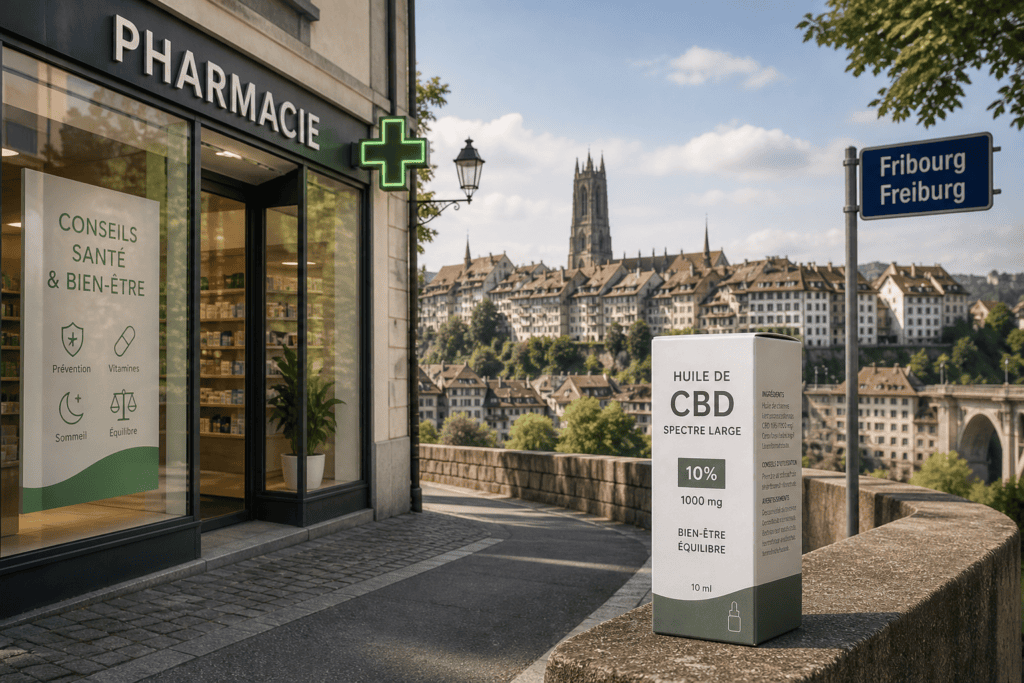
Do not purchase from someone who refuses to identify the product, will not provide a receipt, pressures you to pay in advance or claims that all cannabis is legal in Switzerland. A professional seller should be willing to explain the product category without making exaggerated promises.
3. Check the product, label and laboratory information
Good purchasing decisions depend on more than a strain name or attractive packaging. Before buying CBD or another lawful cannabis-related product, examine the label carefully. It should identify the producer or responsible distributor, the ingredients, the net quantity, recommended use and any relevant warnings. The packaging should not be damaged, tampered with or so vague that you cannot determine what you are buying.
What to look for on a product
- Clear THC and CBD information presented in a comprehensible format.
- A batch or lot number that allows the product to be traced.
- An expiry date or best-before date where applicable.
- Instructions for storage and use.
- Warnings about driving, pregnancy, medication interactions or use by minors.
- Independent laboratory testing that identifies cannabinoid levels and screens for contaminants, where such testing is relevant.
Be cautious with products advertised as “strongest,” “100% safe,” or capable of treating a long list of conditions. Marketing language is not medical evidence. Edibles, oils and vapes can also differ considerably in how quickly effects appear and how long they last. If the label is incomplete or the seller cannot answer basic questions, choose a different source.
4. Treat medical cannabis in Fribourg as a healthcare decision
Searching for medical cannabis in Fribourg is different from looking for a recreational product. Cannabis-based medicines may be considered for particular symptoms or conditions, but suitability depends on your health history, current medicines, age and individual risks. A doctor or pharmacist can help distinguish an approved medicine from a general wellness product sold over the counter.
Prepare for a healthcare discussion by writing down your symptoms, previous treatments, allergies and all prescription or non-prescription medicines you use. Be honest about alcohol, other drugs and any past mental-health symptoms. This information helps a clinician assess possible interactions and adverse effects.
Do not stop an existing treatment or replace it with cannabis without professional advice. Cannabis may cause drowsiness, dizziness, impaired concentration or other unwanted effects. It may also be unsuitable for some people, including those with specific psychiatric, cardiovascular or substance-use risks. If a product is intended to treat a serious condition, claims on a shop website should never replace medical assessment.
5. Consider consumption, storage and travel risks
Finding a lawful product is only part of responsible use. Read the instructions and start cautiously if a healthcare professional or product guidance indicates that use is appropriate. Edibles can take longer to have an effect than inhaled products, so taking more too soon can increase the risk of an unpleasant reaction. Avoid combining cannabis with alcohol or other substances that may increase impairment.
Never drive, cycle in traffic or operate machinery while impaired. A person can feel capable of travelling while still having reduced reaction time and concentration. Keep products in their original packaging and store them securely away from children, pets and anyone who might mistake them for ordinary food.
Travel requires particular care. Do not take cannabis across the Swiss border without checking the rules of both countries and the requirements for the specific product. A product that is lawful in one jurisdiction may be restricted in another. Airport security, customs controls and foreign drug laws can create serious consequences even when the product was purchased legally in Switzerland.
6. Compare service quality, not just price
Price is a poor guide to quality when buying cannabis-related products. An unusually cheap offer may reflect weak testing, old stock, unclear ingredients or an unlawful supply chain. Instead, compare retailers and providers on transparency, customer support and their willingness to explain limitations.
Questions worth asking a seller
- What type of product is this, and what is its stated THC content?
- Who manufactured or distributed it?
- Can you provide batch information and test documentation?
- How should it be stored and used?
- What warnings apply to driving, medication or pregnancy?
- Do you provide a receipt and clear returns or complaint information?
A trustworthy provider will not guarantee medical outcomes or pressure you into buying a larger quantity. They should also respect age requirements and explain when a pharmacist or doctor is the more appropriate source of advice. If the seller avoids questions, encourages concealment or offers to bypass legal requirements, leave the transaction.
Where to get reliable local advice
For general questions about cannabis in Fribourg, begin with official Swiss information and then seek advice suited to your circumstances. Pharmacists can often explain product categories, safe storage and potential interactions. Doctors can assess medical use, while addiction and public-health services can provide confidential support if consumption is becoming difficult to control.
Local availability should not be confused with authorisation. A shop, website or private contact may appear established while still operating outside the legal framework. Check the product and the supply route independently, and keep records of what you purchase if you need to discuss it with a healthcare professional.
Conclusion
Responsible purchasing starts with legality, verification and realistic expectations. For people considering purchasing weed in Fribourg, the safest path is to identify the product category, use an authorised source, inspect the label, obtain medical guidance when appropriate and avoid informal sellers. Take extra care with driving, storage, travel and interactions with medicines or alcohol.
The rules surrounding cannabis can evolve through legislation, court decisions and authorised pilot projects. Check current official guidance before buying, and treat any seller who promises a risk-free or universally legal product with caution. A careful decision protects not only your health but also your legal and financial security.

The Ziklane Editorial Team is dedicated to providing accurate, well-researched, and up-to-date information on cannabis laws and regulations around the world. Our content is created through careful research of publicly available legal sources, government publications, and reputable references to help readers better understand local cannabis legislation. We are committed to delivering educational, factual, and regularly updated content while encouraging readers to comply with the laws of their respective countries and regions.