
People searching for popular marketplaces to buy weed in Spreitenbach should begin with an important distinction: Switzerland does not have a generally open recreational cannabis market. The legal status of a product depends on its THC content, intended use, seller, and whether it is supplied through an approved medical or research framework.
That means there is no reliable, official ranking of “popular” weed marketplaces in Spreitenbach. Instead of relying on anonymous listings, social-media sellers, or informal delivery offers, consumers should focus on legal product categories, traceable retailers, pharmacy channels, and current public guidance. This approach is safer, more accurate, and less likely to lead to confiscated products, scams, or health risks.
Popular marketplaces to buy weed in Spreitenbach: what is actually legal?
In everyday conversation, “weed” can refer to several different products. Swiss rules do not treat all cannabis-related goods in the same way. A low-THC CBD product, a high-THC recreational flower, and prescribed medical cannabis are separate categories with different requirements.
Products containing less than the applicable legal THC threshold may be sold under Swiss rules, provided they comply with product, labeling, consumer-protection, and other regulatory requirements. High-THC cannabis for non-medical adult use is generally not available through ordinary retail marketplaces. Limited scientific pilot projects may operate under specific authorizations, but these are not the same as a normal commercial shop or unrestricted online marketplace.
The Swiss Federal Office of Public Health cannabis information explains the national framework, including restrictions and research-related exceptions. Rules and enforcement can change, so it is sensible to check official information before buying or carrying any cannabis product.
Where residents may encounter legal cannabis products in Spreitenbach
CBD and low-THC retailers
The most visible legal cannabis-related products in Switzerland are usually CBD or other low-THC items. Depending on the product, consumers may find them in specialist shops, selected convenience retailers, online stores, or other authorized sales channels. Availability in Spreitenbach can change, and a retailer that sells one compliant product is not automatically authorized to sell every type of cannabis product.
Before purchasing, check the product label and the seller’s business details. A responsible retailer should clearly identify the manufacturer or importer, ingredients, THC and CBD information, batch details where relevant, and any required warnings. Vague packaging, exaggerated medical promises, or claims that a product is “completely risk-free” are warning signs.
Pharmacies and prescribed medical cannabis
Medical cannabis in Spreitenbach is a healthcare matter rather than a normal retail purchase. Patients should speak with a qualified doctor about whether a cannabis-based medicine is appropriate for their condition. A pharmacy may dispense an approved medicine or a product prepared or supplied under the applicable medical rules, usually following a prescription or other professional authorization.
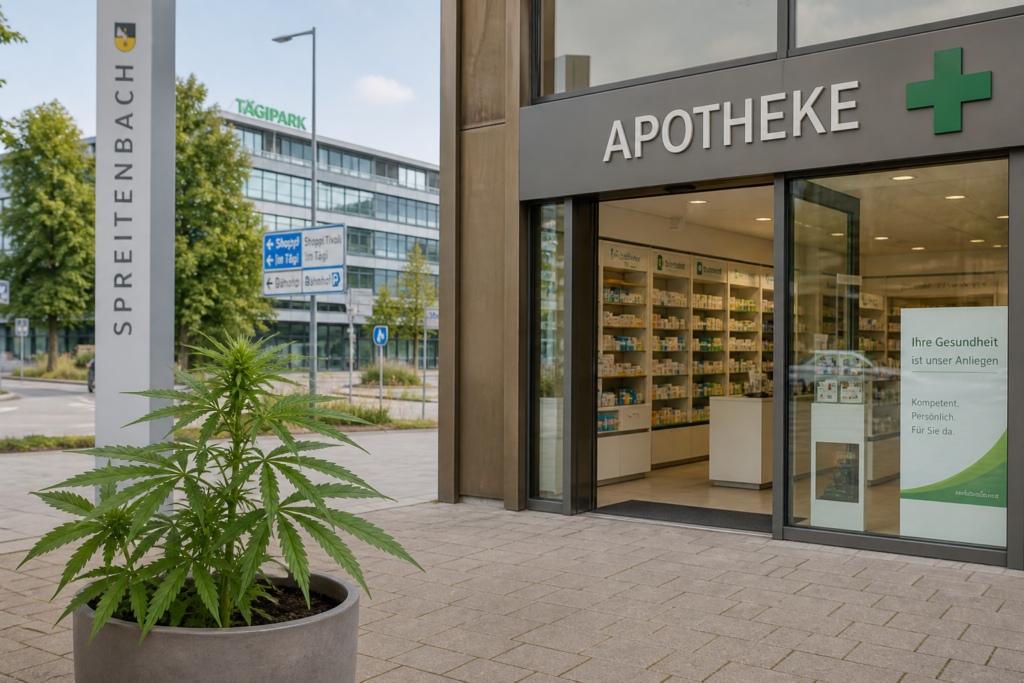
Do not treat a website advertising “medical-grade” flower as equivalent to a pharmacy. Marketing language is not proof of authorization, testing, or clinical suitability. Patients should ask a doctor or pharmacist about the product’s active ingredients, dosage, interactions, driving implications, and safe storage.
Authorized research or pilot projects
Switzerland permits certain cannabis pilot projects under defined scientific and regulatory conditions. Participation is normally limited by location, eligibility rules, registration, and supply arrangements. A project near Spreitenbach may not accept every resident, and participation rules can change.
A genuine project should provide clear information about the responsible institution, eligibility, consent process, product controls, and contact details. Be cautious of online advertisements that use the words “pilot project” without identifying the approved organization behind the program.
How to evaluate an online cannabis marketplace
When comparing cannabis-related websites, the safest question is not which one is most popular, but whether the seller can demonstrate that it operates lawfully and transparently. Popularity claims are easy to manufacture, particularly on social media and encrypted messaging platforms.
- Verify the business identity: Look for a legal company name, physical contact details, customer-service information, and clear terms of sale.
- Check the product category: Confirm whether the item is a compliant low-THC product, a prescribed medicine, or something else. A seller should not blur these categories.
- Look for meaningful product information: Packaging should provide ingredient details, cannabinoid content, batch or lot information where required, and relevant warnings.
- Be skeptical of health claims: Cannabis products should not be presented as guaranteed cures for anxiety, pain, cancer, insomnia, or other conditions.
- Review delivery restrictions: A legitimate seller should explain where it can legally deliver and whether age verification or other checks apply.
- Avoid pressure tactics: Countdown timers, requests for cryptocurrency-only payment, and demands to move immediately to a private chat are common scam indicators.
- Protect personal information: Do not send identity documents, banking credentials, or intimate personal details to an unverified seller.
Independent reviews can be useful for assessing customer service, but they do not prove that a seller is legally authorized. A polished website, Swiss-looking branding, or a large social-media following should never replace regulatory verification.
Understanding cannabis laws in Spreitenbach
Because Spreitenbach is in the canton of Aargau, residents are subject to Swiss federal cannabis rules as well as ordinary commercial, health, traffic, and public-order requirements. Local conditions may affect enforcement and access, but a municipality cannot turn an otherwise prohibited high-THC product into an unrestricted retail item.
Adults should pay particular attention to the difference between possession, purchase, consumption, and driving. Even where a product is sold lawfully, using cannabis before driving can create serious safety and legal consequences. Products may also affect concentration, reaction time, and judgment. Combining cannabis with alcohol or sedating medicines can increase impairment.
The Swiss government’s cannabis guidance on ch.ch is a useful starting point for checking general rules on possession, use, penalties, and exceptions. For an individual legal question, consult a qualified Swiss lawyer or the relevant public authority rather than relying on a seller’s interpretation.
Health and safety checks before buying
Legal status does not automatically make a cannabis product suitable for every person. Cannabis can affect memory, coordination, anxiety, sleep, and heart rate. The risks may be higher for adolescents, people with a personal or family history of psychosis, people with cardiovascular conditions, and anyone taking medicines that affect the central nervous system.
Consumers should be especially careful with edibles and concentrated extracts. Effects from edible products can take longer to appear and may last much longer than expected. Taking more because the first dose feels inactive can lead to an unpleasant or dangerous experience. If a product has no clear strength information, do not assume that it is mild.
Contamination is another concern with unregulated cannabis. Products may contain pesticides, mold, heavy metals, synthetic cannabinoids, or an inaccurate level of THC. A seller’s claim that a product is “organic,” “lab tested,” or “premium” has little value unless the information is supported by credible documentation and a traceable supply chain.
Common red flags in informal marketplaces
Informal sellers often promise discreet delivery, unusually low prices, or products unavailable through ordinary legal channels. These offers may expose buyers to both legal and personal risks. They can also make it impossible to obtain a refund or report a defective product.
- Listings that offer high-THC cannabis with no age, identity, or eligibility checks.
- Unverifiable claims about laboratory testing or medical benefits.
- Photos copied from other websites or product names that change between messages.
- Payment requests using gift cards, cryptocurrency, or direct transfers to unrelated individuals.
- Requests to meet in isolated places or instructions to conceal the transaction.
- Promises that delivery is “risk-free” or that the seller can bypass all Swiss rules.
If a seller pressures you to act quickly, the safest response is to stop communicating. Do not attempt to test an unknown product by consuming it. If you have already taken something and experience severe confusion, chest pain, breathing difficulty, loss of consciousness, or extreme agitation, seek urgent medical help.
A practical buying checklist for Spreitenbach residents
- Identify the product you are looking for and determine whether it is low-THC, medical, or part of an authorized research program.
- Check current Swiss rules through an official government source rather than relying on marketplace advertising.
- Choose a transparent retailer or pharmacy with verifiable business information.
- Read the label, cannabinoid content, warnings, and usage instructions before paying.
- Ask a pharmacist or doctor if you have a medical condition, take prescription medicines, or are considering cannabis for symptoms.
- Keep proof of purchase and the original packaging for as long as you have the product.
- Store cannabis securely away from children, pets, visitors, and anyone who should not use it.
- Never drive or operate machinery while impaired, and avoid mixing cannabis with alcohol or sedatives.
What to do when no suitable marketplace is available
Consumers sometimes find that the product they want is not legally available in Spreitenbach. That is a reason to pause, not to switch to an anonymous seller. For a health concern, arrange a consultation with a doctor. For a low-THC product, ask a reputable retailer or pharmacy about compliant alternatives and how to interpret the label.
If you suspect that a product or seller is violating consumer, health, or drug laws, retain the listing and packaging details and report the concern to the appropriate Swiss authority. Avoid confronting a seller in person. Official advice is more useful than online arguments about whether a marketplace is legitimate.
Conclusion
The search for popular marketplaces to buy weed in Spreitenbach should not be treated like a search for ordinary retail deals. Switzerland distinguishes sharply between compliant low-THC products, prescribed medical cannabis, authorized pilot projects, and prohibited high-THC sales. There is no dependable public list proving that an anonymous marketplace is safe or legal.
The most responsible approach is to verify the product category, use transparent and authorized channels, consult a healthcare professional for medical needs, and check current government guidance. Avoid informal sellers that hide their identity, promise unrestricted high-THC delivery, or make unsupported health claims. A careful, legality-first approach protects your health, your money, and your legal position.

The Ziklane Editorial Team is dedicated to providing accurate, well-researched, and up-to-date information on cannabis laws and regulations around the world. Our content is created through careful research of publicly available legal sources, government publications, and reputable references to help readers better understand local cannabis legislation. We are committed to delivering educational, factual, and regularly updated content while encouraging readers to comply with the laws of their respective countries and regions.