
People searching for Popular marketplaces to buy weed in Krasnokamensk may find websites, social-media accounts, and anonymous listings that appear to offer fast delivery. However, the existence of an online listing does not make a sale lawful, genuine, or safe. In Krasnokamensk, as elsewhere in Russia, unlicensed cannabis sales create serious legal, financial, and health risks.
This guide does not identify sellers or explain how to obtain illegal drugs. Instead, it clarifies what a marketplace can and cannot prove, how to recognize deceptive listings, where to verify current rules, and what safer steps to take if the underlying concern is medical, psychological, or substance-related.
Are there legal weed marketplaces in Krasnokamensk?
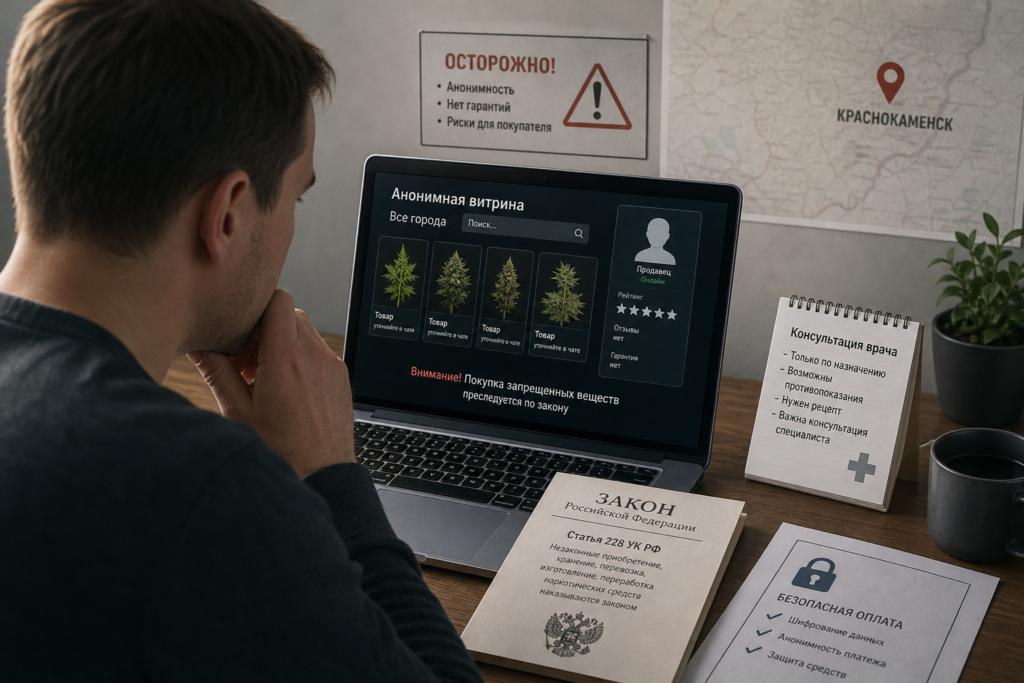
There is no ordinary licensed recreational cannabis marketplace in Krasnokamensk under Russia’s current legal framework. A website or private channel that labels itself a “marketplace” is not automatically authorized to sell, test, transport, or distribute cannabis. Anonymous payment requests, delivery promises, and polished product menus are not substitutes for a government license or a lawful medical supply chain.
The same principle applies to searches for weed in Krasnokamensk. Search results can mix news, discussion forums, scams, and illegal offers. They should not be treated as evidence that a seller is legitimate. Current rules can change in detail, so readers should consult the official Russian legal information portal rather than relying on a seller’s interpretation of the law.
Why anonymous cannabis marketplaces are risky
Unregulated marketplaces remove the safeguards that normally exist in a lawful retail or pharmacy environment. Buyers may have no reliable way to confirm the identity of the seller, the contents of a product, or the conditions under which it was stored. A listing can disappear immediately after receiving payment, leaving no practical route to recover money or report a problem.
Legal exposure
Buying, possessing, transporting, or sharing controlled substances can have serious consequences. The exact outcome depends on the substance, quantity, conduct, and circumstances, so it is unwise to depend on informal claims such as “small amounts are tolerated” or “delivery is not possession.” A seller’s promise of anonymity does not remove the buyer’s legal exposure.
Fraud and payment problems
Scammers often use urgency, limited-time discounts, fake reviews, and requests for irreversible payment methods. Some ask for an additional “insurance,” “customs,” or “verification” payment after the first transfer. These demands are warning signs, not proof that a shipment is delayed.
Unknown product contents
Unlicensed cannabis products may be mislabeled, contaminated, unusually concentrated, or replaced with synthetic substances. Edibles and vape liquids can be especially difficult to assess because the label may not accurately describe the active ingredients. Without independent laboratory testing and a controlled supply chain, appearance and seller assurances are unreliable.
Personal and digital security
Anonymous channels can expose users to phishing, malware, blackmail, extortion, and the collection of identifying information. Requests for passport images, selfies, home addresses, or access to a personal account should be treated as major security risks. Do not share sensitive documents with an unverified seller.
How to evaluate a marketplace claim without making a purchase
If you encounter a listing while researching cannabis in Krasnokamensk, evaluate the claim critically instead of engaging with the seller. The following checks can help identify unreliable information:
- Look for a verifiable legal identity. A legitimate business should be identifiable through official registration and licensing information, not only a nickname or encrypted chat handle.
- Be cautious with guaranteed claims. Promises of “risk-free” delivery, guaranteed potency, or complete legal protection are not credible substitutes for an official authorization.
- Reject pressure tactics. Countdown timers, threats to cancel an order, and demands for immediate payment are common fraud indicators.
- Do not trust testimonials alone. Reviews can be copied, fabricated, or posted by accounts connected to the seller.
- Never test an unknown substance. A small quantity is not a reliable safety strategy when the contents are unidentified.
- Protect your accounts and devices. Avoid downloading files or opening links sent by unknown vendors, and do not provide login codes or payment credentials.
These precautions do not turn an illegal marketplace into a safe one. They are intended to help readers recognize danger and disengage before losing money or exposing themselves to additional harm.
Understanding cannabis laws in Krasnokamensk
Rules affecting controlled substances are national matters, although enforcement and practical procedures may vary by situation. Local internet discussions are therefore a poor source for legal advice. For a reliable starting point, review current legislation through official government resources and seek advice from a qualified lawyer if you are facing a specific legal issue.
Searches for cannabis laws in Krasnokamensk can also produce outdated articles. Check the publication date, distinguish legal text from commentary, and confirm whether a claim applies to possession, cultivation, distribution, medical use, or industrial hemp. These categories are not interchangeable.
It is also important to separate cannabis from regulated medicines that may be prescribed or dispensed under specific rules. A product described online as “medical” is not necessarily an approved medicine. The World Health Organization’s cannabis information provides health context, but it is not a substitute for Russian legal advice or a clinician’s assessment.
Medical concerns and safer alternatives
Someone searching for medical cannabis in Krasnokamensk may be trying to manage chronic pain, sleep problems, anxiety, nausea, or another condition. Buying an untested product online can complicate diagnosis, interact with prescribed medicines, and delay effective treatment. A doctor can assess symptoms, review current medication, and discuss lawful treatment options available in the local healthcare system.
What to discuss with a healthcare professional
- The symptoms you are experiencing, when they began, and how they affect daily life.
- All prescription medicines, over-the-counter products, and supplements you use.
- Any history of anxiety, depression, psychosis, heart problems, or substance dependence.
- Previous treatments, including what helped, what failed, and what caused side effects.
- Whether you need a referral, diagnostic testing, or support from a specialist.
Be honest with a clinician about any substance use. Accurate information helps a professional assess interactions and risks; it does not require you to rely on an anonymous marketplace. If you are worried about dependence or withdrawal, seek medical support rather than attempting to manage the situation with another unverified product.
What to do if you have already contacted a seller
If you have only exchanged messages, stop communicating and avoid sending personal documents or payment details. If you paid money, preserve transaction records, usernames, messages, website addresses, and delivery claims. Do not send additional funds because a seller says they are required to release or insure a parcel.
If your account, card, or device may have been compromised, contact the relevant bank or service provider through its official support channel, change exposed passwords, enable multifactor authentication, and monitor for suspicious activity. If you face threats or extortion, do not negotiate alone; document the messages and contact appropriate law-enforcement or legal-support services.
Do not resell, forward, store, or transport an unknown substance for another person. If a package has arrived and you are unsure what to do, avoid opening or handling it unnecessarily and obtain qualified legal guidance about the appropriate next step.
Questions to ask before trusting online information
- Who published the information, and can the publisher be independently verified?
- Does the page cite current official law or merely repeat anonymous claims?
- Is the content trying to educate readers or pressure them into a transaction?
- Are health claims supported by a recognized medical or public-health source?
- Does the article clearly distinguish legal information from personal opinion?
Readers comparing location-based guides can also review this legal and safety guide to online weed searches in Neryungri for a similar discussion of verification, scams, and risk reduction. The same caution applies: informational content should not be interpreted as a directory of sellers.
Key takeaways for Krasnokamensk readers
- A marketplace listing is not proof of a legal business.
- Anonymous cannabis sales carry legal, fraud, privacy, and product-contamination risks.
- Current rules should be checked through official legal sources, not seller messages or outdated forums.
- Medical concerns are better addressed by a qualified healthcare professional.
- People who have sent money or personal information should preserve evidence and secure their accounts.
Conclusion
Searches for popular marketplaces to buy weed in Krasnokamensk can lead to unsafe and unlawful offers rather than legitimate retail options. The safest approach is not to engage with anonymous sellers, send payment, or trust unsupported claims about legality and product quality. Verify legal information through official sources, protect personal data, and speak with a doctor or qualified lawyer when the issue involves health or legal exposure. Careful research should help you avoid harm, not make an illegal transaction easier.

The Ziklane Editorial Team is dedicated to providing accurate, well-researched, and up-to-date information on cannabis laws and regulations around the world. Our content is created through careful research of publicly available legal sources, government publications, and reputable references to help readers better understand local cannabis legislation. We are committed to delivering educational, factual, and regularly updated content while encouraging readers to comply with the laws of their respective countries and regions.