
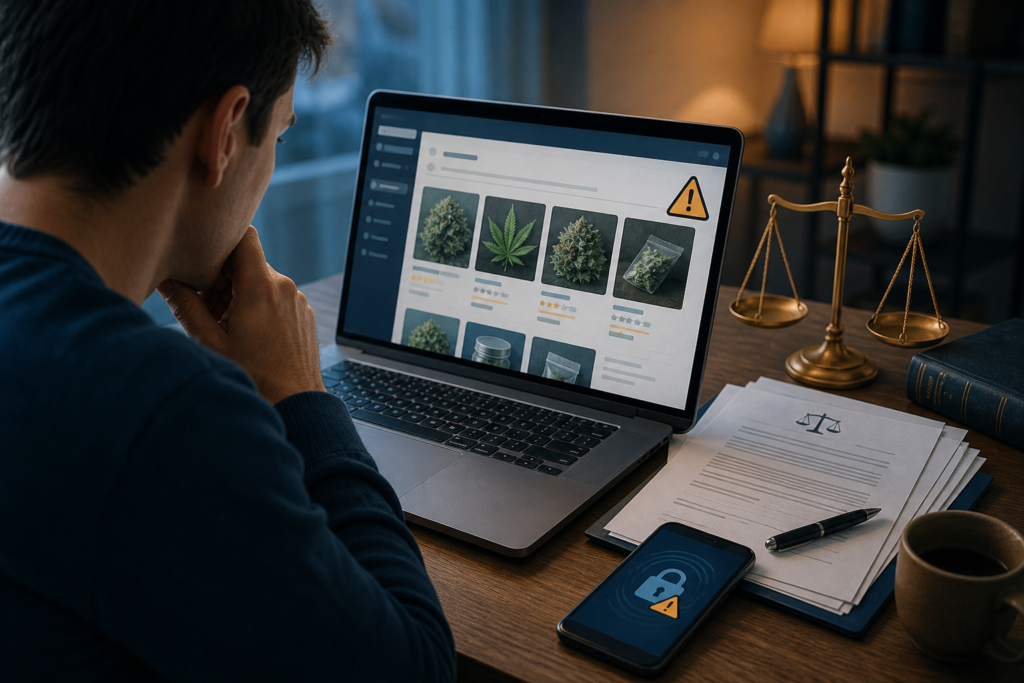
Searching for popular marketplaces to buy weed in Klin can lead to sites and private sellers that create serious legal, financial, and health risks. This guide does not recommend drug marketplaces or help arrange an illegal purchase. Instead, it explains how to assess the legal situation, recognize common marketplace scams, protect personal information, and find safer sources of health advice.
For anyone looking for weed in Klin, the most important point is that a website appearing professional does not make its products or transactions lawful. Listings, reviews, delivery promises, cryptocurrency instructions, and encrypted chats can all be used to make an illegal operation look legitimate.
Popular marketplaces to buy weed in Klin: what shoppers should understand
There is no reliable consumer marketplace model that removes the risks associated with buying prohibited cannabis products. A platform may change its name, domain, payment account, or contact details without notice. Even when a seller claims to offer a “safe” or “medical” product, buyers may have no dependable way to confirm its ingredients, strength, origin, or storage conditions.
In Russia, cannabis and many cannabis-derived substances are subject to strict controls. Rules can apply to possession, purchase, transport, transfer, cultivation, and online facilitation. The precise consequences depend on the substance, quantity, circumstances, and current law. Check the official Russian legal information portal for current legislation rather than relying on marketplace claims or anonymous legal advice.
Local search results do not create a local exception. In other words, searches for cannabis in Klin should be treated as a request for general information, not evidence that a legal retail system exists in the city. A seller’s statement that an item is “not really cannabis,” “for research,” or “legal everywhere” is not a substitute for checking the law.
Why online cannabis listings are especially risky
Fraud and advance-payment schemes
Illegal marketplaces often require payment before a buyer can inspect anything. Common patterns include a seller requesting an additional “customs fee,” “insurance payment,” “verification charge,” or “release fee” after the first transfer. Once the buyer pays, the seller may disappear, demand more money, or threaten to expose the conversation.
Cryptocurrency and anonymous payment methods can make recovery difficult. A polished website, a large number of reviews, or a chat operator who responds quickly does not prove that the seller is genuine. Reviews may be fabricated, copied from other sites, or posted by accounts controlled by the same operator.
Unknown composition and contamination
Products sold online may be mislabeled, unusually potent, contaminated, or replaced with synthetic substances. Packaging can be copied easily, and photographs rarely establish what is inside a product. Edibles and concentrated oils can be particularly difficult to assess because the amount consumed may not correspond to the stated strength.
The World Health Organization’s cannabis information describes health concerns associated with cannabis use, including impairment and the possibility of adverse effects. If someone develops severe confusion, chest pain, seizures, breathing problems, or becomes difficult to wake after taking an unknown substance, seek emergency medical help immediately.
Privacy, blackmail, and device security
Unregulated sellers may request a buyer’s full name, address, identity documents, phone number, or photographs. That information can be used for fraud, extortion, targeted advertising, or harassment. Download links and “verification” files may also contain malware or direct visitors to phishing pages.
Do not send identity documents to an anonymous seller, install an unfamiliar application to complete a transaction, reuse a password on a marketplace account, or provide access to banking and messaging accounts. If personal information has already been shared, change reused passwords, enable multifactor authentication, monitor financial accounts, and preserve messages in case a report is needed.
How to recognize a suspicious marketplace
No checklist can make an illegal purchase safe, but the following warning signs can help people avoid scams and reduce harm:
- Promises of guaranteed delivery, “no risk,” or immunity from law enforcement.
- Pressure to pay immediately or move the conversation to a private channel.
- Requests for a deposit followed by new fees for delivery, release, or protection.
- Claims that a product is legal without identifying the applicable law or providing a verifiable regulatory basis.
- Requests for passports, bank login details, intimate photographs, or unnecessary personal information.
- Unverifiable laboratory certificates, stock photographs, or product descriptions copied across unrelated sites.
- Links that ask users to disable security settings or install unknown software.
- Threats, intimidation, or promises to publish personal details after a payment dispute.
A suspicious seller should not be confronted in person. Save relevant messages and payment records, then report fraud or threats through appropriate official channels. If there is an immediate danger, contact emergency services.
Understanding cannabis laws in Klin
People searching for cannabis laws in Klin may encounter conflicting summaries written for other countries. Rules from Canada, parts of the United States, or European jurisdictions cannot be assumed to apply in Russia. Terms such as “decriminalized,” “medical,” “CBD,” and “hemp” can also have different legal meanings depending on the product and its concentration.
Legal questions may depend on the exact substance, its form, the quantity, the purpose of possession, and the way it was obtained. A general internet article cannot determine how a particular case will be treated. For a real legal concern, consult a qualified lawyer familiar with Russian criminal and administrative law. Do not rely on a marketplace administrator’s interpretation of legislation.
Travel creates additional risks. Carrying a cannabis product across a municipal, regional, or international border can involve rules different from those that apply at home. Never assume that a product purchased legally in another country can be brought into Russia or transported through an airport.
Medical cannabis in Klin: safer ways to seek help
Someone searching for medical cannabis in Klin may be trying to manage pain, sleep problems, anxiety, nausea, or another health condition. Buying an untested product online is not a substitute for diagnosis or treatment. A clinician can review symptoms, current medicines, allergies, mental-health history, and other factors that affect treatment decisions.
Start with a licensed doctor or local medical organization and describe the actual symptoms without assuming cannabis is the answer. Ask about approved treatments, possible interactions, and warning signs that require urgent care. Do not stop prescribed medication or replace it with an online product without medical guidance.
Health information should come from identifiable medical institutions or public-health bodies. Anonymous sellers have a financial incentive to minimize risks, exaggerate benefits, and discourage professional advice. That is especially concerning when a product’s ingredients cannot be independently verified.
What to do if you have already bought an unknown product
- Do not take more because the first dose seemed ineffective. Delayed effects can lead to accidental overconsumption.
- Do not mix the substance with alcohol, sedatives, stimulants, or other drugs.
- Keep the packaging and messages if doing so is safe, but avoid handling leaking or visibly contaminated material.
- Do not drive, cycle in traffic, operate machinery, or supervise children while impaired.
- Tell a trusted person what may have been taken and stay somewhere safe.
- Seek urgent medical help for breathing difficulty, chest pain, seizures, extreme agitation, loss of consciousness, or severe confusion.
When contacting medical professionals, give the most accurate information available about the product, amount, timing, and other substances used. Seeking medical help is more important than trying to hide the purchase.
Safer alternatives to marketplace searches
If the goal is pain relief, sleep support, anxiety care, or information about a prescribed medicine, use a licensed healthcare provider or pharmacist. If the goal is to understand the law, consult official legislation or a qualified lawyer. If the goal is to report a scam, preserve evidence and contact the relevant authorities or payment provider.
Searches for cannabis in Klin can also reflect curiosity rather than an intention to buy. In that case, focus on evidence-based information about impairment, dependence, medication interactions, and mental-health risks. Avoid guides that provide seller names, hidden-market access instructions, delivery routes, or payment workarounds.
Conclusion
There is no dependable way to turn an unregulated online drug listing into a safe and lawful purchase. The apparent convenience of a marketplace can conceal fraud, privacy theft, contaminated products, legal exposure, and medical harm. For residents searching for weed in Klin, the safer approach is to verify the law through official sources, seek healthcare advice from licensed professionals, and avoid anonymous sellers requesting payment or personal information.
When a listing promises certainty, secrecy, and guaranteed delivery, treat those promises as warning signs rather than reassurance. Reliable decisions begin with verified legal and medical information—not with marketplace ratings or promotional claims.

The Ziklane Editorial Team is dedicated to providing accurate, well-researched, and up-to-date information on cannabis laws and regulations around the world. Our content is created through careful research of publicly available legal sources, government publications, and reputable references to help readers better understand local cannabis legislation. We are committed to delivering educational, factual, and regularly updated content while encouraging readers to comply with the laws of their respective countries and regions.