
People searching for online weed retailers in Sosnovy Bor may encounter websites, social-media accounts, encrypted messaging channels, or local advertisements claiming to deliver cannabis. The existence of an advertisement does not mean that a seller is licensed, that the product is genuine, or that purchasing it is lawful. In Russia, the legal risks surrounding cannabis possession, acquisition, transportation, and distribution are serious, and online ordering does not create a legal exception.
This guide explains the situation without directing readers to sellers or helping them obtain illegal drugs. It focuses on how to assess claims, avoid fraud, understand the limits of medical-cannabis information, and find safer sources for health or legal questions in Sosnovy Bor and the Leningrad Region.
Online weed retailers in Sosnovy Bor: what the law means
Russian drug regulations apply to online transactions just as they apply to in-person exchanges. A website or messaging account cannot make an otherwise prohibited product legal. Depending on the substance, quantity, conduct, and circumstances, criminal or administrative consequences may relate to acquisition, possession, storage, transportation, or distribution.
Readers should also avoid assuming that a product described as “natural,” “light,” “CBD,” or “medical” is automatically permitted. The legal status of a product depends on its ingredients, concentration, classification, documentation, and the way it is imported, sold, or used. Product labels and seller promises are not a substitute for an official legal determination.
For primary legal materials and current official publications, consult the Russian official legal information portal. If a situation involves a suspected offense, a lawyer qualified to advise on Russian law is a more appropriate source than an anonymous seller or online forum.
Why location does not change the basic rule
Sosnovy Bor is a specific city, but national drug rules remain the central issue. A local delivery service, a seller based in another city, or a foreign-hosted website does not remove the buyer’s potential exposure under Russian law. Digital communications may also create records that connect a person to an alleged transaction.
That does not mean every online claim is genuine. Many advertisements are designed to collect advance payments, identity documents, cryptocurrency, or personal information. Others may be attempts to draw users into unsafe meetings or obtain compromising messages. Legal risk and fraud risk can exist at the same time.
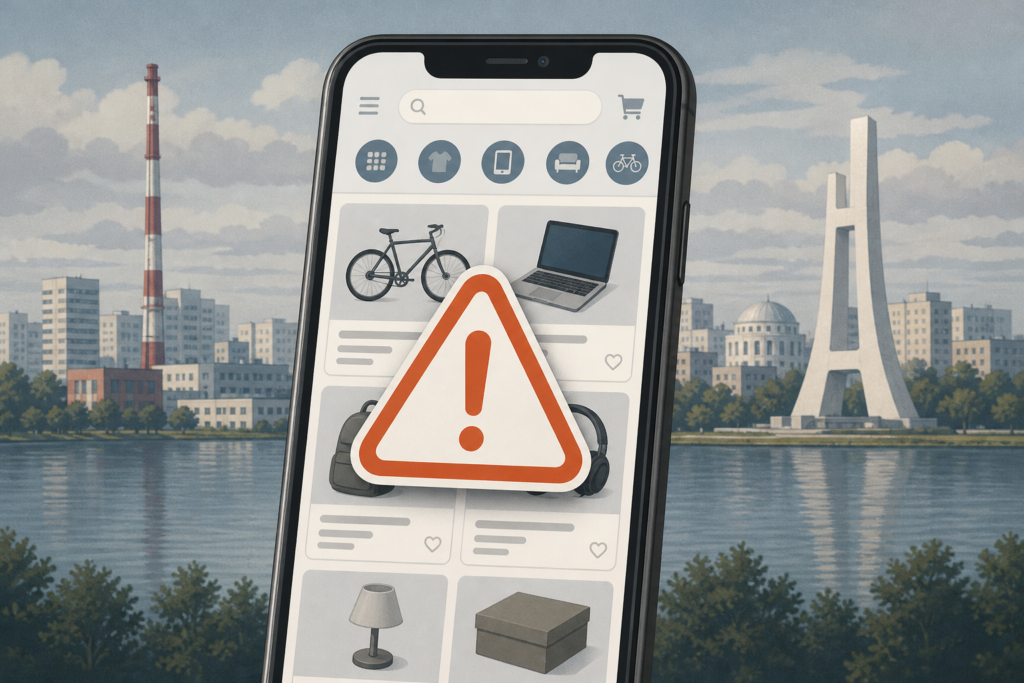
How to recognize risky online cannabis claims
Search results and private channels often use professional-looking branding to imitate a regulated business. A polished site, customer reviews, delivery map, or claims of “quality control” is not proof of authorization. Treat any seller offering prohibited drugs as a high-risk source.
- Guaranteed anonymity: Promises that no transaction can be traced are misleading and should be treated as a warning sign.
- Advance payment pressure: Urgent requests for cryptocurrency, gift cards, or transfers are common features of scams.
- Unverifiable licenses: A logo, certificate image, or registration number is not reliable unless it can be confirmed through an official authority.
- Requests for identity data: Passport scans, selfies, bank details, and access codes should never be sent to an unknown seller.
- Health guarantees: Claims that cannabis will cure anxiety, pain, cancer, or another condition are not a substitute for medical evaluation.
- Pressure to meet privately: A request to visit an unfamiliar location creates personal-safety risks in addition to legal concerns.
What to do if a site has already been contacted
Do not send additional money, identification, passwords, or one-time security codes. Preserve messages, payment records, usernames, and website addresses if you may need to report fraud. Do not arrange a meeting to recover money or confront a seller. Contact your bank or payment provider promptly if financial information was exposed, and seek advice from local law-enforcement or legal professionals when appropriate.
If someone threatens to publish private information or demands more money, treat the situation as potential extortion. Keep communications intact rather than deleting evidence, and use official reporting channels. Avoid reposting the seller’s contact details, because sharing them can expose other people to the same risk.
Understanding cannabis in Sosnovy Bor from a health perspective
Information about cannabis in Sosnovy Bor should be separated into two questions: whether a product is legally available and whether it is medically appropriate. Unregulated products may have unknown potency, contamination, or ingredients that are not shown on the label. The user may also have no reliable information about interactions with prescription medicines, alcohol, or existing mental-health conditions.
Cannabis can affect attention, reaction time, memory, coordination, and judgment. Some people experience anxiety, panic, paranoia, or other adverse mental effects. Driving or operating machinery after using an intoxicating substance can endanger the user and others. Adolescents, pregnant people, and those with a personal or family history of certain psychiatric conditions may require particular caution and professional advice.
The World Health Organization’s cannabis information provides a useful overview of health effects and public-health considerations. It is more dependable than promotional content from a retailer, influencer, or anonymous channel.
Medical cannabis claims require careful checking
Searches for medical cannabis in Sosnovy Bor may produce advertisements for oils, flowers, capsules, or imported products. A product marketed as medical is not necessarily approved, tested, or suitable for a particular patient. Nor does an online consultation with a seller replace an examination by a licensed clinician.
People managing chronic pain, epilepsy, nausea, sleep problems, anxiety, or another condition should discuss evidence-based options with a doctor. Bring a list of current medicines and supplements, including products purchased online. A clinician can consider diagnosis, interactions, contraindications, and treatments that are lawfully available through the healthcare system.
What cannabis laws in Sosnovy Bor mean for buyers and sellers
Searching for cannabis laws in Sosnovy Bor can be confusing because online pages often mix Russian rules with information from countries where regulated cannabis markets exist. A foreign dispensary model, age limit, prescription system, or CBD rule cannot be assumed to apply in Russia.
The same caution applies to small amounts, personal use, or products described as gifts. Legal consequences depend on facts that an online post cannot reliably assess, including the substance, quantity, evidence, and conduct involved. Anyone facing a search, seizure, questioning, or charge should obtain individualized legal advice and should not rely on a seller’s interpretation of the law.
Questions to ask before trusting legal information
- Is the source an official government body, recognized medical institution, or qualified legal professional?
- Does the page identify the jurisdiction and date of the information?
- Does it distinguish between possession, use, sale, transport, import, and cultivation?
- Does it explain uncertainty instead of promising guaranteed safety?
- Can the claim be checked against an official legal publication or healthcare source?
Safer alternatives to online purchasing
If the underlying concern is pain, sleep, stress, or another health problem, start with a licensed healthcare provider rather than a retailer. A doctor can assess the cause, recommend lawful treatment, and identify warning signs that need urgent care. Pharmacies and clinics can also explain which products are legitimately available and how they should be used.
If the concern is a possible scam, save evidence and report it through appropriate official channels. If there is an immediate threat, suspected poisoning, severe confusion, chest pain, seizure, unconsciousness, or difficulty breathing, seek emergency medical assistance immediately. Do not wait for an online seller to provide instructions.
For families and educators, a practical approach is to discuss privacy, coercion, counterfeit products, and the risks of unknown substances without normalizing contact with illegal sellers. Young people should know that “delivery” and “anonymous” are marketing claims, not safety guarantees.
Conclusion
There is no reliable basis for treating online weed retailers in Sosnovy Bor as ordinary local shops. Online listings may involve illegal activity, fraud, privacy abuse, unsafe products, or several of these risks at once. A local address, professional design, positive review, or medical-sounding claim does not establish legality or quality.
The safer path is to avoid purchasing through anonymous channels, verify legal information through official sources, and speak with a qualified doctor or lawyer for personal questions. Understanding the distinction between an advertisement and a legitimate, regulated service can help residents of Sosnovy Bor protect their health, money, privacy, and legal position.

The Ziklane Editorial Team is dedicated to providing accurate, well-researched, and up-to-date information on cannabis laws and regulations around the world. Our content is created through careful research of publicly available legal sources, government publications, and reputable references to help readers better understand local cannabis legislation. We are committed to delivering educational, factual, and regularly updated content while encouraging readers to comply with the laws of their respective countries and regions.