
Searching for online retailers selling weed in Funadhoo can produce websites, social media accounts, messaging groups, and informal delivery offers. However, an online listing does not prove that a seller is licensed, that a product is genuine, or that a purchase is legal. In the Maldives, cannabis-related activity can carry serious legal consequences, while unregulated products may create significant health and financial risks.
This guide explains how to assess online claims, why location matters, what warning signs to look for, and which lawful alternatives may be more appropriate. It is not a directory of sellers and does not help arrange a cannabis purchase.
What to know about cannabis in Funadhoo
Funadhoo may refer to different localities, so readers should confirm the specific island or area involved when checking local requirements. That geographic detail does not remove the need to follow Maldivian national law. A seller operating through a website, social media page, or messaging app is still subject to applicable rules on controlled substances, importation, possession, supply, and payment transactions.
People often assume that an online storefront is legitimate because it displays prices, product photographs, customer reviews, or delivery promises. These features are easy to copy. A polished page is not the same as a government licence, laboratory testing, or legal authorization to sell cannabis.
For current information, consult the official Maldives Customs Service website for relevant customs and import guidance. Rules can change, and questions involving a particular shipment or product should be directed to the appropriate Maldivian authority or a qualified local lawyer.
Are online retailers selling weed in Funadhoo legal?
There is no reliable basis for assuming that an online cannabis retailer serving Funadhoo is lawful. A business may claim to sell “herbal,” “medical,” or “CBD” products, but those descriptions do not automatically determine the legal status of the contents. A product can contain controlled cannabinoids, inaccurate ingredients, or more THC than its label suggests.
Legal status can depend on several factors, including the substance involved, its concentration, the source country, the intended use, the shipping route, and whether the seller has a recognized authorization. Importing a product from another country may create additional customs and criminal-law concerns. Ordering small quantities does not necessarily make the transaction low risk.
Anyone considering a cannabis product for a medical condition should avoid relying on a seller’s claims. A healthcare professional can discuss approved treatments, possible interactions, and safer options. The World Health Organization’s cannabis information provides general health context, but it does not replace advice from a clinician familiar with the patient’s circumstances.
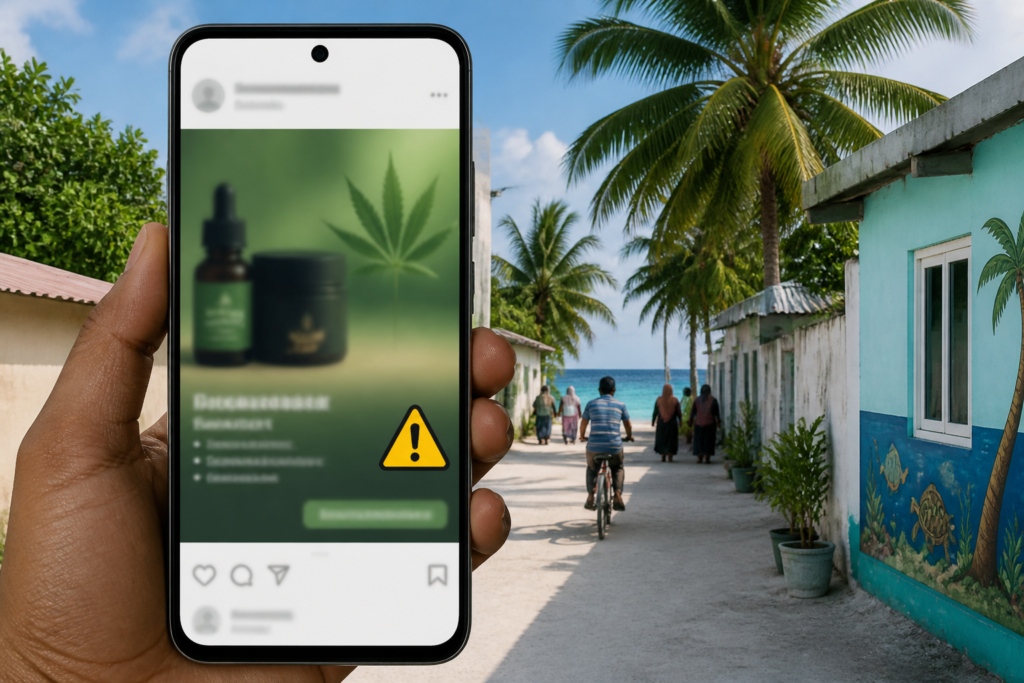
Why online weed delivery claims deserve caution
Unverified products
Unregulated cannabis products may have no dependable testing for potency, contamination, pesticides, heavy metals, solvents, or microbial growth. Edibles can be especially difficult to assess because their contents may be unevenly distributed or mislabeled. A product described as low strength may still cause impairment or an unpleasant reaction.
Scams and payment loss
Informal sellers commonly request advance payment through methods that offer limited protection. After receiving funds, a fraudulent account may disappear, demand extra “customs” or “delivery” fees, or use a fake tracking number. Sharing an identity document, address, bank details, or one-time security code can expose a buyer to identity theft.
Privacy and personal safety
Contacting an unverified seller reveals more information than many people realize. A conversation can expose a phone number, social media profile, home address, workplace, payment history, and personal health details. Some sellers may threaten to disclose messages or photographs when a customer refuses to pay additional money.
Legal exposure
Online communication, payment records, parcel labels, and delivery arrangements can all create evidence of a transaction. Even if a seller claims that a product is legal, that promise does not protect the buyer. The safest approach is not to place an order when the legal position is unclear.
Warning signs of an unsafe cannabis listing
Consumers should treat several patterns as strong reasons to stop engaging with a seller. No single sign proves fraud, but multiple signs indicate a serious risk.
- Promises of guaranteed delivery despite customs or legal restrictions.
- Requests for cryptocurrency, gift cards, cash deposits, or unusual transfer methods.
- Pressure to pay immediately or keep the transaction secret.
- No verifiable business address, licence details, terms of sale, or customer-support process.
- Medical claims such as “cures anxiety,” “replaces all medication,” or “has no side effects.”
- Product images without a batch number, ingredient list, expiry date, or independent testing information.
- Reviews that appear copied, overly similar, or impossible to verify.
- Requests for passport scans, passwords, banking credentials, or security codes.
- Promises to avoid detection or bypass customs inspections.
How to verify a cannabis-related claim without making a purchase
Verification should begin with the relevant authority, not with the seller. Check whether the business name and licence can be confirmed through an official government register. If no public register exists, contact the responsible authority directly using contact details published on its official website.
Be cautious with screenshots of certificates. A document may be expired, altered, issued to another company, or unrelated to the product being advertised. A laboratory report also needs careful review: the company name, product batch, test date, testing methods, and measured ingredients should match the item for sale. Even a genuine report does not establish that importing or possessing the product is permitted in Funadhoo.
Search results and social media recommendations are useful for finding claims, not proving them. Independent reviews may also be manipulated. The strongest evidence comes from an identifiable regulator, a current licence, transparent business information, and clear compliance with local law.
Medical cannabis in Funadhoo: safer questions to ask
People sometimes search for medical cannabis in Funadhoo after hearing that cannabis may help with pain, sleep, nausea, anxiety, or other conditions. Those claims vary widely in quality, and cannabis can cause adverse effects or interact with prescription medicines. It may also be unsuitable for people with certain mental-health, cardiovascular, pregnancy-related, or age-related risk factors.
A safer conversation with a healthcare professional should cover:
- The condition being treated and the evidence-based options already available.
- Current medicines, supplements, allergies, and relevant medical history.
- Possible impairment, dependence, withdrawal, and mental-health effects.
- Whether a regulated medicine is available through a lawful clinical pathway.
- What to do if a product has already been consumed and symptoms develop.
Do not stop prescribed treatment or replace it with an internet product without medical guidance. If someone experiences severe confusion, chest pain, breathing problems, a seizure, loss of consciousness, or extreme agitation after consuming a substance, seek emergency medical help immediately.
What to do if an online seller has already been contacted
If no payment or personal information has been shared, stop communicating and avoid opening additional files or links. Keep the account name and messages only if they may be useful for reporting, but do not threaten the seller or attempt to investigate them personally.
If money has been sent, contact the bank or payment provider promptly and ask whether the transaction can be stopped or flagged. Change passwords if they were reused, enable multi-factor authentication, and monitor accounts for unusual activity. If identity documents were shared, ask the relevant institution about protective steps.
When reporting a suspected scam or illegal offer, provide factual details such as usernames, phone numbers, payment instructions, dates, and screenshots. Avoid forwarding the product to other people or reposting the seller’s advertisement, because doing so can increase exposure and may create additional legal concerns.
Lawful alternatives to informal weed delivery
For general wellbeing, use established healthcare services, pharmacies, and qualified clinicians rather than anonymous online sellers. For a non-medical reason, consider legal products and activities that do not involve controlled substances. If the concern is pain, sleep, stress, or another persistent symptom, obtaining a proper assessment may identify an underlying condition and a safer treatment plan.
Visitors and residents should also remember that travel, accommodation, and employment settings may have their own rules about controlled substances. Never assume that a product permitted in another country can be carried into the Maldives or used locally.
Conclusion
Online listings for weed in Funadhoo should be approached as unverified claims, not as evidence of a lawful retail market. The main risks include criminal liability, customs problems, scams, privacy loss, contaminated products, and unsafe medical advice. Before responding to any seller, check official information, avoid sending money or identity documents, and seek qualified legal or medical guidance when necessary. When the legality or safety of a cannabis product is uncertain, not purchasing it is the most responsible choice.

The Ziklane Editorial Team is dedicated to providing accurate, well-researched, and up-to-date information on cannabis laws and regulations around the world. Our content is created through careful research of publicly available legal sources, government publications, and reputable references to help readers better understand local cannabis legislation. We are committed to delivering educational, factual, and regularly updated content while encouraging readers to comply with the laws of their respective countries and regions.