
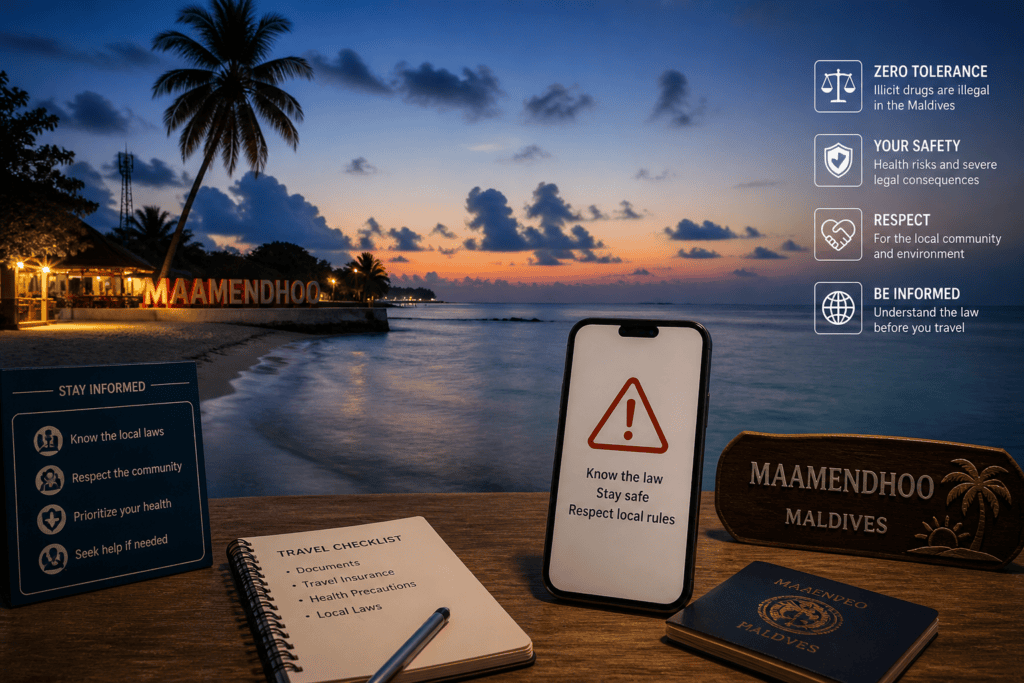
People searching for buy weed in Maamendhoo may expect to find a list of local sellers, delivery services, or online marketplaces. However, there is no reliable, legal marketplace that visitors or residents can use to purchase recreational cannabis in Maamendhoo. Cannabis possession, use, importation, and distribution can carry serious legal consequences in the Maldives.
This guide does not provide seller names, contact details, prices, delivery routes, or instructions for obtaining illegal drugs. Instead, it explains why marketplace listings are risky, how Maldives law affects cannabis in Maamendhoo, what warning signs to recognize, and where to seek legitimate health or legal guidance.
Buy Weed in Maamendhoo: Is There a Legal Marketplace?
There is no established legal retail cannabis market in Maamendhoo. Unlike jurisdictions that license dispensaries, the Maldives does not provide a general recreational cannabis system where adults can legally purchase marijuana from approved shops. Social-media accounts, messaging groups, informal contacts, and websites claiming to offer weed locally should not be treated as regulated businesses.
A listing may use professional-looking branding, product menus, delivery promises, or customer reviews, but those features do not prove that the seller is licensed. An unregulated marketplace also provides no dependable way to verify the substance, its strength, its contamination risk, or the identity of the person selling it.
For current public-safety information, consult the official Maldives Police website. It is a more dependable source than anonymous marketplace posts or advice shared in private chat groups.
Why Weed in Maamendhoo Marketplace Listings Are Risky
Legal exposure
Drug laws in the Maldives are strict, and enforcement can apply to possession, consumption, sale, transportation, and importation. The consequences can be especially serious for visitors who assume that cannabis rules are similar to those in another country. A small quantity is not automatically safe, and a claim that a product is “for personal use” does not make possession lawful.
Travelers should also remember that airports, ports, luggage, parcels, and maritime transport do not create exceptions. Bringing cannabis into the country, moving it between islands, or asking someone to transport it can create additional legal risk. Anyone facing a legal problem should seek qualified local legal advice rather than relying on a seller’s assurances.
Unknown contents
Unregulated cannabis may contain pesticides, mold, heavy metals, synthetic cannabinoids, or other substances. Edibles are particularly difficult to judge because the packaging may be inaccurate and the active ingredient may be unevenly distributed. A product described as cannabis may not contain cannabis at all.
Unknown potency can also lead to accidental overconsumption. Effects may include panic, confusion, vomiting, impaired coordination, rapid heart rate, or severe anxiety. Mixing cannabis with alcohol, sedatives, or other drugs can increase impairment and make it harder to recognize a medical emergency.
Fraud and personal-security threats
Illegal marketplace scams often begin with an unusually low price, urgent payment demands, or a promise of discreet delivery. A seller may request advance payment through a difficult-to-reverse method, then ask for additional fees for transport, clearance, or “security.” Some accounts are created solely to collect money or personal information.
Sharing your name, passport details, hotel information, island location, phone number, photographs, or payment credentials with an unknown seller can create risks beyond the drug transaction. Blackmail, identity theft, harassment, and theft are possible when a conversation contains sensitive messages or images.
Cannabis in Maamendhoo and Maldivian Law
The legal status of cannabis is determined by Maldivian law, not by online claims, local rumors, or the policies of a traveler’s home country. The fact that cannabis is permitted or decriminalized elsewhere does not make it lawful in Maamendhoo or anywhere else in the Maldives.
Rules can also apply to products that appear different from traditional marijuana. Oils, resins, vape cartridges, edibles, concentrates, and plant material may all create legal issues. A product labeled “CBD,” “hemp,” or “natural” should not be assumed to be permitted without checking current official guidance.
For official customs-related information before traveling, use the Maldives Customs Service website. If you are carrying prescription medicine, confirm documentation and import requirements with the relevant authorities before departure. Do not rely on a seller, social-media account, hotel employee, or forum commenter to interpret the rules.
How to Recognize a Suspicious Cannabis Marketplace
There is no risk-free way to use an illegal marketplace, but recognizing warning signs can help people avoid scams and protect their personal safety. Treat the following claims as red flags:
- A seller guarantees that police, customs, or local authorities will not discover the transaction.
- The account has no verifiable business identity, physical address, licensing information, or transparent terms.
- The seller demands full payment before providing any trustworthy information.
- Payment must be made through cryptocurrency, gift cards, anonymous transfers, or another difficult-to-reverse method.
- The seller pressures you to act quickly or claims that stock is available only for a few minutes.
- Product images appear copied, overly polished, or inconsistent across different accounts.
- The seller asks for passport photographs, intimate images, hotel-room details, or access to your accounts.
- The person proposes a meeting in an isolated location or changes the meeting point repeatedly.
- The seller claims that a product is legal because it is “medical,” “organic,” or “CBD” without official documentation.
These signs are not merely indicators of poor customer service. They can point to fraud, coercion, theft, or involvement in a criminal supply chain.
Medical Cannabis in Maamendhoo: What Patients Should Do
Someone seeking cannabis for pain, sleep, anxiety, nausea, or another health concern should speak with a qualified medical professional rather than an unlicensed seller. A clinician can review symptoms, identify underlying conditions, check for drug interactions, and recommend treatments that are lawful and medically appropriate.
Do not stop a prescribed medicine and replace it with an unknown cannabis product. This is particularly important for people who are pregnant, under 18, living with a heart condition, taking psychiatric medication, or managing epilepsy or other chronic illnesses.
If you already used an unknown product
Move to a calm, safe place and avoid driving, swimming, boating, climbing, or operating machinery. Do not take more of the product and do not mix it with alcohol or other drugs. Keep any packaging available for medical staff if an emergency occurs.
Seek urgent medical help if there is chest pain, trouble breathing, a seizure, loss of consciousness, severe confusion, extreme agitation, persistent vomiting, or a person who cannot be awakened. Do not leave someone alone if they are severely impaired. Local emergency and health services are more appropriate sources of help than the seller who supplied the product.
Safer Alternatives for Visitors and Residents
If the goal is relaxation, sleep, pain relief, or managing stress, consider legal and lower-risk options that do not involve an unregulated marketplace. Depending on the need, these may include:
- Making an appointment with a licensed doctor or clinic.
- Asking a pharmacist about lawful over-the-counter products and possible interactions.
- Using prescribed treatment exactly as directed.
- Trying non-drug approaches such as hydration, regular meals, gentle exercise, breathing exercises, or a consistent sleep routine.
- Speaking with a qualified counselor or mental-health professional about anxiety, trauma, or substance use.
- Contacting local authorities for clarification before carrying any medicine into or around the Maldives.
Visitors should also avoid accepting packages or luggage from people they do not know. A request to transport an unknown parcel between islands, through a port, or to an airport can expose the carrier to serious consequences.
What to Do If a Seller Contacts You
Do not send money, personal documents, intimate images, or location details. Save relevant messages only if doing so is safe, then block the account and report it through the platform. If there has been a threat, extortion attempt, theft, or immediate danger, contact local law-enforcement or emergency services.
If you are worried that your own substance use is becoming difficult to control, confidential support from a healthcare professional is a safer starting point than another online seller. A clinician can help without assuming that an anonymous product is safe or accurately labeled.
Conclusion
Searches for weed in Maamendhoo may produce social-media accounts, private contacts, or supposed delivery services, but these are not proof of a legal or trustworthy marketplace. Purchasing cannabis in the Maldives can involve significant legal, health, fraud, and personal-safety risks.
The safest approach is not to use unregulated sellers, carry cannabis across borders or between islands, or trust claims that a product is automatically legal because it is labeled medical, CBD, or hemp. For current rules, consult official Maldivian authorities; for health concerns, speak with a qualified medical professional.

The Ziklane Editorial Team is dedicated to providing accurate, well-researched, and up-to-date information on cannabis laws and regulations around the world. Our content is created through careful research of publicly available legal sources, government publications, and reputable references to help readers better understand local cannabis legislation. We are committed to delivering educational, factual, and regularly updated content while encouraging readers to comply with the laws of their respective countries and regions.