
Finding reliable information about cannabis can be difficult in a smaller city such as Aguaytía. The safest approach is not to rely on anonymous sellers, social-media advertisements, or informal delivery offers. Instead, begin by understanding Peru’s rules, confirming whether a medical route applies to your situation, and checking that any product comes from a lawful and verifiable source. These recommendations for purchasing weed in Aguaytía, Peru are designed to reduce legal, health, financial, and privacy risks without directing readers to unlicensed sellers.
Aguaytía is in the Ucayali region, where availability of specialized health services and regulated cannabis products may be more limited than in Lima or other larger cities. That makes advance verification especially important. If a product, seller, or delivery service cannot clearly explain its legal status, product identity, and safety information, treat that uncertainty as a reason not to proceed.
Start with cannabis laws in Aguaytía
Local geography does not create a separate cannabis market or a different set of national rules. Cannabis laws in Aguaytía are governed primarily by Peru’s national legal and health framework. Rules can distinguish between medical use, possession, cultivation, transport, sale, and distribution. A claim that cannabis is “legal everywhere” or that a seller is protected because a product is described as “natural” should not be accepted without verification.
Before spending money, consult current information from Peru’s Ministry of Health through its official Ministry of Health information portal. For questions involving registration, authorized products, or pharmaceutical oversight, the Directorate General of Medicines, Supplies and Drugs, known as DIGEMID, is another appropriate starting point through its official website. These sources are more dependable than screenshots, chat messages, or copied legal summaries.
Separate medical access from recreational offers
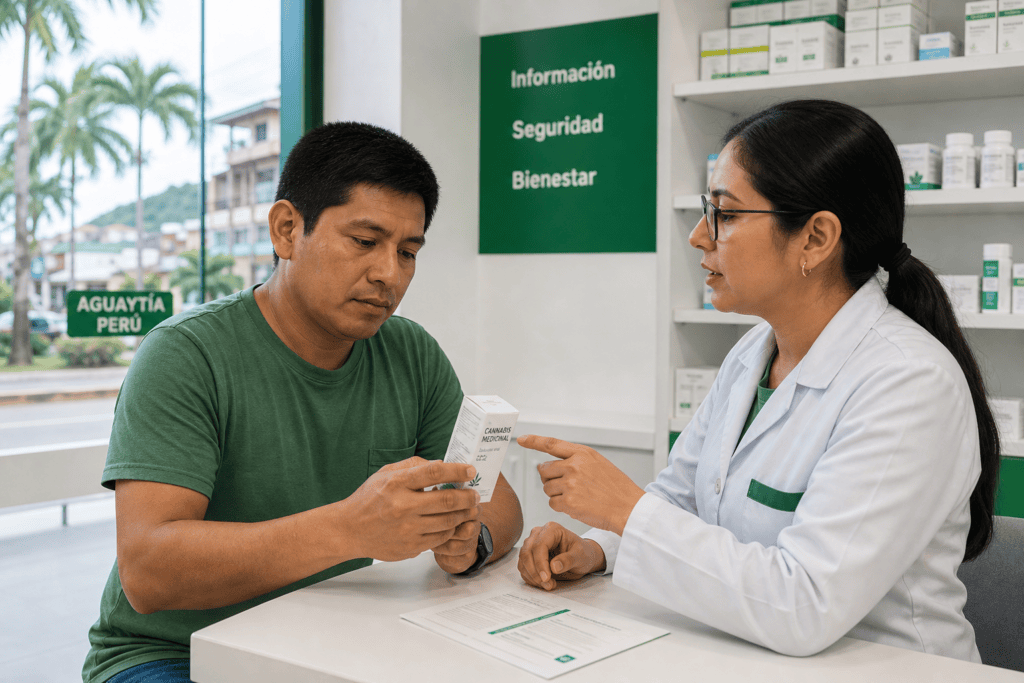
Medical cannabis in Aguaytía should be approached through a qualified health professional and a lawful supply channel. A consultation can help determine whether cannabis-based treatment is appropriate, what formulation may be relevant, and whether another treatment would be safer or better supported. A seller’s recommendation is not a substitute for diagnosis, prescribing guidance, or follow-up care.
Recreational offers raise different legal and safety questions. Avoid assuming that a product is lawful simply because it is sold openly, delivered to a residence, or described as a low-risk strain. If the legal status is unclear, the responsible choice is to pause and seek official guidance.
How to assess a potential source
When researching weed in Aguaytía, focus on verifiable information rather than persuasive marketing. A responsible provider should be willing to identify the business or institution, explain what the product is, and provide appropriate documentation. Refusal to answer basic questions is a warning sign, especially when combined with pressure to pay quickly.
- Identity: Look for a real business name, physical address, working contact details, and a traceable customer-service channel.
- Legal basis: Ask what authorization or medical framework permits the sale or supply of the product.
- Product details: Check whether the label identifies ingredients, cannabinoid content, batch information, expiration date, and storage instructions.
- Testing: Prefer products supported by credible laboratory or quality documentation rather than unsupported potency claims.
- Receipt: A formal receipt or other transaction record is safer than an anonymous cash handoff.
- Professional guidance: For medical products, confirm that a licensed clinician or pharmacist can answer questions about use and risks.
These checks do not guarantee that a source is legitimate, but they can reveal obvious inconsistencies. A polished logo, large social-media following, or positive comments is not proof of authorization or product quality.
Red flags when considering cannabis in Aguaytía
Informal cannabis sales often rely on urgency and secrecy. Be cautious if a person claims to have a “special batch” that must be paid for immediately, refuses to provide a product label, or changes the agreed price after receiving a deposit. Requests for cryptocurrency, gift cards, unusual transfer methods, or identity documents unrelated to a lawful transaction also deserve scrutiny.
- Promises of guaranteed effects or unusually high potency.
- No ingredient list, batch number, expiration date, or dosage information.
- Pressure to meet in an isolated place or change the meeting location repeatedly.
- Offers to conceal products in parcels or transport them across regional boundaries.
- Requests for a full advance payment before any verifiable business details are supplied.
- Medical claims that the product can cure serious illnesses or replace prescribed treatment.
- Packaging that appears copied, damaged, unsealed, or inconsistent with the seller’s description.
Do not attempt to test an unknown product by taking a large amount. Cannabis products can vary substantially in strength, and unregulated products may contain unexpected substances. If you suspect a scam or encounter threats, preserve messages and payment records and contact the relevant authorities rather than confronting the person.
Product and health checks before use
Product quality matters as much as the source. Flower, oils, capsules, edibles, and vaporizer products can differ in onset, duration, concentration, and risk. A package that does not state the active ingredients or serving information makes it difficult to use safely. Products with visible mold, unusual chemical odors, leaking containers, broken seals, or unexplained residue should not be used.
Consider personal health factors
Speak with a doctor or pharmacist before using cannabis if you are pregnant or breastfeeding, under 18, have a history of psychosis or severe anxiety, or take medicines that cause sedation. Extra caution is also appropriate for people with heart conditions, liver disease, or a history of substance-use problems. Cannabis can impair attention and coordination, so do not drive, operate machinery, or combine it with alcohol or other sedating substances.
If severe confusion, chest pain, difficulty breathing, loss of consciousness, or a serious allergic reaction occurs, seek urgent medical care. Keep products away from children and pets, and store them in their original packaging where others cannot mistake them for food or medicine.
Buying, payment, and privacy precautions
For any lawful purchase, use a payment method that creates a clear record and avoid sending more personal information than necessary. Do not share passwords, banking codes, passport scans, or copies of identification with an unknown contact. A legitimate health or pharmacy process should explain why information is required and how it will be handled.
Check the total cost before agreeing to a transaction, including consultation fees, delivery charges, and any applicable taxes. Be wary of unusually cheap offers, because low prices can reflect counterfeit products, stolen goods, diluted formulations, or an attempt to obtain additional payments later. Keep receipts, packaging photographs, and written product information in case you need to report a problem to a health authority or payment provider.
Transport and delivery considerations
Delivery does not automatically make a cannabis transaction lawful. Ask how the provider handles packaging, identification, storage, and delivery boundaries, but do not accept instructions to hide a product or bypass a checkpoint. Carrying cannabis between cities or regions can create additional legal and practical risks, even when the original purchase was presented as medical.
If a lawful provider cannot explain its delivery process clearly, use a local health professional or official health channel to confirm the correct procedure. Avoid receiving unlabeled packages, accepting products for another person, or allowing a stranger to use your address for a transaction. These precautions protect both your privacy and your legal position.
What to do if regulated access is limited
Residents searching for cannabis in Aguaytía may find that local availability is limited. That does not make informal purchasing a safer alternative. Start with a local clinic, hospital, licensed doctor, or pharmacist and ask whether they can explain lawful options or refer you to an authorized service. If a product is unavailable locally, ask about legitimate alternatives rather than arranging an unverified shipment.
It can also help to prepare for a medical consultation by recording symptoms, current medicines, previous treatments, allergies, and the goals of care. This gives the clinician useful context and reduces the chance of making a decision based solely on online claims.
For broader context, readers may also find it useful to compare the safety principles in this legal and safety guide to purchasing weed in Huarmey and the practical checks discussed in this guide to evaluating weed vendors in San Ramón. These articles should be treated as general educational material, not proof that a particular seller is authorized in Aguaytía.
A practical decision checklist
Before proceeding with any cannabis-related purchase, work through the following checklist:
- Confirm what type of product you are considering and why you want it.
- Check the current national legal and health requirements.
- Ask a qualified clinician or pharmacist about medical suitability and interactions.
- Verify the provider’s identity, authorization, location, and transaction records.
- Inspect the label, packaging, ingredients, batch information, and expiration date.
- Reject offers involving urgency, secrecy, unexplained payments, or unsupported medical promises.
- Plan safe storage and avoid driving or mixing the product with alcohol or sedatives.
- Keep receipts and report suspected fraud, unsafe products, or threats through appropriate channels.
Conclusion
The most reliable recommendations for purchasing weed in Aguaytía, Peru are centered on legality, professional advice, verifiable sourcing, and personal safety—not on finding an anonymous seller. Aguaytía residents should be especially cautious about unlabelled products, informal delivery services, advance-payment scams, and claims that national rules do not apply locally. When cannabis is being considered for health reasons, begin with a qualified professional and official information. If a source cannot demonstrate who it is, what it sells, and why the transaction is lawful, walking away is the safest decision.

The Ziklane Editorial Team is dedicated to providing accurate, well-researched, and up-to-date information on cannabis laws and regulations around the world. Our content is created through careful research of publicly available legal sources, government publications, and reputable references to help readers better understand local cannabis legislation. We are committed to delivering educational, factual, and regularly updated content while encouraging readers to comply with the laws of their respective countries and regions.