
People searching for popular marketplaces to buy weed in San Martín de Pangoa, Peru should begin with a legal and health-focused question: what cannabis products, if any, may be accessed through authorized channels? Informal sellers, social-media accounts, messaging groups, and unverified delivery services can expose buyers to legal problems, scams, contamination, unknown potency, and personal-safety risks.
This guide does not identify illegal sellers or provide instructions for purchasing unregulated cannabis. Instead, it explains how residents and visitors can assess information, understand Peru’s medical-cannabis framework, recognize warning signs, and find safer next steps. Rules can change, so confirm current requirements with Peru’s health authorities and a qualified professional before acting.
What “marketplaces” mean in San Martín de Pangoa
In online searches, the word “marketplace” may refer to a physical shop, a pharmacy, a social-media page, a private chat group, or a person offering delivery. These categories are not equivalent. A listing can look professional while having no verifiable business identity, medical oversight, product testing, or legal authorization.
For weed in San Martín de Pangoa, the safest interpretation of a marketplace is a legally authorized point of access, where applicable, rather than an anonymous seller. A legitimate provider should be able to explain its business identity, product source, labeling, and any prescription or documentation requirements. If the seller avoids basic questions or insists on secrecy, treat that as a strong warning sign.
Why local availability can be difficult to verify
San Martín de Pangoa is a local district rather than a national cannabis market. Online references may use nearby cities or broad regional labels, which can make it difficult to determine whether a provider actually operates locally. Search results can also be outdated, duplicated, or created solely to collect payments and personal information.
Do not assume that a social-media profile, map listing, or customer comment proves authorization. Verify the business independently, and do not send money or identification documents until you understand who is responsible for the transaction and whether the proposed product is lawful.
Understanding cannabis laws in San Martín de Pangoa
Cannabis laws in San Martín de Pangoa are governed primarily by Peru’s national legal framework, not by informal local marketplace practices. Peru has established rules concerning medicinal cannabis, but that does not mean every cannabis product, seller, delivery service, or recreational transaction is authorized.
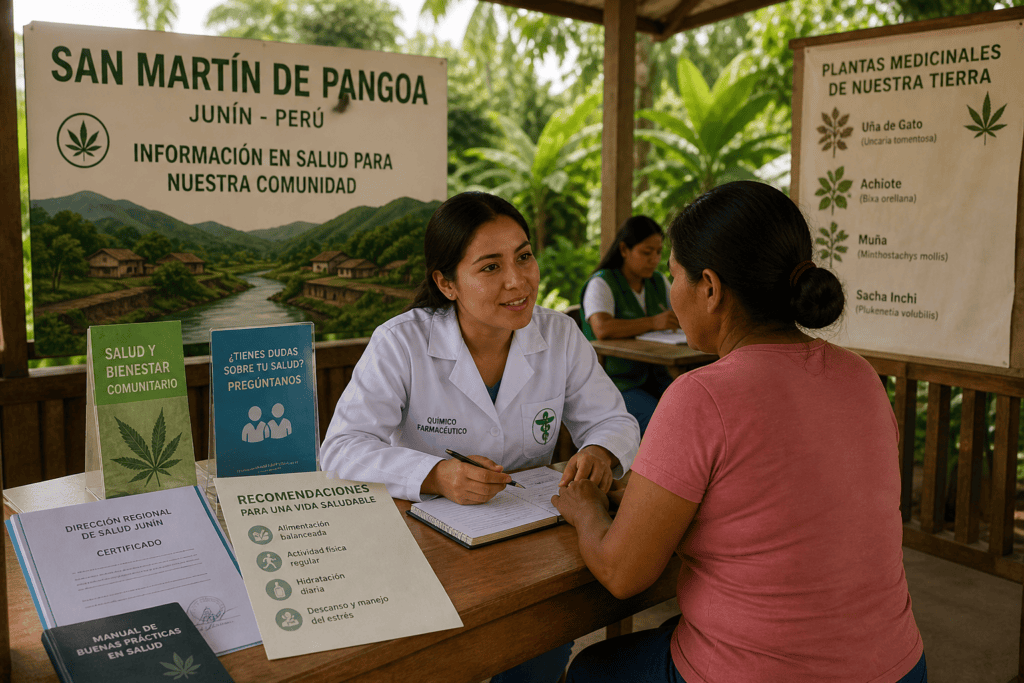
For current information, consult the Peruvian Ministry of Health’s official medicinal-cannabis information. Government guidance is more reliable than advertisements or community posts, especially when rules involve prescriptions, registration, product categories, importation, or authorized establishments.
It is also useful to review information from DIGEMID, Peru’s medicines and health-products authority. If a seller claims to offer a regulated medicinal product, ask how its authorization and labeling can be verified through the appropriate official channels.
Medical use is different from recreational purchasing
Someone looking for medical cannabis in San Martín de Pangoa should begin with a licensed healthcare professional, not an unverified seller. A clinician can help determine whether cannabis is appropriate, discuss possible interactions, and consider treatments with clearer evidence or lower risk.
Do not use another person’s prescription, buy products advertised as “stronger” without testing information, or assume that a plant product is safe because it is described as natural. Medical decisions should account for age, pregnancy, mental-health history, heart conditions, current medicines, and the reason for use.
How to evaluate a legal cannabis provider
If you locate a business that claims to operate legally, use a verification process before considering any purchase. The goal is not to find the most persuasive advertisement; it is to establish whether the provider is identifiable, accountable, and transparent.
- Confirm the business identity: Look for a verifiable name, physical address, contact details, and formal documentation where applicable.
- Ask about authorization: A provider should explain what type of authorization applies to its activities and where that information can be checked.
- Check product labeling: Packaging should identify the product, ingredients, batch information, recommended use, and responsible company.
- Look for testing information: Be cautious when there is no credible information about cannabinoid content, contaminants, pesticides, solvents, or microbial safety.
- Review medical requirements: A seller promising cannabis without any questions may be ignoring important legal and health safeguards.
- Use a traceable payment method: Avoid pressure to send money through an irreversible transfer before receiving clear documentation.
Warning signs of an unsafe listing
Red flags include guaranteed medical cures, unusually low prices, claims of unlimited potency, anonymous delivery, disappearing messages, pressure to pay immediately, and requests for unnecessary identity information. Photos copied from unrelated websites, inconsistent product names, and vague answers about origin are also reasons to stop.
A seller who says that laws do not matter, that no documentation is ever needed, or that a product is “safe for everyone” should not be treated as a trustworthy source. The same caution applies to sellers using encrypted chats or temporary accounts to avoid accountability.
Safer research for people comparing nearby information
Residents may encounter guides about cannabis access in surrounding areas such as Satipo or Pichanaqui. Those pages can provide general questions to ask, but they do not prove that a provider is licensed or currently operating in San Martín de Pangoa. For broader safety context, readers can compare the guidance in this legal and safety guide for weed sellers in Satipo and the guide to trusted sellers in Pichanaqui.
Location-specific claims should always be checked separately. A business serving one town may not be authorized to sell, deliver, or provide medical products in another. Travel distance does not remove the need to verify the provider, product, and applicable rules.
Questions to ask before using any product
Before making a health-related decision, write down the information you need and ask for direct answers. Useful questions include:
- What is the exact product name and cannabinoid content?
- Who manufactured or prepared it?
- Is there a batch number and credible laboratory information?
- What authorization or prescription requirement applies?
- How should the product be stored and used?
- What side effects, interactions, or conditions make it unsuitable?
- Who should be contacted if the product causes a problem?
If the answers are incomplete, contradictory, or delivered with pressure, do not proceed. A regulated health product should not depend on secrecy or guesswork.
Health and personal-safety considerations
Cannabis can affect attention, reaction time, memory, mood, and coordination. Do not drive, operate machinery, or combine cannabis with alcohol or other substances that can cause sedation. Keep any product away from children and pets, and avoid consuming an unknown edible because its effects may be delayed and difficult to predict.
Seek urgent medical help for severe confusion, chest pain, trouble breathing, loss of consciousness, seizures, or a serious allergic reaction. For non-emergency concerns, speak with a healthcare professional and provide accurate information about what was taken, how much, and when.
Personal safety matters as much as product safety. Avoid meeting unknown sellers alone, sharing unnecessary personal information, or visiting private locations after an online contact makes unexpected demands. The safest option is to use accountable, legally recognized channels rather than informal arrangements.
Practical checklist for San Martín de Pangoa
- Check official Peruvian health information before relying on marketplace claims.
- Separate medical access from recreational or informal sales.
- Verify the provider’s identity and authorization independently.
- Ask for complete labeling and credible testing information.
- Do not pay under pressure or provide unnecessary documents.
- Consult a qualified healthcare professional for medical use.
- Stop if the product, seller, or legal situation cannot be verified.
Conclusion
There may be online pages and informal offers described as popular marketplaces to buy weed in San Martín de Pangoa, Peru, but popularity is not evidence of legality, quality, or safety. The responsible approach is to rely on official health information, verify any claimed authorization, seek professional advice for medical use, and avoid anonymous sellers who cannot document their products and business identity.
For anyone researching cannabis in San Martín de Pangoa, careful verification is more valuable than a long list of unconfirmed vendors. Laws, product availability, and authorized providers can change, so current information from Peruvian authorities should guide every decision.

The Ziklane Editorial Team is dedicated to providing accurate, well-researched, and up-to-date information on cannabis laws and regulations around the world. Our content is created through careful research of publicly available legal sources, government publications, and reputable references to help readers better understand local cannabis legislation. We are committed to delivering educational, factual, and regularly updated content while encouraging readers to comply with the laws of their respective countries and regions.