
Searching for the best deals on weed in Tupac Amaru requires more than comparing asking prices. The first question is whether a product is being offered through a lawful and verifiable channel. In Peru, cannabis access depends heavily on the intended use, the product, and the seller’s authorization. A low price from an anonymous contact may carry legal, health, financial, and personal-safety risks that outweigh any apparent saving.
This guide does not identify illicit vendors or arrange purchases. Instead, it explains how to evaluate legal options, avoid misleading offers, verify medical information, and recognize when a deal is too risky to consider. Because “Tupac Amaru” can refer to more than one locality or district, confirm the exact jurisdiction before relying on local advice or assuming that a nearby service is available.
What “best deals” should mean in Tupac Amaru
A genuine bargain is not simply the cheapest item. For cannabis, value should include legality, predictable contents, appropriate dosing information, secure payment practices, and a clear return or complaint process where applicable. An inexpensive product with unknown strength or contamination risk is not a good deal.
When evaluating cannabis in Tupac Amaru, compare the complete cost rather than only the advertised amount. Consider consultation fees, delivery charges, taxes where applicable, required documentation, and the quantity supplied. A seller that refuses to disclose basic product information is not offering a transparent price.
- Legitimacy: Can the provider explain its legal status and provide verifiable business information?
- Product clarity: Are the ingredients, cannabinoid content, batch details, and expiry information available?
- Medical suitability: If the product is for treatment, has a qualified health professional recommended it?
- Payment safety: Does the transaction avoid pressure, unusual transfers, and requests for sensitive documents?
- Consistency: Can the provider explain how prices vary by product, quantity, and formulation?
Understanding cannabis laws in Tupac Amaru and Peru
Local availability should not be confused with legality. Peru has a legal framework for medicinal and therapeutic cannabis, but the rules governing products, authorization, prescriptions or medical oversight, and distribution can change. Recreational offers made through informal channels should be treated as legally risky rather than assumed to be permitted because they are visible online or discussed locally.
For current information, review the Peruvian Ministry of Health and confirm requirements with a licensed healthcare professional or the relevant authority. The Ministry’s information is more reliable than social-media claims, copied advertisements, or messages promising “guaranteed” legal delivery.
The safest approach to cannabis laws in Tupac Amaru is to verify the rule that applies to your specific situation before paying. Ask whether the product is intended for a recognized medical purpose, whether the provider is authorized to supply it, and what documentation is required. Do not rely on a seller’s statement that a product is “legal” without independent confirmation.
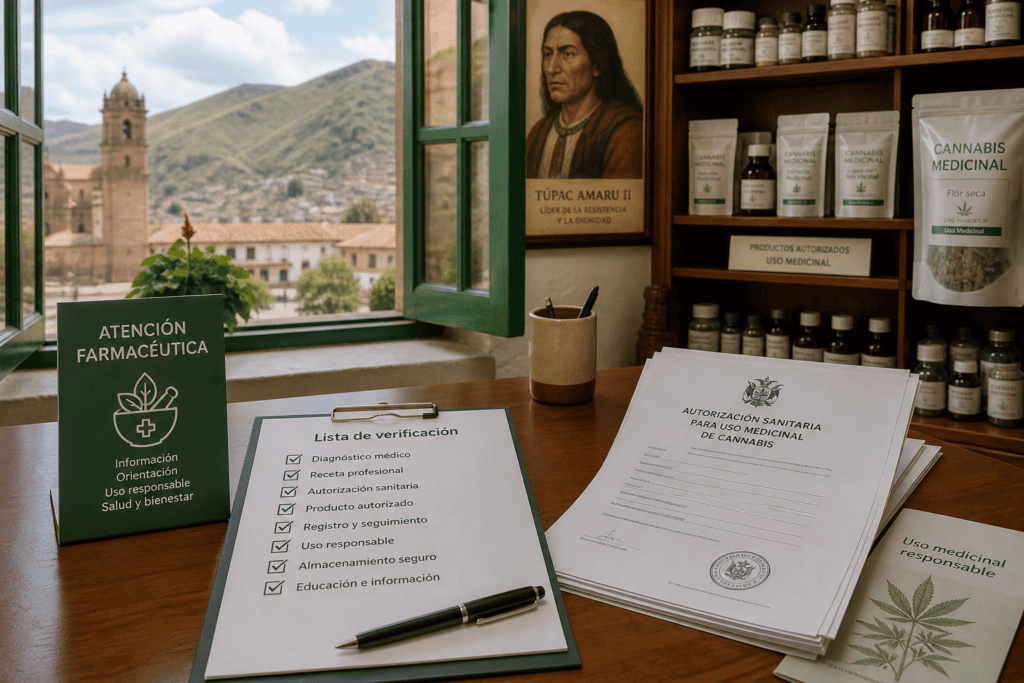
Where to look for lawful medical access
Start with a qualified medical consultation
If cannabis is being considered for pain, sleep, anxiety, seizures, or another condition, begin with a physician rather than a marketplace. A clinician can assess alternatives, possible interactions, and whether cannabis is appropriate at all. This is especially important for people who are pregnant, under 18, managing heart or psychiatric conditions, or taking sedatives, anticoagulants, or other medicines.
Ask the clinician what formulation and route of administration are appropriate. A regulated medical product may differ substantially from dried plant material or an unlabeled oil. The term “natural” does not establish safety, purity, or effectiveness.
Check pharmacies and authorized providers
Where lawful medical products are available, begin with established pharmacies, clinics, or providers that can explain their authorization and documentation requirements. Do not assume that a business selling supplements is allowed to sell cannabis products. Request written product information and retain receipts, instructions, and packaging.
For wider context on evaluating cannabis offers in Peru, compare the safety principles in this guide to cannabis deals in Bagua Grande and the practical checks in this Chulucanas cannabis safety guide. These articles should be used for general decision-making principles, not as proof that a provider serves Tupac Amaru.
How to compare prices without encouraging unsafe purchases
Price comparison is useful only after a provider and product have passed basic legality and safety checks. Compare equivalent products: the same formulation, package size, concentration, and intended use. Comparing a labeled medical oil with an unknown homemade preparation can produce a misleading result.
- Write down the product name, form, quantity, concentration, and total price.
- Separate one-time costs, such as a consultation, from recurring product costs.
- Ask whether the quoted price includes delivery, taxes, or other charges.
- Check the expiry date, storage instructions, and batch or lot information.
- Compare at least two transparent providers rather than responding to the lowest anonymous offer.
- Keep records of the provider’s name, receipt, product label, and professional advice.
Be cautious with bulk discounts. Buying more of an unverified product increases exposure to financial loss and possible health risks. A discount should never require you to conceal the purchase, send an advance payment to an unknown person, or accept a product without labeling.
Warning signs of a risky weed offer
Informal cannabis sellers often use urgency, secrecy, and unusually low prices to discourage questions. These tactics can also appear in scams that take payment without delivering anything. Walk away if a seller refuses basic questions or demands immediate action.
- Promises of guaranteed effects, instant cures, or a specific medical outcome.
- No ingredient list, cannabinoid information, expiry date, or batch details.
- Pressure to move from a public platform to an encrypted chat immediately.
- Requests for deposits through unusual payment methods or transfers to unrelated accounts.
- Claims that no prescription, consultation, or identification is ever required.
- Unsealed packaging, strong chemical odors, visible contamination, or inconsistent labeling.
- Requests to transport cannabis across borders, through airports, or for another person.
Never share passport images, banking credentials, one-time codes, or unnecessary personal information with an unverified contact. Do not meet an unknown seller alone, invite one to your home, or carry a package for someone else. If a transaction feels coercive or unsafe, stop communicating and seek help from local authorities or a trusted person.
Health and harm-reduction considerations
Even legally obtained cannabis can cause unwanted effects. Cannabis may impair attention, reaction time, coordination, and judgment. Avoid driving, operating machinery, or combining it with alcohol or sedating medicines. Keep all products locked away from children and pets, and never share a prescribed product with another person.
Edible products deserve particular caution because effects may take longer to appear than expected. Taking more before the first dose has had time to work can increase the chance of severe anxiety, confusion, vomiting, or other distressing reactions. Follow professional instructions and product labeling rather than advice from an anonymous seller.
The World Health Organization’s cannabis information provides a useful public-health overview of potential effects and risks. Seek urgent medical help for chest pain, trouble breathing, loss of consciousness, severe confusion, or a suspected poisoning. Tell healthcare workers what was taken, when it was taken, and whether alcohol or other drugs were involved.
Questions to ask before paying
A short checklist can prevent an expensive or dangerous mistake. Ask the provider to answer clearly and in writing where possible:
- What is the legal basis for selling this product?
- Who is responsible for quality control and labeling?
- What are the active ingredients and stated concentration?
- What are the recommended storage conditions and expiry date?
- Is medical authorization or a prescription required?
- What is the full price, including delivery and consultation fees?
- What happens if the package is damaged, mislabeled, or not delivered?
If the answers are vague, contradictory, or based only on testimonials, do not proceed. A legitimate medical provider should be able to explain its process without promising guaranteed results or pressuring you to buy.
Safer alternatives to chasing the lowest price
If cost is the main concern, discuss less expensive and legally recognized treatment options with a clinician. Ask whether a different formulation, a smaller initial quantity, or a non-cannabis therapy could meet the same medical goal. Do not reduce a prescribed dose or replace another medicine without professional advice.
For people who are not pursuing a medical use, the safest choice is not to purchase from an unverified seller. Laws, product quality, and enforcement risks are difficult to assess from online advertisements. Protecting your identity, finances, and health is more important than finding a short-term discount.
Conclusion
The best deals on weed in Tupac Amaru are not necessarily the cheapest offers. A responsible choice begins with confirming the applicable law, using qualified medical guidance where relevant, checking provider credentials, comparing like-for-like products, and refusing unlabeled or high-pressure offers. Since local conditions and legal requirements can change, verify current information through official Peruvian sources before taking action. When legality or product quality cannot be established, the safest decision is to walk away.

The Ziklane Editorial Team is dedicated to providing accurate, well-researched, and up-to-date information on cannabis laws and regulations around the world. Our content is created through careful research of publicly available legal sources, government publications, and reputable references to help readers better understand local cannabis legislation. We are committed to delivering educational, factual, and regularly updated content while encouraging readers to comply with the laws of their respective countries and regions.