
Searching for online retailers selling weed in Sullana requires more than comparing menus, delivery promises, or social-media recommendations. Peru distinguishes between regulated medicinal cannabis activity and unlicensed recreational sales, so a website or messaging account is not automatically a lawful retailer. Buyers should confirm what a business is legally allowed to sell, whether products can be traced to a legitimate source, and whether any medical purchase follows the applicable requirements.
This guide explains how to research weed in Sullana without treating anonymous sellers as trustworthy by default. It focuses on legal checks, product information, scam warning signs, privacy, and safer steps for people exploring medical cannabis in Sullana. It does not identify informal dealers or provide instructions for bypassing Peruvian law.
What online cannabis shopping means in Sullana
Online cannabis retail can take several forms: a pharmacy or registered business may publish product information, a clinic may explain medical options, or an informal account may advertise products through social media and private messages. These models are not equivalent. A polished website can still lack authorization, accurate labeling, secure payment practices, or a verifiable business identity.
Before contacting a seller, separate three questions:
- What product is being offered? It may be a prescribed medicinal product, a cannabinoid preparation, a hemp-derived item, or an unregulated product with unknown contents.
- Who is legally selling it? Look for a traceable company name, physical contact details, tax information, and evidence of the relevant authorization.
- Is the transaction permitted? A seller’s willingness to deliver does not prove that possession, sale, importation, or delivery is lawful.
These distinctions are especially important in Sullana, where online advertisements may target local buyers even when the seller operates elsewhere or has no verifiable presence in Peru.
Understanding cannabis laws in Sullana and Peru
There is no separate Sullana cannabis system that replaces national rules. Questions about cannabis laws in Sullana should therefore be checked against current Peruvian regulations and official health guidance. Peru has established a framework for medicinal and therapeutic cannabis, but that should not be confused with a general authorization for recreational online sales.
Rules can involve product category, authorization, medical use, prescribing or documentation requirements, business registration, and the handling of controlled products. Because regulations and administrative procedures can change, use the Peru Ministry of Health information portal for current public-health guidance and consult the DIGEMID official portal for information related to medicines, health products, and pharmaceutical oversight.
A responsible retailer should be able to explain its legal status without pressuring a customer to use coded language, avoid written records, or move immediately to an anonymous payment method. If a seller claims that “everything is legal” but cannot identify the authorization or product classification, treat that statement as unverified marketing.
Medicinal use versus recreational advertising
People searching for medical cannabis in Sullana should begin with a qualified healthcare professional rather than a sales account. Cannabis-based products may differ in active ingredients, concentration, route of administration, and interaction risks. A clinician can help determine whether a cannabis product is appropriate and whether another treatment would be safer or better supported.
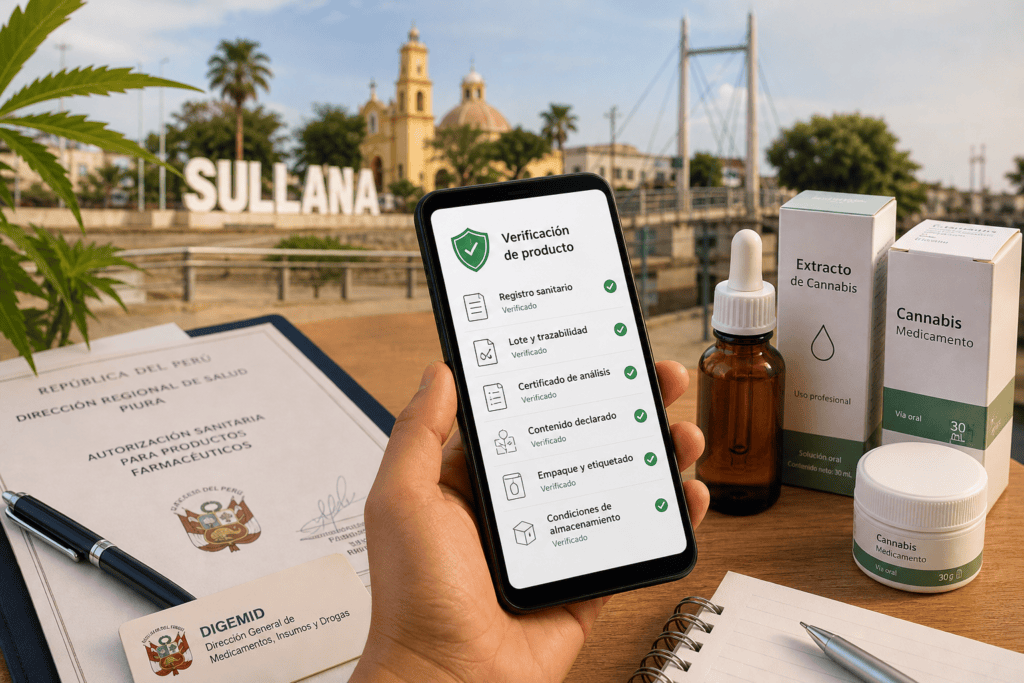
Recreational claims deserve particular caution. Promises of guaranteed effects, unusually high potency, discreet delivery, or “no prescription needed” may indicate an unregulated transaction. They also make it difficult to know what is actually in the product or how it was produced.
How to evaluate online retailers selling weed in Sullana
A retailer’s digital presence is only a starting point. Use a verification process before sharing personal information or sending money.
Check the business identity
Look for a complete legal name, verifiable address, customer-service contact, return or complaint procedure, and consistent information across the website and official business channels. A seller that communicates only through a temporary account or refuses to provide basic business details carries a higher risk.
Do not assume that customer reviews prove legitimacy. Reviews can be copied, purchased, or posted by accounts with no connection to real transactions. Independent verification is more useful than a long list of testimonials.
Review product documentation
Legitimate medicinal products should have clear labeling appropriate to their category. Depending on the product, useful information may include ingredients, cannabinoid content, batch or lot identification, expiry information, manufacturer details, storage instructions, and warnings. A seller should not make unsupported claims that a product cures serious diseases or works identically for every customer.
Be wary of photographs showing jars, flowers, or oils without readable labels. If the seller cannot explain the product’s origin, intended use, or testing, the buyer has no reliable basis for judging quality or safety.
Examine payment and delivery practices
Pressure to pay immediately, requests for gift cards or cryptocurrency only, unexplained extra fees, and delivery promises that ignore legal requirements are significant warning signs. Before paying, ask for the full price, delivery conditions, refund policy, and any documentation required by law.
Do not send identity documents, medical records, card details, or home-access instructions through an unverified account. If a seller requests more information than appears necessary, pause and investigate its privacy practices.
Common risks when buying cannabis online
The main risk is not simply receiving a poor-quality product. An unverified purchase can expose someone to legal problems, financial fraud, contaminated substances, inaccurate dosing, or unwanted disclosure of sensitive health information.
- Mislabeling: The stated cannabinoid concentration may not match the contents.
- Contamination: Poorly produced products may contain pesticides, solvents, microbes, or other substances.
- Unexpected effects: High concentrations or unknown ingredients can increase the chance of impairment, anxiety, dizziness, or other adverse reactions.
- Fraud: Some accounts collect deposits and then disappear, invent customs charges, or demand repeated payments.
- Data exposure: Informal sellers may retain names, addresses, phone numbers, and medical details without meaningful security.
- Legal uncertainty: A local delivery offer does not establish that the sale or possession is authorized.
Never drive, operate machinery, or combine cannabis with alcohol or sedating medicines. Anyone who experiences severe confusion, chest pain, difficulty breathing, loss of consciousness, or another emergency should seek immediate medical help.
Safer research steps for buyers in Sullana
- Define the purpose. Decide whether you are researching a medically indicated product, a regulated cannabinoid item, or general information. Avoid shopping first and seeking medical advice later.
- Check official guidance. Start with national health and pharmaceutical authorities rather than anonymous groups or search advertisements.
- Ask a licensed professional. A doctor or pharmacist can discuss potential interactions, contraindications, and suitable alternatives.
- Verify the seller. Request the legal business identity, product classification, and evidence of relevant authorization.
- Read the label before paying. Avoid products with missing ingredients, unclear dosage, no batch information, or exaggerated medical promises.
- Protect your information. Share only what is necessary and use payment methods with documented protections where lawful.
- Keep records. Save invoices, product photographs, written claims, and delivery details in case you need to report a problem.
For broader regional context, readers can compare this approach with the guide to weed retailers in Piura and the article covering cannabis buying questions in Chiclayo. These nearby-market examples should be treated as research references, not proof that a particular seller is authorized in Sullana.
How to spot misleading claims
Search results and social-media posts often use vague language such as “premium,” “pharmaceutical,” or “100% safe.” Those descriptions have little value without supporting documentation. A credible business should explain what the product is, who made it, how it is labeled, and what legal pathway allows it to be sold.
Other warning signs include countdown discounts, claims that a product treats every condition, before-and-after stories presented as medical evidence, and requests to conceal the package contents. A seller that encourages a buyer to misrepresent the contents of a shipment is creating risk rather than reducing it.
Also be cautious with delivery claims. A courier route through Sullana does not confirm that the product was legally sourced, properly stored, or permitted for transport. Temperature-sensitive oils and other preparations may be damaged by poor storage, while unpackaged plant material offers little traceability.
Questions to ask before contacting a retailer
A short checklist can prevent an impulsive decision. Ask:
- What is the business’s registered name and physical address?
- What category does the product belong to under Peruvian rules?
- Can the seller provide readable labeling and batch information?
- Is a prescription, consultation, or other medical documentation required?
- What are the ingredients, concentration, expiry date, and storage instructions?
- How are complaints, refunds, and suspected adverse reactions handled?
- What personal information is collected, and how is it protected?
If the answers are evasive, contradictory, or delivered with pressure to pay immediately, walk away. There is no reliable reason to risk money, health, or personal information for an unverified listing.
Reporting suspicious sellers or unsafe products
Keep screenshots of advertisements, usernames, phone numbers, payment instructions, receipts, and delivery messages. Do not confront a suspected scammer or attempt a risky test purchase. Depending on the problem, a consumer may need to contact the payment provider, local authorities, consumer-protection channels, or health and pharmaceutical authorities.
Medical concerns should be discussed with a healthcare professional. If someone has a serious reaction after using an unknown product, seek urgent medical attention and provide the packaging or remaining product if it can be handled safely. Accurate information about what was purchased can help clinicians respond more effectively.
Conclusion: research before you buy
Finding online retailers selling weed in Sullana is easy; finding a seller that is lawful, transparent, and safe requires verification. The strongest approach is to distinguish medicinal cannabis from informal recreational offers, consult current Peruvian authorities, examine product documentation, protect personal data, and reject pressure tactics.
For anyone researching cannabis in Sullana, the safest next step is not to trust the first online menu. Confirm the legal framework, speak with an appropriate healthcare professional when medical use is involved, and choose only channels that can demonstrate accountable business and product practices.

The Ziklane Editorial Team is dedicated to providing accurate, well-researched, and up-to-date information on cannabis laws and regulations around the world. Our content is created through careful research of publicly available legal sources, government publications, and reputable references to help readers better understand local cannabis legislation. We are committed to delivering educational, factual, and regularly updated content while encouraging readers to comply with the laws of their respective countries and regions.