
People searching for weed vendors in La Oroya may be looking for medical information, legal products, or a way to understand the local market. However, trying to locate an unlicensed seller can create serious legal, health, and personal-safety risks. A safer approach is to verify Peru’s current cannabis rules, distinguish medical access from informal sales, and avoid transactions that cannot be independently checked.
This guide does not provide contacts, locations, or instructions for buying cannabis illegally. Instead, it explains how to assess information about weed in La Oroya, what warning signs to recognize, and which questions to ask before considering any lawful medical route.
Understand the legal position before looking for cannabis in La Oroya
Cannabis rules can distinguish between possession, cultivation, supply, and medical use. Those categories may have different requirements, and a claim that cannabis is “legal” does not necessarily mean that every product, seller, delivery service, or online listing is authorized.
Peru’s rules and administrative requirements can change. Before acting on advice found in a social-media group or messaging app, consult current information from an official source such as the Peruvian government portal. Look for information from the relevant health, justice, or law-enforcement authorities rather than relying on anonymous posts.
Medical access is not the same as informal availability
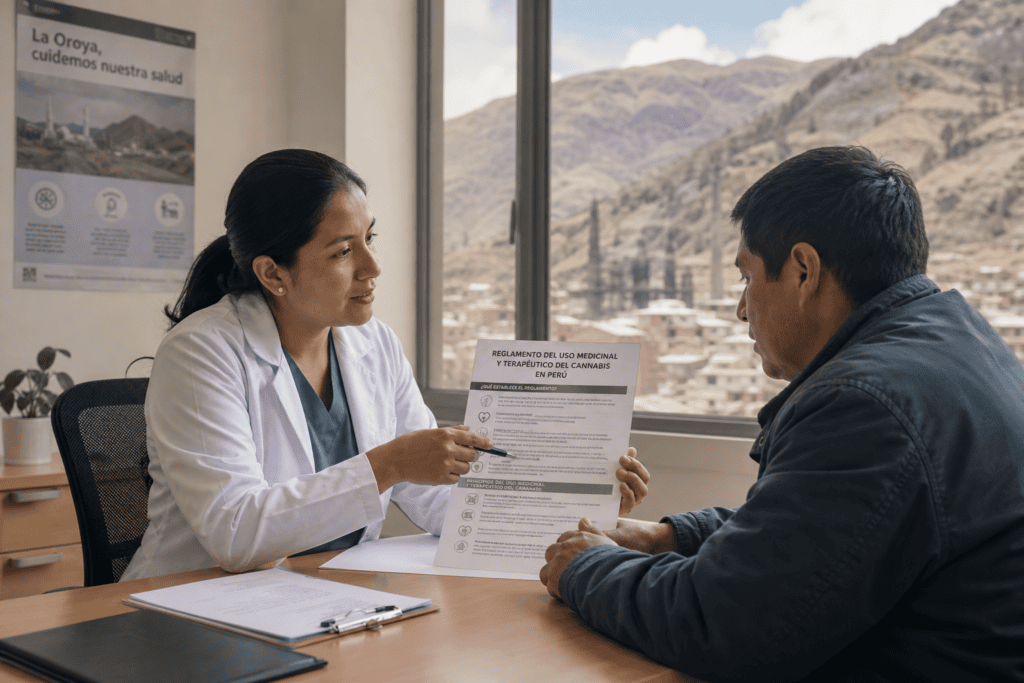
Medical cannabis may involve a health evaluation, a prescription or other documentation, and products obtained through regulated channels. An informal seller may use medical language without having a licensed business, qualified staff, testing records, or lawful authorization.
If your interest relates to pain, sleep, anxiety, epilepsy, or another condition, speak with a qualified clinician first. A clinician can discuss evidence-based treatments, possible interactions, and whether a cannabis-based option is appropriate. Do not treat a vendor’s claims as a substitute for medical advice.
How to evaluate claims about weed vendors in La Oroya
Online listings can be incomplete, copied, misleading, or designed to collect personal information. A professional-looking profile is not proof that a seller is legitimate. Before trusting any claim about cannabis in La Oroya, check whether the business can provide verifiable information through an official or regulated channel.
Useful verification questions
- What is the legal name of the business or organization?
- Can the seller provide a physical business address that can be independently confirmed?
- Is there evidence of the authorization required for the product or service being offered?
- Does the seller provide clear product information, including ingredients, intended use, and warnings?
- Are testing or quality-control records available from a credible laboratory?
- Does the seller explain age restrictions, medical requirements, storage, and responsible use?
- Can you pay through a traceable, lawful method rather than an urgent cash transfer or cryptocurrency payment?
If answers are vague, contradictory, or accompanied by pressure to act quickly, stop the conversation. A legitimate health-related service should not need to hide its identity or discourage reasonable questions.
Warning signs of unsafe or illegal sellers
Many risks associated with informal cannabis sales come from the transaction itself, not only from the substance. A person offering weed in La Oroya through an anonymous account may be selling a product of unknown strength or composition. The same account could also be used for theft, extortion, identity fraud, or harassment.
- Guaranteed medical results: Claims to cure serious diseases or replace prescribed treatment are unreliable and potentially dangerous.
- No product information: Unknown potency, contaminants, pesticides, mold, or synthetic additives can create health risks.
- Pressure and secrecy: Requests to keep the transaction hidden, meet in isolated places, or send money immediately should be treated as major red flags.
- Advance-payment demands: A seller who insists on a nonrefundable transfer before providing verifiable business details may be attempting fraud.
- Unclear identity: Disposable phone numbers, newly created profiles, and constantly changing accounts make accountability difficult.
- Delivery promises without legal documentation: A courier or delivery claim does not prove that the underlying product is lawful.
Do not share copies of identification documents, banking details, home addresses, or private photographs with an unverified contact. If someone threatens you after a conversation, preserve the messages and seek help from local authorities or a trusted person.
Safer options for people seeking medical cannabis
For residents researching medical cannabis in La Oroya, the most responsible starting point is a consultation with a licensed healthcare professional. Explain your symptoms, current medicines, allergies, and treatment goals. Cannabis can affect alertness and may interact with other medicines, alcohol, or health conditions.
Ask the clinician these practical questions:
- Is there a medically supported reason to consider a cannabis-based treatment?
- Are there safer or better-established alternatives?
- What product type, dose, and monitoring plan would be appropriate?
- What side effects or interactions should be reported?
- What documentation is required under current Peruvian rules?
- Which authorized establishments may legally dispense the product?
Do not drive, operate machinery, or combine cannabis with alcohol if a clinician advises that impairment is possible. Keep any medicine in its original labeled packaging and follow storage instructions. If a product has no label, batch information, instructions, or warnings, its contents cannot be reliably assessed.
What to check when researching cannabis laws in La Oroya
Searches for cannabis laws in La Oroya should focus on national Peruvian law and current administrative guidance, not only on local rumors. La Oroya is subject to Peru’s national legal framework, while local businesses may also have registration, health, and consumer-protection obligations.
When reading a legal explanation, check its publication date and identify the authority responsible for the information. Be cautious with pages that cite no law, confuse decriminalization with legalization, or present old rules as current. For health-related background, the World Health Organization’s cannabis information provides a useful general reference, but it does not replace advice about Peruvian law or an individual medical consultation.
Questions that help prevent legal misunderstandings
- Is the information about recreational use, medical use, possession, cultivation, or sale?
- Does it apply to an individual, a patient, a caregiver, or a registered business?
- Are there registration, prescription, importation, labeling, or storage requirements?
- Does the information address transport and possession outside the place of purchase?
- Was the guidance issued recently by an identifiable official or professional source?
How to protect your privacy and personal safety
People searching for local cannabis information often disclose more than they intended. Use a neutral email address for general research, avoid sharing your home location, and do not send identification documents until you have confirmed that the recipient is a legitimate and authorized organization.
If you decide to visit a lawful healthcare provider or pharmacy, use a public, professionally operated setting and tell someone you trust where you are going. Never meet an unknown seller alone or in an isolated location. More importantly, do not allow online pressure to override your judgment. Walking away is the safest response when a transaction feels rushed or secretive.
Readers comparing information from other Peruvian cities may also find it useful to review this legal and safety guide about weed vendors in Bagua or the discussion of weed sellers in San Ramón. These articles should be used for general safety principles, not as directories or endorsements of unlicensed sellers.
What to do if you encounter a suspicious listing
Do not argue with the account or attempt to investigate it personally. Save the profile name, messages, payment requests, and links if doing so is safe. Avoid forwarding the listing to friends, since sharing it may expose others to fraud or illegal activity.
For immediate danger, threats, suspected poisoning, or a medical emergency, contact the appropriate local emergency or health service. If you believe a listing involves fraud or a serious crime, report it to the relevant Peruvian authority. A pharmacist, clinician, consumer-protection professional, or lawyer may also help clarify the lawful next step.
Conclusion
Finding weed vendors in La Oroya should not mean meeting anonymous sellers or trusting unverified online advertisements. The safer path is to understand current Peruvian rules, seek qualified medical advice when appropriate, verify any business through official channels, and reject products with unknown contents or unclear origins.
Whether you are researching weed in La Oroya for medical reasons or simply trying to understand local cannabis information, prioritize lawful access, privacy, and personal safety. If a seller cannot demonstrate who they are, what they are authorized to provide, and how the product is tested and labeled, do not proceed.

The Ziklane Editorial Team is dedicated to providing accurate, well-researched, and up-to-date information on cannabis laws and regulations around the world. Our content is created through careful research of publicly available legal sources, government publications, and reputable references to help readers better understand local cannabis legislation. We are committed to delivering educational, factual, and regularly updated content while encouraging readers to comply with the laws of their respective countries and regions.