
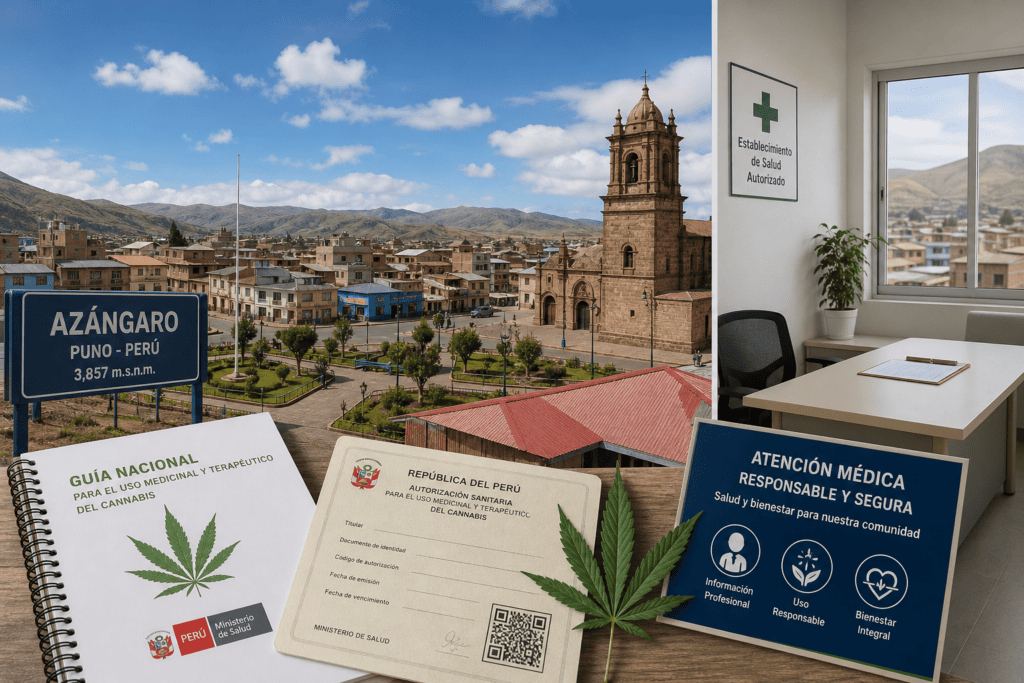
Searching for places to buy weed in Azángaro, Peru requires more than finding a seller or an online listing. Cannabis access in Peru is shaped by medical regulations, product authorization, and local enforcement. In Azángaro, a small city in the Puno region, there may be limited specialist services and few reliable public directories. That makes legal verification and personal safety especially important.
This guide does not identify informal sellers or provide instructions for buying unregulated cannabis. Instead, it explains how to assess your options, where to seek legitimate medical guidance, how to recognize warning signs, and what to do if you are visiting Azángaro or living in the surrounding province.
Places to Buy Weed in Azángaro, Peru: Start With the Legal Context
Peru distinguishes between regulated medical and therapeutic cannabis access and unregulated sales. A product being advertised as cannabis, CBD, or “medicinal” does not automatically mean it is authorized, tested, or suitable for use. Informal transactions can expose buyers to legal problems, contamination, inaccurate potency, and fraud.
The most reliable starting point is the national health framework rather than a social-media advertisement. Review information from Peru’s Ministry of Health and ask a licensed healthcare professional about current requirements. Rules and administrative procedures can change, so avoid relying on old forum posts, copied screenshots, or claims that a product is “legal everywhere.”
For residents of Azángaro, the practical question is usually not whether a walk-in recreational dispensary exists. It is whether a person has a legitimate medical need, can obtain professional advice, and can access a properly documented product through an authorized route.
Medical cannabis in Azángaro: the safer route
If you are considering medical cannabis in Azángaro, begin with a consultation from a qualified doctor. Discuss your symptoms, existing diagnoses, medications, allergies, and previous treatments. Cannabis can affect people differently and may interact with prescription medicines, alcohol, or other substances.
What a responsible consultation should cover
- Your medical history and the condition you want to address.
- Potential benefits, side effects, contraindications, and alternative treatments.
- The difference between THC, CBD, and other product ingredients.
- Dosage, timing, storage, and what to do if you experience an adverse reaction.
- Whether a regulated product is available through a lawful channel.
Azángaro may not have the same range of specialized services found in Lima or larger regional centers. A local health professional can explain whether you need a referral or whether a consultation in another city is appropriate. Do not treat a long journey or limited local availability as a reason to purchase an unverified product.
Readers comparing access questions in other Peruvian locations may also find the general safety guidance in this article about finding cannabis vendors in San Ramón useful, although local conditions and legal procedures can differ.
How to evaluate a cannabis-related business or listing
A business that claims to sell cannabis should be evaluated carefully. A polished website, delivery service, or professional-looking packaging is not proof of authorization. Before sharing personal information or paying, ask for verifiable details about the business and the product.
Useful verification questions
- Is the seller a registered business with a traceable physical or administrative presence?
- Can the seller clearly explain whether the product is intended for medical use?
- Is there transparent information about the manufacturer, ingredients, batch, and expiry date?
- Can the seller provide evidence of lawful authorization without pressuring you to decide quickly?
- Are returns, complaints, and adverse-reaction procedures explained in writing?
Be cautious if a seller refuses to identify the product manufacturer, promises a guaranteed cure, offers unusually strong effects without documentation, or says that no prescription or professional guidance is ever needed. Claims about “100% safe,” “undetectable,” or “legal in every part of Peru” should be treated as serious warning signs.
Online offers and delivery claims in Azángaro
Online searches may produce social-media accounts, messaging groups, classified advertisements, or delivery offers that appear to serve Azángaro. These channels can be difficult to verify. A profile may disappear after payment, use stolen photographs, or sell a product that differs from its description.
Do not send identity documents, intimate photographs, banking passwords, or unnecessary personal details to an unknown contact. Avoid paying a deposit merely to “reserve” a product, and be wary of sellers who change payment instructions at the last minute. A request to meet in an isolated place is another clear safety concern.
It is also important to avoid transporting cannabis between cities or across regional and national borders without understanding the applicable rules. Travelers should not assume that a product obtained elsewhere can be carried into Azángaro without consequences. If you are unsure, ask a qualified legal or health professional before transporting anything.
How to avoid scams and unsafe products
Scams often target people who are seeking quick relief or who are unfamiliar with cannabis terminology. Some advertisements use medical language without providing any clinical information. Others sell oils, flowers, capsules, or edible products with no reliable indication of contents.
Common warning signs
- Pressure to pay immediately through an untraceable method.
- Prices that change after you provide your address.
- No verifiable business identity or customer-support process.
- Promises to treat serious diseases without medical supervision.
- Packaging with spelling errors, missing ingredients, or no batch information.
- Unwillingness to discuss THC content, possible interactions, or age restrictions.
- Requests for secrecy, especially when combined with threats or intimidation.
If you believe you have been defrauded, keep messages, receipts, account names, and transaction records. Do not confront a suspected seller alone. Consider reporting the incident to the relevant platform and local authorities, particularly if threats, extortion, theft, or identity misuse is involved.
Cannabis in Azángaro: health and safety considerations
Cannabis is not risk-free. Possible effects can include impaired attention, dizziness, anxiety, drowsiness, and changes in judgment. Products with THC may be especially unsuitable for people with certain psychiatric histories, cardiovascular concerns, pregnancy-related considerations, or medication interactions. A healthcare professional can help assess individual risks.
Never drive, operate machinery, work at heights, or make important decisions while impaired. Keep any prescribed or legally obtained product away from children and pets. Do not mix cannabis with alcohol or sedating medicines unless a clinician specifically advises you to do so.
If someone experiences severe confusion, chest pain, difficulty breathing, loss of consciousness, or a serious mental-health reaction after using a cannabis product, seek urgent medical care. Do not rely on an online seller for emergency advice.
Alternatives for people who cannot find a lawful local option
Limited availability in Azángaro does not mean that an informal purchase is the only choice. Ask a local clinic, hospital, or licensed doctor about evidence-based treatments for your condition. Depending on your circumstances, a clinician may recommend a non-cannabis medicine, physical therapy, counseling, rehabilitation, or referral to a specialist.
If medical cannabis is being considered, ask whether a telemedicine appointment with a licensed professional is appropriate and how any product would be obtained lawfully. Confirm the provider’s credentials independently rather than relying solely on a social-media profile.
For broader comparison, the guide to legal and safer cannabis access questions in Quillabamba illustrates why local availability should be checked carefully instead of assumed. The same principle applies in Azángaro: verify the current rules, the provider, and the product before taking action.
Questions to ask before making a decision
- Am I seeking medical treatment, or am I responding to an unverified advertisement?
- Have I discussed cannabis with a qualified healthcare professional?
- Can I independently verify the provider and product information?
- Do I understand the possible legal, health, and transport risks?
- Would a conventional treatment or specialist referral be safer for my situation?
- Can I walk away without losing money or sharing sensitive information?
These questions help separate a legitimate healthcare decision from a rushed transaction. If a seller discourages professional advice or says that verification is unnecessary, that is a reason to stop.
Conclusion
Finding places to buy weed in Azángaro, Peru should not mean relying on informal vendors, anonymous delivery accounts, or unverified marketplace posts. The safer approach is to understand the medical framework, consult a qualified professional, verify any provider and product, and avoid transactions that involve pressure or secrecy.
For many people, the most appropriate next step will be a local medical consultation and, if necessary, a referral to a regulated service outside Azángaro. Cannabis in Azángaro should be approached as a health and legal matter—not simply as a product search. Taking time to verify information can reduce the risk of scams, unsafe products, and avoidable legal problems.

The Ziklane Editorial Team is dedicated to providing accurate, well-researched, and up-to-date information on cannabis laws and regulations around the world. Our content is created through careful research of publicly available legal sources, government publications, and reputable references to help readers better understand local cannabis legislation. We are committed to delivering educational, factual, and regularly updated content while encouraging readers to comply with the laws of their respective countries and regions.