
Searching for popular marketplaces to buy weed in Tarma requires more than finding a social-media account or a delivery promise. In Peru, cannabis access is regulated, and an online listing is not proof that a seller is licensed, that a product is accurately labeled, or that a transaction is legal. Tarma also does not have a widely documented, officially recognized recreational cannabis marketplace that consumers can safely rely on.
This guide explains how to evaluate cannabis-related information in Tarma without directing readers to unverified sellers. It focuses on legal routes, medical considerations, warning signs, and practical questions that can help residents and visitors avoid scams, contaminated products, and unnecessary legal risk.
Popular marketplaces to buy weed in Tarma: what is actually available?
There is an important difference between a marketplace that appears in search results and a regulated retail channel. A marketplace may be a social-media profile, messaging group, informal delivery service, or classified listing. These channels can change names quickly, disappear without notice, and provide little evidence about product origin or business registration.
For that reason, this article does not present a list of alleged dealers or claim that any particular Tarma marketplace is trustworthy. No reliable public directory should be assumed to validate informal cannabis sellers. If a business claims to operate legally, ask for verifiable information about its authorization, business identity, product documentation, and the professional responsible for any medical service.
People researching weed in Tarma may encounter offers for flowers, oils, edibles, or vape products. Product names and photographs are not sufficient evidence of contents. Cannabis products can vary significantly in cannabinoid concentration, and unregulated items may contain undisclosed substances, pesticides, solvents, or other contaminants.
Understanding cannabis laws in Tarma and Peru
Tarma follows Peru’s national legal framework; local online sellers cannot create their own exception to national law. Peru has established rules for medicinal and therapeutic cannabis, but that framework should not be confused with unrestricted recreational sales. The precise legal position can depend on the product, intended use, authorization, possession, transport, and whether a licensed entity is involved.
Before making a purchase, consult current information from the Peruvian Ministry of Health and, when necessary, obtain advice from a qualified Peruvian lawyer or health professional. Official guidance is more dependable than a seller’s statement that a product is “legal,” “imported,” or “for medical use.” Regulations and administrative requirements can change, so older social-media posts should not be treated as current legal advice.
Medical cannabis is not the same as recreational retail
Interest in medical cannabis in Tarma should begin with a clinical conversation, especially for pain, sleep problems, anxiety, epilepsy, or other conditions. Cannabis may not be appropriate for everyone and can interact with medicines or worsen some symptoms. A clinician can discuss established treatments, possible benefits, side effects, and whether a regulated cannabis product is relevant to the individual’s situation.
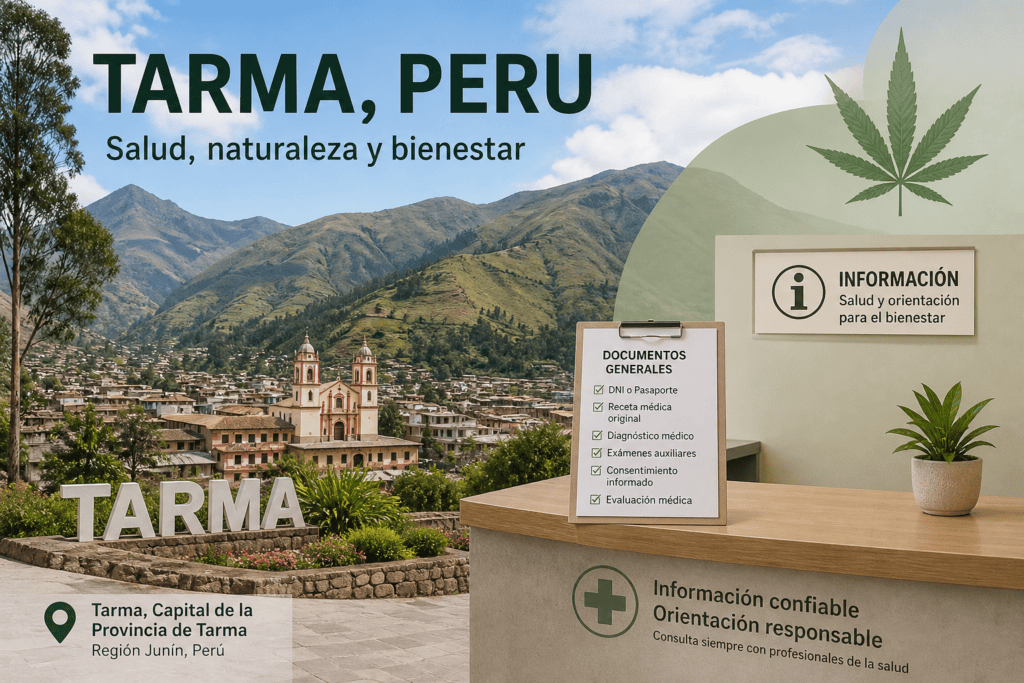
A medical claim is not proof of safety. Be cautious when a seller promises to cure several unrelated conditions, recommends unusually high doses, or discourages consultation with a doctor. Responsible information should acknowledge uncertainty and explain how a product is identified, tested, stored, and used.
How to evaluate a cannabis marketplace without taking unnecessary risks
If you are assessing a business that claims to sell legal cannabis in Tarma, use a verification-first approach. Do not send money or personal documents until the seller’s identity and legal basis have been independently checked.
- Confirm the business identity: Look for a real business name, physical address, contact details, and documentation that can be verified through official channels.
- Ask what type of product is being offered: Flowers, oils, extracts, foods, cosmetics, and prescription-related products may be subject to different rules.
- Request product information: Packaging should identify ingredients, cannabinoid content, batch details, expiration information, and appropriate warnings where required.
- Look for independent testing: A credible certificate should identify the laboratory, testing date, batch number, and results for potency and contaminants. A blurred image or generic PDF is not enough.
- Check professional oversight: Medical advice should come from a qualified health professional, not only from a salesperson or anonymous account.
- Review payment and delivery practices: Pressure to pay through an irreversible method, meet in an isolated location, or hide the transaction is a serious warning sign.
These checks cannot make an unlicensed sale legal, but they can help distinguish transparent information from common fraud tactics. If a seller refuses basic questions, changes terms at the last minute, or promises guaranteed effects, walk away.
Red flags in online listings for cannabis in Tarma
Searches for cannabis in Tarma may lead to listings that use professional-looking logos, copied product photographs, or customer reviews that cannot be verified. A polished presentation does not establish legitimacy. Some scams collect deposits and then request additional “delivery,” “customs,” or “insurance” fees. Others send a different product from the one advertised.
Be particularly cautious about claims such as “100% legal everywhere,” “no prescription needed,” “medical grade” without documentation, or “guaranteed THC strength.” Sellers who ask for a photograph of an identity document, bank credentials, or sensitive medical records before proving their identity also create avoidable privacy risks.
Do not rely on smell, appearance, or a seller’s description to judge potency or purity. Even experienced consumers cannot confirm laboratory results by looking at a product. Avoid consuming products with missing labels, broken seals, strange odors, visible mold, or unclear ingredients.
Safer legal pathways for residents and visitors
Start with a health professional
For a health-related reason, speak with a doctor or pharmacist in Peru. Explain your symptoms, current medicines, allergies, pregnancy status if relevant, and any history of anxiety, psychosis, heart problems, or substance-use concerns. This information helps a professional assess whether cannabis may create more risk than benefit.
Verify the regulatory route
Ask which legal category applies to the product and who is responsible for its authorization. A seller should be able to explain the source and intended use without relying on vague phrases. When the answer is unclear, contact a relevant public authority rather than accepting informal advice.
Consumers can also consult the World Health Organization’s cannabis information for general health context. This does not replace Peruvian legal advice or a medical assessment, but it can help readers understand why potency, dependence, impairment, and drug interactions deserve attention.
Be careful when traveling
Tarma is connected to other parts of Peru by road, and visitors may see offers from sellers outside the city. Transporting cannabis between cities can create additional legal and practical issues. Never assume that a product purchased in another location can be carried safely into Tarma, placed in luggage, or taken across a border.
Travelers should also avoid consuming an unfamiliar product before driving, operating equipment, hiking at altitude, or making safety-critical decisions. Cannabis can affect attention, reaction time, coordination, and judgment. Mixing it with alcohol or sedating medicines can increase impairment.
What to do if a purchase goes wrong
If you believe you have encountered a scam, preserve receipts, messages, account names, payment records, and product photographs. Contact your payment provider promptly and report suspected fraud through the appropriate Peruvian authority. Avoid threatening the seller or arranging a private confrontation.
Seek urgent medical help after severe confusion, chest pain, difficulty breathing, seizure, loss of consciousness, extreme agitation, or persistent vomiting. Tell healthcare workers what was consumed, how much was taken, and when. Accurate information can help them provide safer treatment.
When a product causes unexpected effects but no emergency symptoms, stop using it and contact a healthcare professional. Do not give an unfamiliar cannabis product to another person, child, or pet.
Using local information responsibly
Local knowledge can be useful for finding healthcare services and understanding how residents experience access, but recommendations in forums and messaging groups should be treated as unverified. A positive comment does not establish legal authorization, and a negative comment may be incomplete or fabricated.
For broader comparison, readers can review our guides on cannabis marketplace claims in Huaraz and safer purchasing questions in Huamachuco. These related guides follow the same principle: explain the risks and legal context without presenting unverified vendors as trustworthy.
Conclusion
There is no dependable basis for naming a verified recreational cannabis marketplace in Tarma. The safest approach is to avoid anonymous sellers, confirm the current Peruvian rules, and use a qualified healthcare professional for medical questions. When a product’s source, testing, labeling, or legal status cannot be established, the sensible choice is not to buy it.
Responsible cannabis information should help people make informed decisions rather than encourage risky transactions. Whether you are researching cannabis laws in Tarma, considering medical options, or checking an online listing, prioritize official guidance, privacy, product transparency, and personal safety.

The Ziklane Editorial Team is dedicated to providing accurate, well-researched, and up-to-date information on cannabis laws and regulations around the world. Our content is created through careful research of publicly available legal sources, government publications, and reputable references to help readers better understand local cannabis legislation. We are committed to delivering educational, factual, and regularly updated content while encouraging readers to comply with the laws of their respective countries and regions.