
If you are searching for weed sellers in Tumbes, Peru, it is important to separate reliable legal information from unverified street offers, social-media accounts, and informal contacts. This guide does not provide dealer names, meeting points, or instructions for buying cannabis illegally. Instead, it explains the safer options available, the legal questions to check, and the risks that matter most in a border city such as Tumbes.
Rules can depend on the type of cannabis, the intended use, the amount involved, and whether a product comes from an authorized medical channel. Before making any decision about weed in Tumbes, verify current information through Peruvian public institutions, speak with a licensed health professional when medical use is involved, and avoid products whose origin and contents cannot be confirmed.
What people should know before looking for cannabis in Tumbes
Tumbes is close to the Ecuadorian border and has substantial movement of residents, visitors, and goods. That setting can create confusion about which country’s rules apply. A product or claim that appears acceptable elsewhere is not automatically lawful in Peru. Border crossings also add practical risks, because carrying cannabis or cannabis products across an international boundary can lead to serious legal consequences even when a person believes the product is for personal use.
Informal sellers may advertise flower, oils, edibles, or other products without providing a reliable ingredient list, laboratory analysis, dosage information, or proof of authorization. Packaging can be copied, products can be contaminated, and the stated strength may be inaccurate. These problems apply whether the offer appears in person, through messaging apps, or on social networks.
Why online listings and street offers are difficult to verify
- A seller may not be licensed or may be using a false business identity.
- Photos rarely prove what is inside a package or whether it belongs to the advertised seller.
- Products described as cannabis may contain other substances, synthetic cannabinoids, or unknown additives.
- Requests for advance payment, identity documents, or a meeting in an isolated place increase the risk of fraud or personal harm.
- Public posts can expose buyers to scams, extortion, theft, or legal scrutiny.
For these reasons, a search for cannabis in Tumbes should begin with official health and regulatory information rather than anonymous listings. If a source cannot explain its authorization, labeling, and complaint process, treat it as unverified.
Cannabis laws in Tumbes and the wider Peru framework
There is no separate recreational cannabis market created by the city of Tumbes. National Peruvian rules are the starting point, and local enforcement still matters. The legal treatment of possession, cultivation, supply, transport, and medical products can differ, so a general internet summary should not be treated as personal legal advice.
Medical cannabis is a particularly important distinction. A person seeking medical cannabis in Tumbes should ask a qualified clinician whether a cannabis-based treatment is appropriate, what product and dosage are suitable, and how follow-up care will work. A medical recommendation does not necessarily make every cannabis product or every purchase method lawful.
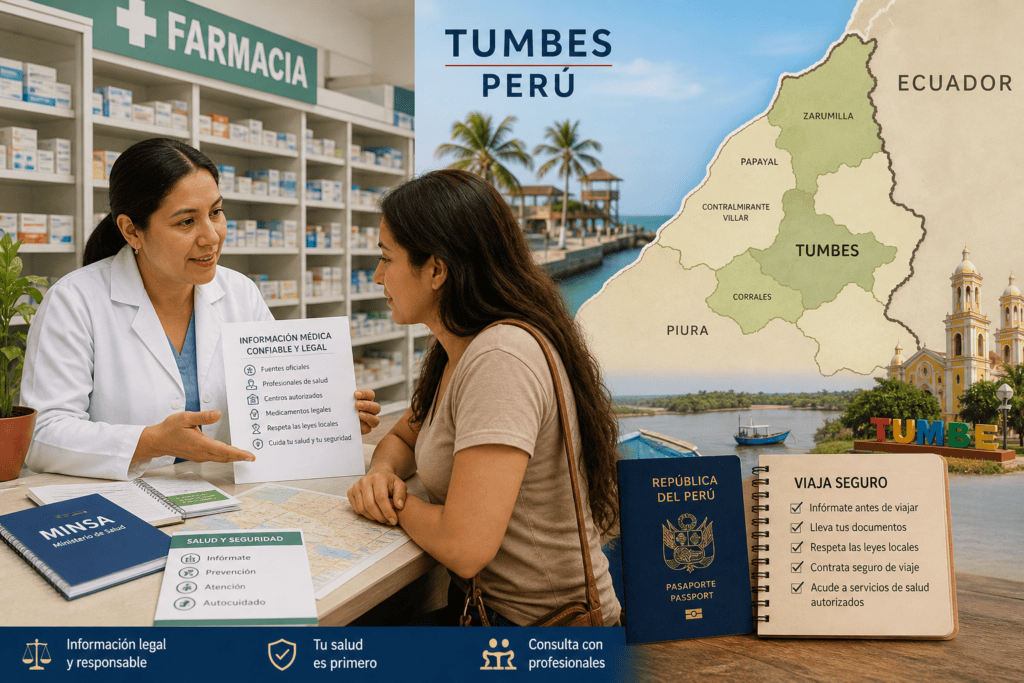
For current public-health and regulatory information, consult the official Peruvian Ministry of Health and the General Directorate of Medicines, Supplies and Drugs. These are better starting points than seller advertisements because official guidance can change and may identify the relevant procedures or authorities.
Questions to check before relying on a medical product
- Is the product intended for medical use and legally authorized for sale in Peru?
- Does the label identify the ingredients, concentration, batch, expiry date, and responsible manufacturer or importer?
- Can a pharmacist or healthcare professional explain how it should be used?
- Is there a clear way to report an adverse reaction or defective product?
- Will using the product affect driving, work, pregnancy, or another medication?
If the answer to these questions is unclear, do not assume that a lower price or confident seller makes the product safe. A regulated route may be slower than an informal purchase, but traceability and professional advice are much more valuable than convenience.
Safer ways to research weed in Tumbes without contacting illegal sellers
Research does not require arranging a purchase. Start by defining the purpose: medical treatment, information about the law, or concern about someone’s use. Each purpose calls for a different source. A doctor or pharmacist is appropriate for health questions; an official government authority is appropriate for regulatory questions; and an emergency service is appropriate when someone is experiencing severe symptoms.
It can also help to compare the information available in Tumbes with broader guidance in Peru. Our related guide on weed retailers in Piura discusses the same need to distinguish legal, verifiable information from informal claims. For a separate overview of the topic in a southern border city, see our guide to weed in Tacna. These articles should be read as general safety guidance, not as directories of sellers.
A practical verification checklist
- Confirm that the information comes from an identifiable institution, licensed professional, or established pharmacy.
- Check the date of the information, because laws, registration systems, and approved products can change.
- Look for clear product labeling rather than relying on photographs or verbal promises.
- Avoid sellers who pressure you to act quickly or discourage medical advice.
- Do not carry cannabis across the Peru-Ecuador border or agree to transport a package for another person.
- Keep records of legitimate medical consultations and product information in case a clinician needs to assess an adverse effect.
Health and personal safety risks to consider
Cannabis can affect attention, memory, coordination, reaction time, and perception. The risks may be greater with high-potency products, concentrates, edibles, or products with unknown contents. Edibles can take longer to produce effects, which makes accidental overconsumption more likely when a person takes more before the first dose is felt.
Avoid driving, swimming, operating machinery, or making important decisions after using cannabis. Combining it with alcohol, sedatives, or other drugs can increase impairment and may create additional health risks. People who are pregnant, have a history of psychosis or severe anxiety, or take prescription medicines should seek professional advice before using cannabis.
When to seek urgent help
Get urgent medical assistance if someone has chest pain, trouble breathing, a seizure, extreme confusion, loss of consciousness, severe agitation, or symptoms that may indicate poisoning. Keep the product packaging, if available, and tell healthcare workers what was taken and approximately when. Do not rely on an online seller’s advice during a medical emergency.
Warning signs of an unsafe seller
Even without discussing how to buy cannabis, recognizing danger signs can prevent harm. Be cautious of anyone who promises guaranteed medical benefits, refuses to identify ingredients, claims that every product is legal, or asks you to cross a border with cannabis. A seller who changes prices at the last minute, demands unusual payment methods, or insists on secrecy may be attempting fraud or coercion.
- No verifiable business identity or responsible contact.
- No batch number, expiry date, ingredient list, or concentration.
- Claims to cure serious diseases or replace prescribed treatment.
- Pressure to meet alone, visit a private residence, or share personal documents.
- Instructions to hide products from authorities or transport them across a border.
These warning signs are relevant to anyone researching cannabis laws in Tumbes, because an unsafe transaction can create both health and legal problems. Walking away is the safest response when a source cannot provide credible information.
How to approach a medical cannabis conversation
If you believe cannabis might help with a medical condition, prepare a short list of symptoms, previous treatments, current medicines, allergies, and relevant diagnoses before speaking with a clinician. Ask about evidence, expected benefits, side effects, interactions, follow-up, and lawful product access. Be honest about any cannabis already used, including informal products, so the clinician can give safer advice.
Do not stop a prescribed medicine or substitute cannabis without medical guidance. Cannabis-based treatment may not be appropriate for every condition, and a regulated product still requires careful use. A pharmacist can also help explain storage, labeling, and what to do if the product causes unwanted effects.
What visitors and residents should avoid in Tumbes
Visitors should not assume that tourist areas, nightlife venues, or border markets are safe places to find cannabis. Public visibility does not establish legality, and accepting a package from a stranger can create serious consequences. Residents should likewise avoid storing, selling, or transporting cannabis for another person without understanding the law and the potential risks.
Do not post personal details when asking about sellers online. Public requests can attract scams and expose your identity. If you are worried about dependence, withdrawal, or pressure to use, contact a healthcare professional or a trusted support service rather than relying on a dealer or anonymous forum.
Conclusion
There is no responsible directory of illegal weed sellers in Tumbes, Peru. The safer approach is to verify current Peruvian rules, use official health and regulatory sources, consult a qualified professional for medical questions, and avoid unverified products and cross-border transport. Searches for weed in Tumbes or cannabis in Tumbes should lead to reliable information, not risky meetings. When a product’s origin, contents, and legal status cannot be confirmed, the safest decision is not to buy it.

The Ziklane Editorial Team is dedicated to providing accurate, well-researched, and up-to-date information on cannabis laws and regulations around the world. Our content is created through careful research of publicly available legal sources, government publications, and reputable references to help readers better understand local cannabis legislation. We are committed to delivering educational, factual, and regularly updated content while encouraging readers to comply with the laws of their respective countries and regions.