
People searching for trustworthy weed retailers in Urus-Martan should first understand an important distinction: a website, social-media account, or informal seller is not necessarily a lawful, regulated retailer. Urus-Martan is in the Chechen Republic of Russia, where cannabis is not sold through a normal licensed recreational retail system. Claims that a seller is “official,” “safe,” or “government approved” should therefore be treated with caution unless they can be verified through an appropriate official authority.
This guide does not direct readers to illegal suppliers or explain how to obtain controlled substances. Instead, it explains how to assess claims, avoid fraud, protect personal information, and find legitimate health or legal guidance. Laws and enforcement practices can change, so anyone facing a specific legal or medical issue should consult a qualified professional in Russia.
Are there legal weed retailers in Urus-Martan?
There is no established, broadly lawful cannabis dispensary market in Urus-Martan comparable to regulated retail systems in some other countries. A local advertisement for “weed delivery,” “premium cannabis,” or “medical marijuana” does not by itself prove that the product or seller is legal. The same applies to messaging-app channels, private groups, marketplace listings, and cash-on-delivery offers.
Russian rules treat cannabis and many cannabis-derived substances as controlled or restricted. The exact legal consequences can depend on the substance, quantity, purpose, documentation, and circumstances. Possession, purchase, transport, distribution, and cultivation may create different risks. For that reason, a seller’s promise that a product is “legal,” “imported,” or “for personal use” should never be accepted without independent verification.
For general health information about cannabis, consult the World Health Organization’s cannabis fact sheet. It explains potential health effects and risks without promoting unregulated purchasing.
What to know about cannabis laws in Urus-Martan
Searching for cannabis laws in Urus-Martan can be confusing because local questions are usually governed by national Russian law, together with applicable administrative and criminal procedures. A local seller cannot override those rules, and a product label cannot guarantee that possession or use is permitted.
Important legal uncertainties
- Product labels may be unreliable: Terms such as CBD, hemp, herbal blend, or “technical cannabis” do not automatically establish that a product is lawful.
- Online sales are not automatically legal: A polished website, customer reviews, or delivery service may conceal an unlicensed operation.
- Medical language can be misleading: Descriptions such as “doctor recommended” or “therapeutic” are not substitutes for a prescription, licensed consultation, or official authorization.
- Travel increases risk: Carrying cannabis or cannabis-labelled products across borders, into airports, or between regions can create additional legal problems.
- Rules may change: Confirm current requirements with an official Russian authority or qualified lawyer rather than relying on old blog posts or anonymous advice.
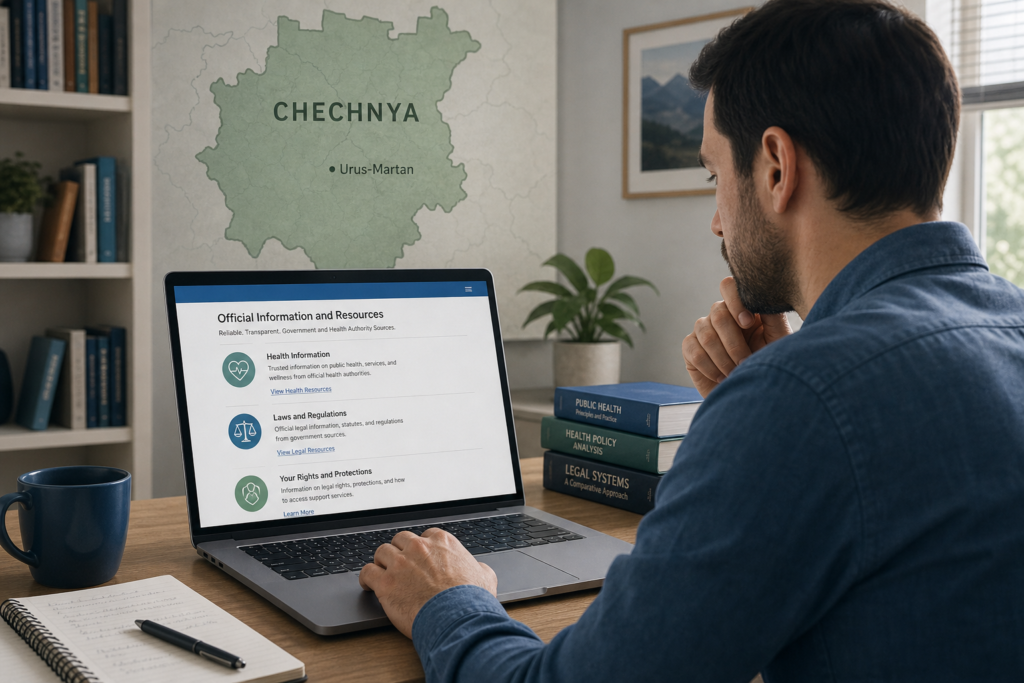
For official public-health and regulatory information, the Russian Ministry of Health website is a more reliable starting point than a retailer’s marketing page. It may not answer every cannabis-specific question, but it can help direct readers toward current health guidance and relevant institutions.
How to recognize risky sellers and scams
When people search for weed in Urus-Martan, they may encounter sellers who use urgency, secrecy, or unusually broad promises. These warning signs do not prove that a seller is committing a particular offense, but they indicate that a transaction may be unsafe, fraudulent, or legally dangerous.
Common warning signs
- Requests for advance payment by an irreversible method, cryptocurrency, or gift card.
- Pressure to act immediately because “stock is limited” or an offer is supposedly about to disappear.
- No verifiable business identity, physical address, licensing information, or clear terms of service.
- Claims that law enforcement, customs, or local officials have approved the seller.
- Requests for passport scans, banking passwords, one-time codes, or unnecessary personal information.
- Promises of guaranteed medical results, instant relief, or a product that treats every condition.
- Instructions to hide a package, collect it from an unusual location, or mislead delivery staff.
- Reviews that appear copied, unusually similar, or impossible to verify independently.
Do not send money or identity documents simply because a seller provides photographs of packages, laboratory reports, or supposed certificates. Documents can be altered or taken from unrelated businesses. If a seller claims to operate legally, ask for information that can be checked through an official register or regulator, and stop the conversation if the answers are evasive.
How to assess cannabis-related products more safely
There is no reliable way for a consumer to confirm the strength, purity, or contents of an unregulated cannabis product at home. Appearance, smell, packaging, and a seller’s description are not laboratory testing. Products may be mislabelled, contaminated, stronger than expected, or mixed with other substances.
Safer decision-making principles
- Do not use an unknown product because a seller calls it natural, organic, or low-risk.
- Do not combine cannabis or suspected cannabis products with alcohol, sedatives, opioids, or other substances.
- Do not drive, operate machinery, or supervise children after using an intoxicating substance.
- Keep unknown products away from children, pets, and anyone who could mistake them for food or medicine.
- Seek urgent medical help for chest pain, severe confusion, fainting, seizures, breathing problems, extreme agitation, or loss of consciousness.
- Tell medical staff honestly what may have been taken, when it was taken, and how much was involved.
These precautions do not make an illegal or unregulated purchase safe. They are basic steps for reducing harm if someone has already encountered an unknown substance or is experiencing symptoms.
Medical cannabis guidance in Russia
Readers searching for medical cannabis guidance in Russia should begin with a licensed doctor rather than an online seller. A clinician can assess symptoms, review current medicines, consider evidence-based treatments, and explain which options are legally available. This is especially important for pain, sleep problems, anxiety, epilepsy, nausea, or other conditions for which online sellers may make exaggerated claims.
Bring a clear list of symptoms, diagnoses, medicines, allergies, and previous treatments to an appointment. Do not stop prescribed medication or substitute an unregulated product without professional advice. A doctor may recommend a different treatment, additional testing, or referral to a specialist.
Be particularly cautious about advertisements aimed at people with serious illnesses. A promise that cannabis can replace cancer treatment, prevent seizures without supervision, or cure a chronic condition is a major warning sign. Marketing is not clinical evidence, and a seller has a financial incentive to present benefits selectively.
What to do if you have already contacted a seller
If you have only made an inquiry, stop communicating and avoid sharing additional personal information. If you paid money, save receipts, usernames, messages, phone numbers, delivery details, and screenshots. Contact your bank or payment provider promptly to ask whether a transaction can be stopped or disputed. Change passwords if you shared account details, and never provide a one-time banking code to a seller.
If you receive threats, blackmail, or pressure to collect a package, do not arrange a private confrontation. Preserve the evidence and contact local law enforcement or a qualified lawyer for advice. If you believe a substance has caused poisoning or severe symptoms, prioritize emergency medical care over concerns about embarrassment.
Better alternatives to searching for a retailer
For many people, the real need behind a search for cannabis in Urus-Martan is help with pain, insomnia, stress, or another health problem. A licensed clinic, pharmacy, or doctor can provide a safer route to assessment and lawful treatment. Ask whether the provider is licensed, whether the proposed medicine is approved for use in Russia, and what follow-up care is available.
For legal questions, use a qualified Russian lawyer who can explain current rules in the relevant jurisdiction. Avoid relying on anonymous posts that promise immunity, secret delivery, or a way to bypass regulations. A trustworthy professional will explain uncertainty clearly and will not demand unnecessary secrecy or an immediate payment.
Conclusion
The safest answer to the search for trustworthy weed retailers in Urus-Martan is not a list of informal sellers. Because there is no ordinary legal recreational cannabis retail market to rely on, online claims should be treated as unverified and potentially risky. Check current information through official institutions, consult licensed medical professionals for health concerns, and seek qualified legal advice for questions about possession, products, or travel.
Avoid advance payments, identity-document requests, guaranteed medical claims, and instructions designed to conceal a transaction. If a substance has already been used and serious symptoms appear, contact emergency medical services immediately. Careful verification and professional guidance are safer than trusting an anonymous retailer’s promises.

The Ziklane Editorial Team is dedicated to providing accurate, well-researched, and up-to-date information on cannabis laws and regulations around the world. Our content is created through careful research of publicly available legal sources, government publications, and reputable references to help readers better understand local cannabis legislation. We are committed to delivering educational, factual, and regularly updated content while encouraging readers to comply with the laws of their respective countries and regions.