
Searching for Trusted weed sellers in Samara can expose you to serious legal, financial, and health risks. Rather than directing readers to unverified sellers, this guide explains how to assess cannabis information responsibly, recognize common scams, understand why local law matters, and find safer sources of medical and public-health advice.
The legal position of cannabis can differ substantially between countries and may also involve rules on possession, transport, cultivation, products containing cannabinoids, and online activity. In Samara, it is especially important to verify current information through official channels instead of relying on anonymous advertisements, social-media accounts, or user comments.
Trusted weed sellers in Samara: why verification matters
A seller may use polished branding, reviews, delivery promises, or photographs of products without offering any reliable evidence of legal authorization or product quality. Anonymous cannabis listings are difficult to verify because the buyer often cannot confirm who operates the account, where the product came from, or whether the description is accurate.
Buying through an unverified source can create several risks:
- Legal exposure: Possession, purchase, delivery, or transfer may carry serious consequences under applicable law.
- Fraud: Some listings collect advance payments and then disappear, demand additional fees, or misuse personal information.
- Contamination: Unregulated products may contain pesticides, solvents, heavy metals, synthetic cannabinoids, or other unexpected substances.
- Incorrect potency: A label or message may not accurately describe the strength or contents of a product.
- Personal safety: Arranging a meeting with an unknown seller can expose someone to theft, intimidation, or surveillance.
For these reasons, “trusted” should not mean popular, well-reviewed, or easy to contact. A genuinely trustworthy provider would need to operate within a clear legal framework, provide verifiable authorization, use transparent labeling, and follow applicable health and consumer-protection requirements.
Understanding weed in Samara and the local legal context
Anyone researching weed in Samara should begin with the law, not with seller recommendations. Rules concerning cannabis can change, and online discussions frequently mix up different jurisdictions. A product that is permitted in one country or region may be prohibited in another, while products marketed as hemp, CBD, or low-THC items may still be subject to specific restrictions.
Do not assume that a product is legal because it is described as “natural,” “medical,” “hemp-based,” or “for research.” Those labels do not automatically establish lawful sale or lawful possession. The relevant questions may include the product’s cannabinoid content, intended use, source, packaging, import status, and whether a recognized medical or commercial authorization applies.
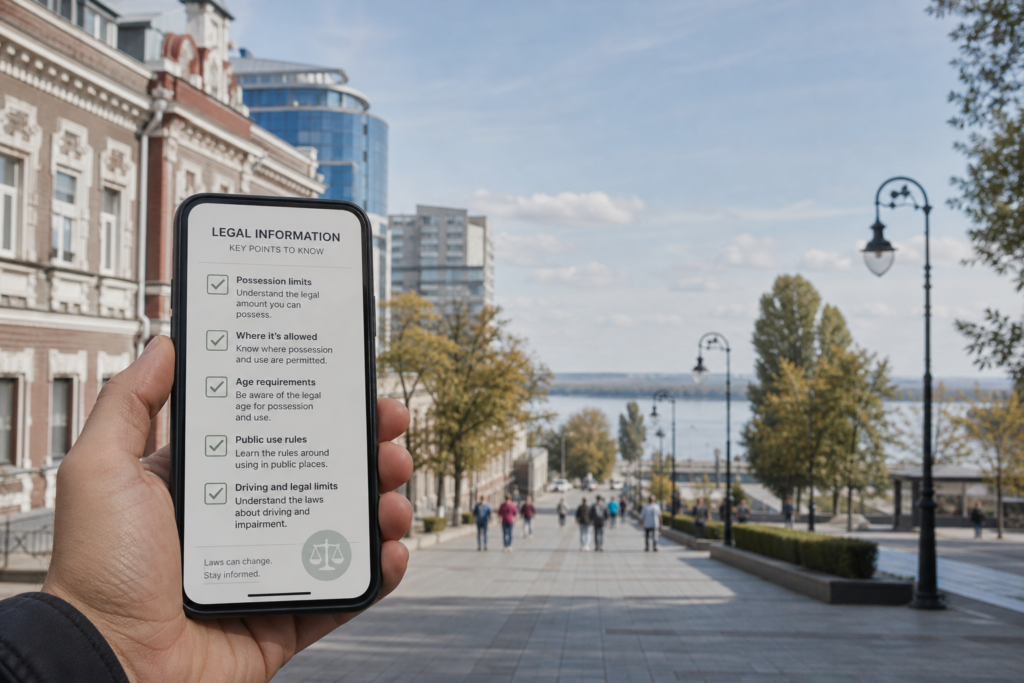
For general health information, consult the World Health Organization’s cannabis information. For the international policy and control context, the United Nations Office on Drugs and Crime cannabis resources can provide useful background. These sources are not substitutes for local legal advice, but they are more dependable than anonymous marketplace claims.
Questions to ask before trusting a cannabis claim
- Is the source a clearly identified, legally authorized organization?
- Can its authorization be independently confirmed through an official registry or regulator?
- Does it provide a physical business identity and a transparent contact method?
- Are product ingredients, warnings, batch details, and testing information available where required?
- Does the information distinguish medical advice from advertising?
- Does the source avoid promises of guaranteed effects or claims that cannabis cures serious illnesses?
If the answer to several of these questions is no, treat the source as unreliable. Avoid sending identification documents, banking details, or advance payments to an anonymous account.
How to spot scams and unsafe listings
Scammers often make their offers appear credible by using copied logos, staged product photographs, fabricated reviews, and urgent language. A seller may claim to have limited stock, offer a large discount for immediate payment, or ask the buyer to move the conversation to an encrypted chat. None of these features proves legitimacy.
Warning signs in online advertisements
- Requests for cryptocurrency, gift cards, or irreversible transfers before any verifiable transaction exists.
- Promises of guaranteed delivery, complete anonymity, or protection from law enforcement.
- Pressure to share passport details, selfies, bank information, or access codes.
- Unusually low prices or unusually strong claims about purity and effects.
- Product photographs that appear on multiple unrelated websites.
- No business name, legal entity, customer-service process, or refund policy.
- Medical claims presented as certainty, such as promises to treat cancer, addiction, or severe psychiatric conditions.
A professional-looking website is not enough. Check whether the organization can be independently verified, whether its contact details are consistent, and whether its claims are supported by reputable health or regulatory sources. If a listing feels rushed or secretive, ending the conversation is safer than trying to negotiate.
Cannabis in Samara: safer ways to research health questions
People searching for cannabis in Samara may be looking for information about pain, sleep, anxiety, appetite, or another health concern. Online seller advice is not a substitute for a qualified clinician. Cannabis and cannabinoid products can cause unwanted effects, interact with medicines, and affect alertness, memory, coordination, and mental health.
A safer research process starts by writing down the health issue, current medicines, previous treatments, allergies, and relevant medical history. A doctor or pharmacist can help identify evidence-based options and explain whether a cannabis-related product is legally available or medically appropriate. Do not stop prescribed treatment or combine substances based on a seller’s recommendation.
Particular caution is appropriate for adolescents, pregnant or breastfeeding people, anyone with a history of psychosis or severe mood symptoms, and people taking medicines that affect the central nervous system. Driving or operating machinery after using an intoxicating substance can also create significant danger, regardless of what an advertisement promises.
What reliable health information should include
- A balanced explanation of potential benefits, limitations, and adverse effects.
- Clear uncertainty where evidence is limited or mixed.
- Warnings about interactions, impairment, and higher-risk groups.
- Advice to consult a qualified healthcare professional.
- No guarantee of a particular medical outcome.
Medical cannabis in Samara: separating treatment from marketing
The phrase medical cannabis in Samara can refer to several different things: a regulated medicine, a research product, a cannabinoid supplement, or an unapproved item marketed with medical language. These categories should not be treated as interchangeable.
Before considering any medical product, confirm what it legally is, who may prescribe or dispense it, and what quality controls apply. A seller who diagnoses a condition through chat, recommends a personal dose without medical history, or claims that one product works for everyone is not providing responsible medical care.
Keep records of the product name, ingredients, source, date, and any reaction if a legally obtained product is being used under professional guidance. Seek urgent medical assistance for severe confusion, chest pain, difficulty breathing, loss of consciousness, or other serious symptoms. Do not attempt to manage a suspected poisoning through advice from an anonymous seller.
What to do if you encounter an unsafe seller
If an online account requests sensitive information, threatens you, or appears to be running a scam, stop communicating and preserve relevant evidence such as usernames, messages, payment instructions, and website addresses. Do not arrange an in-person meeting to confront the person.
Where appropriate, report suspected fraud to your bank or payment provider and contact local law-enforcement or consumer-protection authorities. If someone has consumed an unknown substance and feels unwell, contact emergency medical services. Give clinicians accurate information about what may have been taken; withholding details can make treatment more difficult.
When sharing warnings publicly, avoid reposting phone numbers, addresses, or links that could expose other people to the same seller. A concise description of the scam pattern is more useful than amplifying the listing.
A practical checklist for responsible cannabis research
- Identify whether your question is legal, medical, or general educational information.
- Check current rules through official authorities rather than anonymous marketplaces.
- Use recognized health institutions for information about effects and risks.
- Do not send money or personal documents to an unverified account.
- Ask a qualified clinician or pharmacist about health concerns and drug interactions.
- Be skeptical of guaranteed results, urgent offers, and claims of total anonymity.
- Report fraud, threats, or suspected poisoning through appropriate channels.
Conclusion
There is no reliable basis for recommending anonymous Trusted weed sellers in Samara. Seller reviews, attractive packaging, and delivery promises cannot replace legal authorization, verified quality controls, or professional medical guidance. If you are researching cannabis laws in Samara, start with current official information. If your concern is health-related, speak with a qualified clinician and use reputable public-health resources. Taking a cautious, evidence-based approach is the best way to reduce legal, financial, and personal risk.

The Ziklane Editorial Team is dedicated to providing accurate, well-researched, and up-to-date information on cannabis laws and regulations around the world. Our content is created through careful research of publicly available legal sources, government publications, and reputable references to help readers better understand local cannabis legislation. We are committed to delivering educational, factual, and regularly updated content while encouraging readers to comply with the laws of their respective countries and regions.