
People searching for marketplaces to buy weed in Santo Tomé should first establish which Santo Tomé they mean and what the law permits. This guide focuses on Santo Tomé, Corrientes, Argentina, where cannabis access depends on the purpose of use, the product, and the applicable national and provincial rules. It does not promote unlicensed sellers or provide instructions for obtaining illegal drugs.
There is an important distinction between a searchable online marketplace and a lawful access channel. A website, social-media account, messaging group, or delivery service may look professional without being licensed, tested, or accountable. For consumers, the safest approach is to verify the legal framework first, then speak with an appropriate health professional or public authority before considering any cannabis-related product.
Are there legal marketplaces to buy weed in Santo Tomé?
For adult recreational use, consumers should not assume that a general retail cannabis marketplace operates legally in Santo Tomé or elsewhere in Argentina. A seller advertising flower, oils, edibles, or delivery may be operating outside the authorized system. The fact that a product is easy to order does not make the sale lawful or the product safe.
Medical cannabis follows a different path. Argentina has a national framework for medicinal cannabis, and some forms of access require medical documentation, registration, or compliance with specific rules. Requirements can change, so current information should be checked through official government channels rather than through a seller’s advertisement.
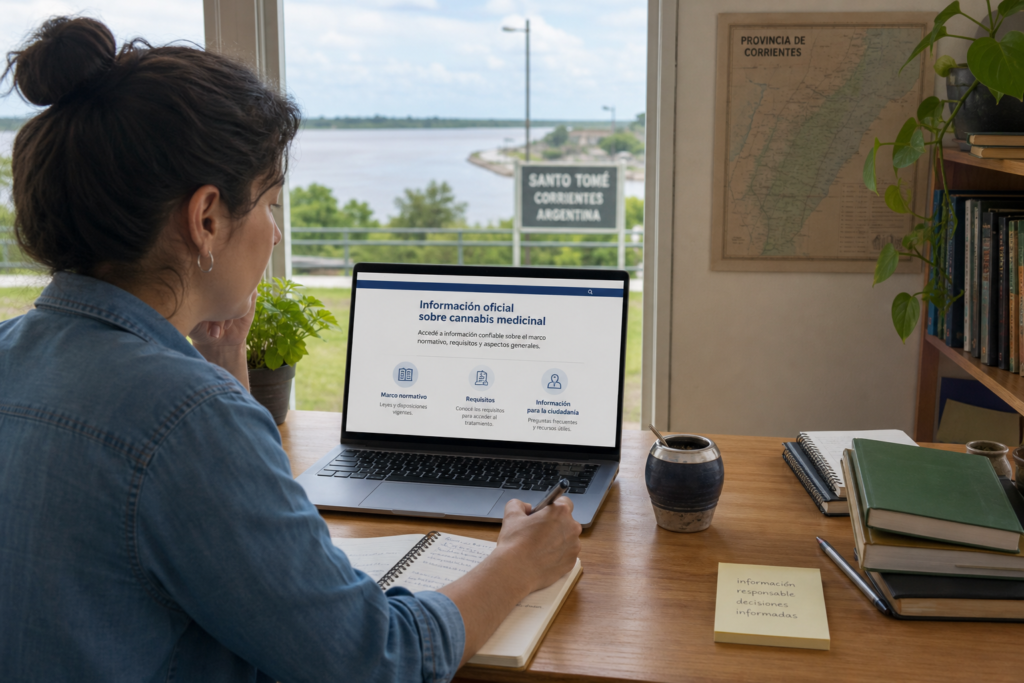
The most reliable starting point is the Argentine government information on medicinal cannabis. It explains the national framework and helps readers distinguish regulated medical access from informal commercial offers.
How to understand cannabis in Santo Tomé before buying
Searching for cannabis in Santo Tomé can produce a mixture of legal information, private clubs, informal delivery offers, medical services, and ordinary retail advertising. These categories are not interchangeable. A medical professional, a registered organization, and an anonymous online seller do not have the same responsibilities or legal status.
Check the purpose of use
Start by identifying whether the intended use is medical, personal, or research-related. If cannabis is being considered for pain, sleep, anxiety, epilepsy, nausea, or another condition, discuss it with a qualified clinician. Cannabis may interact with medicines and may not be appropriate for people with certain health conditions, during pregnancy, or for those who must drive or operate machinery.
Do not treat a seller’s product description as medical advice. Claims such as “cures pain,” “replaces prescription medicine,” or “has no side effects” are warning signs. A legitimate health discussion should include the person’s diagnosis, current medicines, possible risks, and a plan for monitoring effects.
Identify the product accurately
“Weed” may refer to dried flower, resin, oils, tinctures, capsules, edibles, or products containing different levels of THC and CBD. These products can have very different effects and legal classifications. Labels should clearly state ingredients, concentration, batch information, expiry details, and the name of a responsible producer or dispenser where applicable.
Unlabeled products create particular risks because the buyer cannot reliably know their potency, contamination status, or contents. Avoid products with unclear packaging, unexplained powders or liquids, exaggerated health claims, or instructions that encourage unusually large doses.
Cannabis laws in Santo Tomé: what shoppers should verify
Anyone researching cannabis laws in Santo Tomé should verify both national rules and any local requirements that apply in Corrientes. Legal status may differ according to the product, the intended use, the quantity, the method of access, and whether a person is carrying or transporting it.
Official guidance is more dependable than comments in a marketplace group. The National Administration of Medicines, Food and Medical Technology is a useful official source for checking regulatory information related to medicines and health products. When an online listing conflicts with government guidance, treat the listing as unreliable until its authorization can be confirmed.
Questions to ask before trusting a provider
- Is the provider legally authorized to offer this particular product?
- Can the provider identify the responsible business, professional, or organization?
- Does the product have clear labeling and traceable batch information?
- Are medical claims supported by a qualified health professional rather than a sales representative?
- Does the provider explain applicable registration, prescription, or documentation requirements?
- Is payment requested through a method that leaves no reliable record?
A refusal to answer basic questions is a reason to stop. So are pressure tactics, limited-time offers, requests for identity documents without a clear purpose, or demands for full payment before any verifiable information is provided.
Medical cannabis in Santo Tomé: safer legal routes
For people exploring medical cannabis in Santo Tomé, a clinician-led process is generally more responsible than buying an unknown product online. Begin with a consultation and explain the symptoms, existing diagnoses, previous treatments, allergies, and all medicines or supplements being used. The clinician can determine whether cannabis is appropriate and what follow-up may be needed.
Ask the healthcare professional what type of product is being considered, how its strength is measured, and how side effects will be monitored. Keep a record of the product name, batch or lot number, amount used, timing, and any changes in symptoms. This information can help identify adverse reactions and prevents accidental duplication with another product.
People who already have a legal authorization or registration should follow its conditions precisely. Do not assume that authorization to cultivate, possess, transport, or use one product automatically permits commercial resale or distribution. Different activities can have separate requirements.
Why informal online marketplaces are risky
Search results and social networks can make informal cannabis sellers appear established, but online presentation is not proof of quality or legality. These sellers may not provide a verifiable business address, independent testing, secure data practices, or a process for reporting adverse reactions.
Products may also be mislabeled. A stated THC or CBD concentration may be inaccurate, while contaminants such as pesticides, solvents, mold, or other substances may be impossible for a buyer to detect by appearance alone. Edibles are especially difficult to judge because effects can take longer to appear, increasing the risk of consuming more than intended.
There are also personal-safety concerns. Sharing identification documents, home addresses, financial details, or photographs with an unknown seller can expose buyers to fraud, harassment, theft, or further unwanted contact. Never meet an unknown provider alone or enter a private location merely because a listing promises a lower price.
Safer decisions if cannabis is legally available
Where a lawful medical route applies, use only products obtained through the authorized channel and follow the label or clinician’s directions. Do not drive, ride a motorcycle, operate machinery, or perform safety-sensitive work while impaired. Keep cannabis away from children and pets, and store it in its original, clearly marked packaging.
Avoid combining cannabis with alcohol, sedatives, or other substances unless a qualified professional has specifically assessed the combination. Stop using the product and seek medical advice if severe confusion, chest pain, breathing difficulty, fainting, persistent vomiting, or a serious allergic reaction occurs. In an emergency, contact local emergency services rather than relying on the seller for help.
Practical consumer checklist
- Confirm whether the product and intended use are legal in your circumstances.
- Consult a qualified healthcare professional when use is medical or involves another treatment.
- Verify the provider through an official source, not only through reviews or social media.
- Choose products with clear, complete, and traceable labeling.
- Keep records of what was used and watch for adverse effects.
- Protect personal information and avoid untraceable payments to unknown sellers.
- Do not share or resell a product unless the law clearly allows it.
How to research local options without relying on dubious listings
Use government health portals, recognized medical institutions, and licensed healthcare professionals as the first layer of research. A local pharmacy may also explain whether it handles an authorized medicinal product, but it should not be expected to validate every online seller in the area.
If you contact a provider, ask for its legal name, authorization details, product documentation, and written terms. Verify those details independently. A phone number, polished logo, or customer testimonial is not enough. Do not treat search-engine rankings as evidence that a marketplace is approved.
Because rules and programs can change, check the date of any information you find. If a page does not identify its jurisdiction, legal basis, responsible organization, or update date, use it only as a lead and confirm the information through an official source.
Bottom line for people searching for weed in Santo Tomé
The most useful answer to a search for weed in Santo Tomé is not a list of anonymous sellers. It is a clear distinction between regulated medical access and unlicensed marketplaces. In Santo Tomé, Corrientes, verify the current rules, consult a qualified professional for health-related use, and check official sources before sharing money or personal information.
There may be no reliable way to judge an informal product from a listing alone. If a provider cannot demonstrate authorization, traceability, accurate labeling, and responsible customer support, walking away is the safer decision. Legal compliance and product accountability matter more than convenience, discounts, or delivery promises.
Conclusion
Popular online marketplaces are not automatically legitimate places to buy cannabis. For residents of Santo Tomé, the responsible route is to understand the applicable law, use official information, and seek medical guidance when cannabis is being considered for a health condition. Avoid anonymous sellers, unverifiable claims, unlabeled products, and requests for sensitive information. A cautious, evidence-based approach protects both personal safety and legal rights.

The Ziklane Editorial Team is dedicated to providing accurate, well-researched, and up-to-date information on cannabis laws and regulations around the world. Our content is created through careful research of publicly available legal sources, government publications, and reputable references to help readers better understand local cannabis legislation. We are committed to delivering educational, factual, and regularly updated content while encouraging readers to comply with the laws of their respective countries and regions.