
Searching for online retailers selling weed in Casilda can produce a confusing mix of websites, social-media accounts, delivery offers and medical-cannabis information. Before sharing personal details or paying for a product, it is important to distinguish between a legitimate, legally permitted service and an unverified seller operating outside the rules.
Casilda is in Santa Fe Province, Argentina, so national regulations are central to understanding what can legally be cultivated, prescribed, possessed or supplied. Local availability does not automatically make a product legal. This guide explains what to check, how medical access differs from recreational sales, and how residents can reduce the risk of scams, contaminated products and legal problems.
Online retailers selling weed in Casilda: what shoppers should know
There is a major difference between a website that publishes information about cannabis and a retailer that is legally authorized to sell cannabis products. A polished website, delivery logo or large social-media following is not proof of authorization. Sellers may use terms such as “premium,” “discreet,” or “100% legal” without providing verifiable details about their business or regulatory status.
In Argentina, cannabis access depends on the type of product and its intended use. Medical cannabis has a specific regulatory framework, while recreational retail sales are not equivalent to buying an ordinary consumer product online. A seller offering flowers, oils, edibles or vapes for general delivery should therefore be assessed carefully rather than assumed to be lawful.
For a general overview of Argentina’s medical-cannabis framework, consult the Argentine Ministry of Health cannabis medicinal information. Official guidance is more reliable than claims made in advertisements or messaging groups and may change as regulations develop.
Understanding cannabis laws in Casilda and Argentina
People looking for cannabis laws in Casilda should begin with national law and then check whether any provincial or municipal requirements apply. A local delivery route does not override national rules. The legal position can also depend on whether the product is intended for medical treatment, whether a person has the required registration, and whether the seller is authorized to produce or distribute it.
Medical access is different from recreational retail
Medical cannabis may involve a healthcare professional, an approved treatment pathway and registration through the relevant national system. The presence of a medical label on a product does not, by itself, prove that the item is approved or that the seller can legally distribute it. Consumers should ask which entity authorized the product, how its quality is tested and what documentation applies.
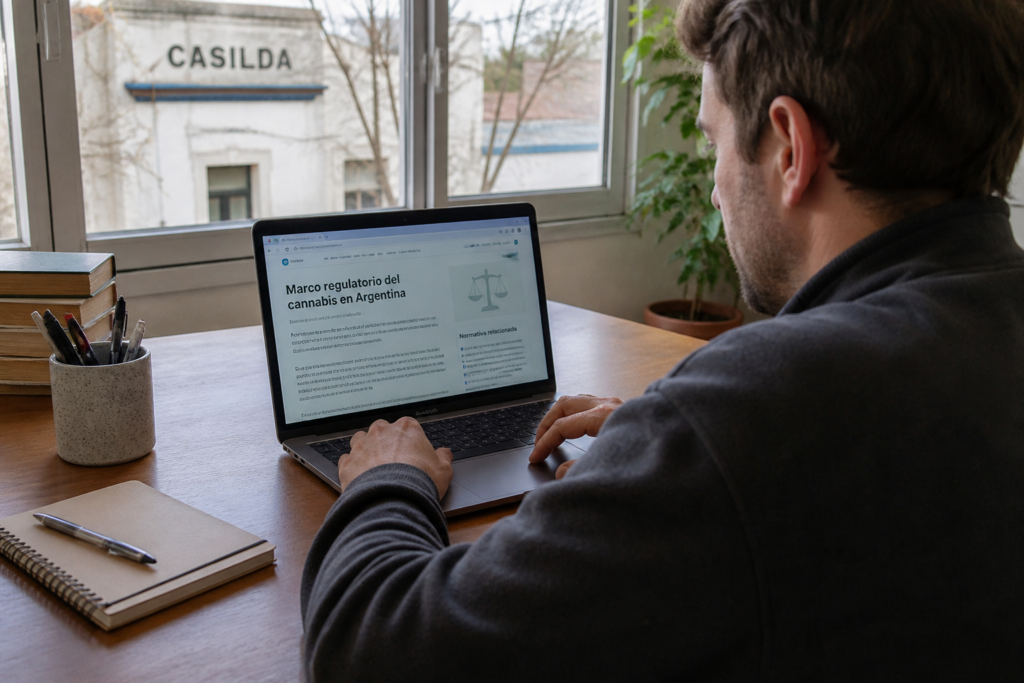
Argentina’s REPROCANN system is associated with regulated access for qualifying medical-cannabis patients and authorized cultivation arrangements. Eligibility and procedures can change, so users should review the current information on the official REPROCANN page rather than relying on screenshots or old social-media posts.
Why product type matters
Flowers, extracts, capsules, topical products, seeds and foods may be treated differently under applicable rules. A product containing cannabidiol is not automatically interchangeable with a product containing significant levels of tetrahydrocannabinol. Labels should clearly identify ingredients, concentration and intended use, but an honest-looking label still needs independent verification.
Anyone with a medical condition, who takes prescription medicines, is pregnant or is considering cannabis for a child should speak with a qualified healthcare professional. Cannabis can produce side effects and may interact with medicines. Online sellers should not replace a clinician’s assessment or promise that cannabis will cure a disease.
How to evaluate a cannabis website before making contact
When researching cannabis in Casilda, use the following checks before sending money or identity documents:
- Look for a real business identity. The site should provide a legal business name, physical contact information, customer-service details and clear terms. A phone number alone is not sufficient evidence.
- Ask about authorization. A seller should be able to explain what permits or registrations allow it to offer the specific product. Be cautious when answers are vague, evasive or based only on claims of “private membership.”
- Review the label. Check whether the package identifies cannabinoids, concentration, batch information, ingredients, warnings, an expiration or production date and storage instructions.
- Request testing information. A credible supplier should be able to explain how products are tested for potency, pesticides, heavy metals, microbes and contaminants. A decorative certificate with no laboratory identity is not useful evidence.
- Check payment and privacy practices. Avoid sellers demanding cryptocurrency, gift cards or urgent transfers. Do not send a scan of an identity document unless there is a clear, lawful reason and a trustworthy privacy policy.
- Be wary of medical promises. Claims that a product treats cancer, cures addiction or works for everyone are warning signs, particularly when no qualified professional is involved.
Red flags associated with cannabis delivery offers
Searches for weed in Casilda may lead to informal sellers who operate through messaging applications. Informal contact does not automatically prove criminal activity, but several warning signs should make a buyer stop and reassess the offer.
- Prices are far below comparable products, or a seller pressures you to pay immediately.
- The account has recently been created, frequently changes names or uses copied product photographs.
- The seller refuses to identify the product’s origin, ingredients or cannabinoid content.
- Delivery is promised without any explanation of the applicable legal framework.
- The seller guarantees that police, customs or health authorities cannot intervene.
- Reviews appear repetitive, anonymous or impossible to verify.
- The product is sold in an unmarked bag, ordinary food container or damaged package.
Do not attempt to bypass age checks, import restrictions or other legal controls. An offer of “discreet shipping” is not a substitute for lawful authorization, and accepting a parcel can create risks even when a buyer did not know how the product was sourced.
Safer ways to research medical cannabis in Casilda
For people seeking medical cannabis in Casilda, the safest starting point is a consultation with a qualified doctor or other authorized healthcare professional. Explain the condition being treated, current medicines, allergies and previous treatments. A clinician can discuss whether cannabis is appropriate, what evidence exists and how to monitor effects.
Questions to ask a healthcare professional
- Is cannabis suitable for my condition and current treatment?
- Which formulation and cannabinoid profile, if any, should be considered?
- What dose and schedule are appropriate?
- Which side effects or interactions should I monitor?
- How should the product be stored and kept away from children?
- What documentation or registration is required for lawful access?
Patients should keep copies of prescriptions, registration records and product information. They should also avoid changing dose or combining cannabis with alcohol or sedating medicines without professional advice. Driving or operating machinery after using an impairing product can be dangerous and may have legal consequences.
What legitimate online information should include
A trustworthy cannabis information page should distinguish facts from marketing. It should identify the jurisdiction it discusses, provide dates for regulatory information, explain limitations and point readers toward official or clinical sources. It should not present anonymous testimonials as medical evidence or imply that every product is safe because it is plant-based.
Retail websites should also make their privacy, refunds, complaints and product-recall procedures understandable. If a product causes an unexpected reaction, stop using it and seek medical advice. Keep the packaging if possible so a professional can identify the ingredients and batch details.
Questions to ask before trusting a Casilda seller
- What is the seller’s registered legal identity?
- Which authority permits the sale or distribution of this specific product?
- Where was the product produced, and can its origin be documented?
- Does the package show a batch number, ingredients and cannabinoid concentrations?
- Is there a recent laboratory report from an identifiable testing facility?
- What happens if the product is recalled or causes a problem?
- Does the service protect customer data and provide a clear complaint channel?
If a seller cannot answer these questions clearly, the safest choice is not to proceed. A professional appearance, fast delivery and positive comments are not substitutes for legal status or product-quality controls.
Conclusion
Finding online retailers selling weed in Casilda requires more than comparing prices or delivery times. Residents should first determine whether they are researching medical access, general information or an unregulated retail offer. National Argentine rules, the product type, authorization and patient status all matter.
Use official government information, consult a qualified healthcare professional for medical questions and treat anonymous online sellers with caution. Avoid products without clear labeling or testing, never send unnecessary identity or payment information, and do not assume that a local delivery service is legal simply because it operates openly. Careful verification is the best way to protect health, privacy and legal rights.

The Ziklane Editorial Team is dedicated to providing accurate, well-researched, and up-to-date information on cannabis laws and regulations around the world. Our content is created through careful research of publicly available legal sources, government publications, and reputable references to help readers better understand local cannabis legislation. We are committed to delivering educational, factual, and regularly updated content while encouraging readers to comply with the laws of their respective countries and regions.