
Searching for online retailers selling weed in Formosa can be confusing because websites and social-media accounts may advertise cannabis products without making their legal status clear. In Formosa, Argentina, the distinction between medicinal cannabis access and recreational cannabis sales is especially important. A website, messaging account, or delivery service is not automatically an authorized retailer.
This guide explains how to assess online cannabis offers, what the current Argentine framework generally permits, and which warning signs should make a buyer stop. It is designed to help residents of Formosa make informed decisions without promoting unlawful purchases or unverified products.
What online cannabis sales mean in Formosa
The phrase “online cannabis retailer” can describe several very different businesses. Some sellers offer hemp-derived products, such as cosmetics or foods, while others advertise cannabis flowers, oils, extracts, or products containing cannabinoids. Their legal treatment may differ according to the ingredients, concentration, intended use, labeling, and authorization behind the product.
For people searching for weed in Formosa, the most important point is that an online listing does not prove that the seller is licensed to sell the product. A polished store, local delivery promise, or customer-review page can exist alongside missing permits, unclear ingredients, and no verifiable business identity.
Argentina’s cannabis rules are divided between medicinal access, regulated production, and other forms of cannabis activity. Recreational retail should not be assumed to be legal simply because a seller operates publicly online. Rules can also change, so buyers should consult current information from official Argentine authorities rather than relying on advertisements or informal advice.
Understanding cannabis laws in Formosa
Cannabis laws in Formosa operate within Argentina’s national legal framework, while provincial and local authorities may affect health services, commerce, inspections, and enforcement. The national medicinal cannabis framework is associated with Law 27,350 and subsequent regulations. It created a structure for medicinal, therapeutic, and palliative use, but it did not create a general recreational cannabis retail market.
The official text of Argentina’s Law 27,350 is a useful starting point for understanding the national medicinal-cannabis framework. Readers should also check later regulations and official updates because the practical requirements for patients, caregivers, cultivation, and product access may develop over time.
In practical terms, someone in Formosa should distinguish between:
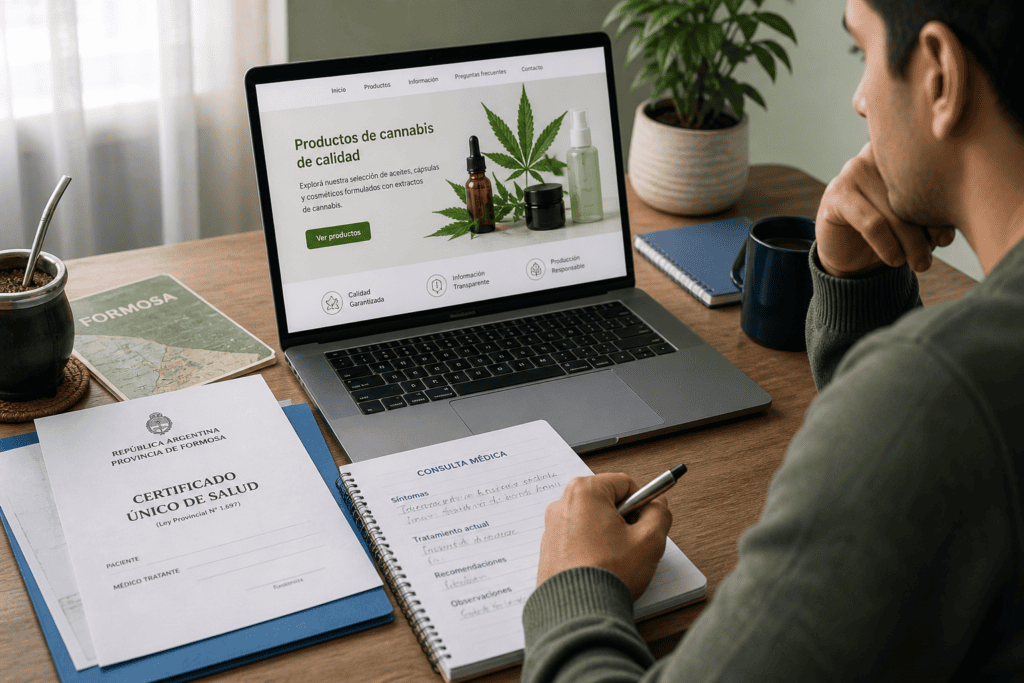
- Medicinal access: Products or cultivation connected to a recognized medical purpose and the applicable authorization process.
- Hemp or cannabinoid goods: Products that may fall under separate rules depending on their ingredients, claims, and registration.
- Unregulated cannabis sales: Offers with no reliable proof of authorization, testing, traceability, or lawful distribution.
- Recreational retail claims: Advertisements that imply anyone can legally order cannabis for non-medical use without restrictions.
Because these categories can look similar online, buyers should not treat a seller’s description as a legal determination. A health professional, regulator, or qualified lawyer can provide advice for a specific situation.
Medical cannabis in Formosa: the lawful route to investigate
People seeking medical cannabis in Formosa should begin with a healthcare professional rather than an anonymous online seller. A clinician can discuss symptoms, established treatments, possible risks, drug interactions, and whether a cannabis-based therapy is appropriate. Cannabis is not risk-free, and self-treatment may delay diagnosis or conflict with other medicines.
REPROCANN and patient documentation
Argentina has a national registration system commonly known as REPROCANN for qualifying medicinal-cannabis patients and other authorized participants. Eligibility, documentation, medical support, and permitted activities depend on the current rules. Registration should be completed through official channels, not through a retailer that promises approval in exchange for a payment.
The Argentine government’s REPROCANN information explains the official system and its requirements. Applicants should read the current instructions carefully and confirm whether their medical circumstances and intended activity fit the rules. A registration or authorization, where granted, does not necessarily turn every online cannabis seller into a lawful pharmacy or retailer.
Why a prescription or registration does not solve every purchasing issue
Authorization for medicinal use can address a person’s lawful access or cultivation rights, but it does not guarantee that a product advertised online is safe or approved. Buyers still need to consider the source, formulation, labeling, storage, and whether the product is actually intended for the authorized use.
Be cautious of sellers claiming that a registration number allows unrestricted delivery of any cannabis product. Legitimate documentation should be verifiable through the relevant authority, and medical authorization should never require a patient to conceal information from a doctor or regulator.
How to evaluate online cannabis retailers in Formosa
When reviewing a website or social-media account, focus first on verifiable information rather than price, branding, or delivery speed. A responsible seller should be able to explain what the product contains, who makes it, and under which authorization it is offered.
Checks worth making
- Business identity: Look for a legal business name, physical contact information, customer-service details, and a clear explanation of who is responsible for the product.
- Product description: The listing should identify the ingredients, cannabinoid content, intended use, batch information, and expiration or production date where applicable.
- Independent testing: A credible certificate of analysis should identify the tested batch and show relevant results, such as cannabinoid levels and contamination screening. A generic image or undated laboratory document is not enough.
- Regulatory information: The seller should explain which Argentine authority regulates the product and provide verifiable registration or authorization details when required.
- Transparent terms: Refund, delivery, privacy, and complaint procedures should be written clearly instead of being handled only through disappearing messages.
- Medical claims: Be skeptical of promises to cure cancer, anxiety, epilepsy, pain, or other conditions. Strong therapeutic claims require strong clinical and regulatory support.
These checks cannot turn an unauthorized product into a legal one, but they can help consumers identify obvious risks before sharing personal information or money.
Warning signs of unsafe or illegal sellers
Many risky sellers use urgency and secrecy to prevent buyers from asking questions. A request for cryptocurrency, prepaid gift cards, or an immediate bank transfer may make refunds difficult. A seller that refuses to provide a legal identity, product batch details, or written terms should be treated cautiously.
- Claims that cannabis is “fully legal everywhere” in Argentina.
- Promises of guaranteed medical results or instant relief.
- No ingredient list, testing information, or batch identification.
- Products packaged in unmarked bags or ordinary containers.
- Pressure to move from a public website to an encrypted chat before basic questions are answered.
- Requests for copies of identity documents without explaining why they are needed.
- Delivery claims that conflict with the customer’s authorization or the product’s legal category.
- Reviews that appear copied, unusually similar, or impossible to verify.
Unregulated cannabis may contain inaccurate cannabinoid concentrations, pesticides, mold, solvents, heavy metals, or other contaminants. Oils and edible products can be particularly difficult to assess when the label does not state serving size or laboratory results. Children, pregnant people, older adults, and people taking prescription medicines should be especially cautious and seek professional advice.
Safer alternatives to informal online purchases
If the goal is symptom management, discuss established treatment options with a qualified healthcare professional and ask whether medicinal cannabis is appropriate. A doctor or pharmacist may also help identify lawful products and explain how to use them responsibly if they are available through an authorized pathway.
If the goal is to understand cultivation or patient rights, use official government information and keep copies of relevant applications, approvals, and medical documentation. Avoid intermediaries who guarantee authorization, offer to manufacture documents, or claim to bypass formal procedures.
For hemp-derived products, check the label and the seller’s regulatory information before buying. “Hemp,” “CBD,” and “natural” are not universal guarantees of legality, purity, or effectiveness. The product’s actual composition and intended claims matter more than the marketing language.
Questions to ask before contacting a seller
- What is the exact legal identity of the business?
- What Argentine authority regulates this product or activity?
- Can the seller provide a batch-specific laboratory report from an identifiable laboratory?
- Does the product contain THC, CBD, or other active ingredients, and in what amount?
- Is the product intended for medical use, general consumer use, or another regulated category?
- What documentation is required from the buyer, and how will personal data be protected?
- What happens if the package is damaged, mislabeled, or different from the listing?
If the answers are vague, contradictory, or based only on testimonials, do not assume the offer is safe. Saving a product page, receipt, conversation, and payment record may be useful if a complaint becomes necessary, but consumers should avoid sending further money to recover funds from a suspected scam.
Making an informed decision about cannabis in Formosa
Interest in cannabis in Formosa may reflect medical needs, curiosity about hemp products, or a desire for convenient delivery. Each reason calls for a different legal and health assessment. The safest approach is to identify the product category, confirm the applicable rules, consult a healthcare professional when medical use is involved, and verify the seller independently.
Online availability is not the same as legal availability. A seller may advertise locally while operating outside Formosa, outside Argentina, or outside any meaningful regulatory system. Buyers should be particularly careful with cross-border shipping, since customs, import, health, and controlled-substance rules may apply in addition to domestic requirements.
Conclusion
Finding online retailers selling weed in Formosa does not necessarily mean that those retailers are authorized or that their products are safe. Argentina’s medicinal cannabis framework provides specific pathways, but it should not be confused with unrestricted recreational retail. Residents should verify current rules through official sources, discuss medical use with a qualified professional, and demand clear information about product identity, testing, and regulatory status.
When an online offer depends on secrecy, exaggerated health promises, or an urgent payment, walking away is usually the safer choice. Careful verification protects both personal health and personal information while helping consumers distinguish legitimate medicinal or hemp-related options from unregulated cannabis sales.

The Ziklane Editorial Team is dedicated to providing accurate, well-researched, and up-to-date information on cannabis laws and regulations around the world. Our content is created through careful research of publicly available legal sources, government publications, and reputable references to help readers better understand local cannabis legislation. We are committed to delivering educational, factual, and regularly updated content while encouraging readers to comply with the laws of their respective countries and regions.