
If you are searching for weed vendors in Himmafushi, the most important fact is that buying, possessing, using, importing, or distributing cannabis in the Maldives can expose you to serious legal and personal risks. Himmafushi is a small island community, not a destination with a regulated recreational cannabis market, licensed dispensaries, or a dependable legal way to purchase marijuana.
Rather than trying to identify sellers, visitors and residents should understand the local legal position, recognize common scams, protect themselves from unsafe products, and know where to seek legitimate medical or emergency help. This guide explains those issues without directing anyone to illegal suppliers or helping arrange a drug purchase.
Why looking for weed in Himmafushi is risky
In a small island community, an informal offer may appear to come through a friend, a social-media account, a boat operator, a guesthouse contact, or someone met near a café or tourist area. None of those channels provides legal protection or confirms that a product is genuine. An offer can be a scam, an attempt to obtain money or personal information, or a setup that creates legal problems.
Illegal cannabis also has no reliable labeling, dosage information, laboratory testing, or quality control. A substance sold as marijuana may be contaminated, unusually strong, mixed with other drugs, or not cannabis at all. Edibles are especially difficult to assess because their strength may be unknown and their effects can take much longer to appear than inhaled products.
- You may lose money to a seller who disappears after receiving payment.
- You may be exposed to robbery, blackmail, extortion, or threats.
- You may be given a different substance from the one advertised.
- Messages, payments, and meetings can create evidence of suspected involvement in illegal activity.
- Trying to transport cannabis between islands, through a port, or through an airport can create additional risk.
Understand cannabis laws in Himmafushi and the Maldives
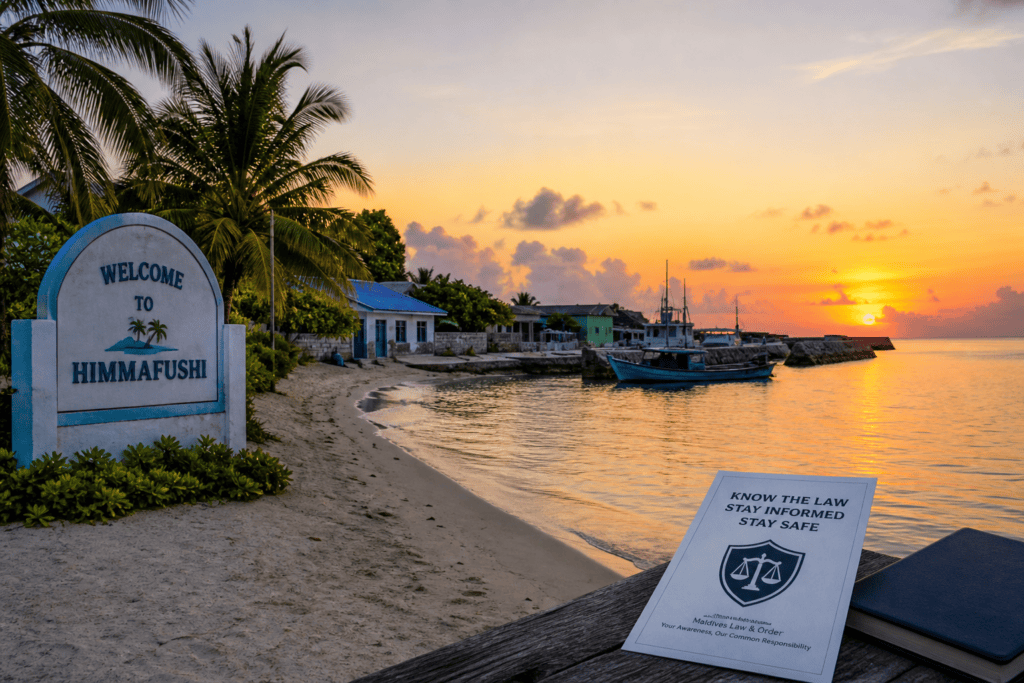
Himmafushi follows Maldivian law. The island does not have a separate legal cannabis framework for tourists or residents. Claims that a resort island, local contact, or private party is “safe” should not be treated as legal advice.
Maldives law enforcement can treat possession, consumption, sale, supply, and importation as serious offenses. The consequences depend on the facts of a case and the law in force, but they can include arrest, investigation, court proceedings, imprisonment, fines, deportation, or restrictions on future travel. Foreign visitors should not assume that a prescription or legal purchase in another country automatically authorizes possession in the Maldives.
For current official information, consult the Maldives Police Service and obtain advice from a qualified lawyer or your embassy if you are facing a specific legal situation. Laws and enforcement practices can change, so online comments and travel anecdotes are not reliable substitutes for current official guidance.
Do not rely on “medical” claims
Searching for medical cannabis in Himmafushi does not make an informal purchase lawful or medically safe. A seller’s statement that a product is medicinal is not the same as a prescription, an approved medicine, or a licensed pharmacy supply.
If you use cannabis for pain, sleep, anxiety, nausea, epilepsy, or another condition, speak with a qualified clinician before traveling. Bring only medicines that are permitted, properly labeled, and supported by the documentation required by Maldivian authorities. Before departure, verify import rules with the relevant official authority and your airline. Do not hide medication in luggage or transfer it to another container.
How to avoid scams linked to cannabis in Himmafushi
People searching for cannabis in Himmafushi may be targeted by accounts that advertise discreet delivery, guaranteed quality, secret menus, or unusually low prices. These promises are warning signs, not evidence of a trustworthy service.
Common warning signs
- A stranger asks for an advance payment, cryptocurrency, gift cards, or a photograph of your passport.
- The seller insists on meeting in an isolated location, on a boat, or at a private accommodation.
- The account has recently been created, uses copied photographs, or refuses a verifiable identity.
- The seller pressures you to act quickly or claims that police, customs, or a hotel employee can provide protection.
- You are asked to carry a package, store something for another person, or move an item between islands.
- The product is described with medical or laboratory claims but has no legitimate packaging, prescribing information, or traceable source.
Do not send identification documents, accommodation details, banking credentials, or intimate images to an unknown contact. If someone threatens you after you decline an offer, preserve the messages and contact local law enforcement or your embassy. Do not agree to a second meeting to recover money or confront the person yourself.
Safer alternatives if you are already in Himmafushi
If your goal is relaxation, sleep, pain management, or relief from stress, consider legal and lower-risk options first. Speak with your accommodation host about reputable wellness services, use established providers rather than informal referrals, and check that any treatment is appropriate for your health.
For a health concern, visit a licensed medical facility or ask your accommodation provider to help you contact legitimate care. A clinician can assess symptoms, check for medication interactions, and explain which treatments are available lawfully. Avoid buying prescription medicines from social-media sellers or using another person’s medication.
For ordinary travel stress, practical measures can help: maintain hydration, limit alcohol, protect sleep, take breaks from heat and sun, and use quiet activities such as walking, swimming where safe, reading, or breathing exercises. These steps are not a substitute for medical care, but they can reduce common travel-related discomfort without creating legal exposure.
What to do if you have already bought or used an unknown substance
If you have already purchased cannabis or an unknown product, do not sell it, share it, carry it to another location, flush it into the environment, or attempt to conceal it from authorities. Avoid driving, boating, swimming, or operating equipment while impaired. Keep away from children and other people who could accidentally consume it.
Seek urgent medical help if someone has trouble breathing, collapses, has a seizure, becomes severely confused, experiences chest pain, cannot be awakened, or behaves dangerously. Tell medical staff what was taken, when it was taken, and how much may have been used. Honest information can help clinicians choose appropriate care.
For less urgent concerns such as panic, dizziness, vomiting, or extreme drowsiness, stay with the person in a safe place and contact a qualified medical provider. Do not attempt to counteract an unknown substance with alcohol, stimulants, or additional drugs.
Travel and border considerations
Visitors should be especially cautious about airport, seaport, and inter-island travel. Never accept a package, suitcase, parcel, or sealed container from someone you do not know well. Do not transport a substance for another person, even if they say it is harmless, legal elsewhere, or needed urgently.
Before traveling, check official rules for medicines, supplements, and controlled substances. Product names can differ between countries, and a medicine available legally at home may be restricted abroad. Keep permitted medication in its original packaging and carry supporting documents when required. When in doubt, ask the relevant Maldivian authority or your embassy before departure rather than relying on a seller’s assurance.
Reliable information is better than informal vendor advice
Online discussions about cannabis laws in Himmafushi often mix old information, personal stories, and claims copied from other countries. Use official government sources for legal requirements and recognized health organizations for general drug information. The World Health Organization’s cannabis information can provide health context, but it does not replace advice about Maldivian law or an individual medical assessment.
If you are a tourist facing a legal issue, contact your embassy or consulate and obtain independent legal advice. If you are a resident, use a licensed local lawyer or an appropriate health professional. Keep records of threatening messages, payment requests, or suspected fraud, but avoid publicly posting private information that could escalate the situation.
Final advice for visitors and residents
There is no dependable or lawful method for finding weed vendors in Himmafushi. Informal sellers expose buyers to legal consequences, scams, unsafe products, and potential harm. The safer approach is to avoid arranging a purchase, do not carry packages for others, and seek licensed medical or legal assistance when you need it.
Understanding local rules before traveling, protecting your personal information, and responding quickly to a medical emergency are far more useful than relying on rumors about where to buy cannabis. If you have a specific health or legal concern, use an accredited professional and current official guidance.

The Ziklane Editorial Team is dedicated to providing accurate, well-researched, and up-to-date information on cannabis laws and regulations around the world. Our content is created through careful research of publicly available legal sources, government publications, and reputable references to help readers better understand local cannabis legislation. We are committed to delivering educational, factual, and regularly updated content while encouraging readers to comply with the laws of their respective countries and regions.