
Searching for trustworthy cannabis retailers in Qusour requires an important reality check. Qusour is a residential area in Kuwait, where cannabis possession, sale, importation, and use are subject to strict legal controls. As a result, there is no ordinary licensed retail market comparable to legal dispensaries in some other countries. Websites, social-media accounts, or private sellers claiming to offer reliable delivery in the area should not be treated as verified retailers.
This guide explains how to assess the situation safely, recognize misleading offers, understand the legal and health concerns, and find legitimate help when cannabis-related questions involve pain, sleep, anxiety, or another medical issue. It does not provide instructions for buying prohibited substances or avoiding law enforcement.
Are there trustworthy cannabis retailers in Qusour?
For consumers in Qusour, the central issue is that a legal recreational cannabis retail system is not available in Kuwait. A seller may use professional branding, product menus, customer reviews, or delivery language, but those features do not establish legal authorization. A business registration, online payment page, or local address also does not prove that a seller is permitted to handle controlled substances.
Anyone searching for weed in Qusour should therefore be cautious about treating online listings as legitimate businesses. An unverified seller can expose a customer to legal consequences, financial fraud, identity theft, extortion, or products that contain unknown substances. Claims such as “government approved,” “discreet and risk-free,” or “medical grade” should be independently verified through an official authority rather than accepted at face value.
Why online listings are especially difficult to verify
Illegal sellers often operate anonymously and can change account names, phone numbers, websites, and payment details quickly. Product photographs may be copied from other websites, while testimonials can be fabricated or selectively presented. Even when a package appears professionally labeled, the label may not accurately describe its contents, strength, or origin.
There is also no dependable consumer-protection process for an illegal transaction. If a product is missing, contaminated, misrepresented, or connected to harassment, a buyer may be reluctant to report the incident. That lack of accountability is one of the clearest differences between a regulated pharmacy system and an unlicensed marketplace.
Understanding cannabis laws in Qusour and Kuwait
The applicable national law matters more than the neighborhood where a transaction takes place. Qusour does not have a separate cannabis retail framework, and moving a transaction to a private residence, messaging app, or delivery service does not make it lawful. Possession, consumption, distribution, and importing controlled substances may carry serious consequences, with outcomes depending on the facts and the relevant law.
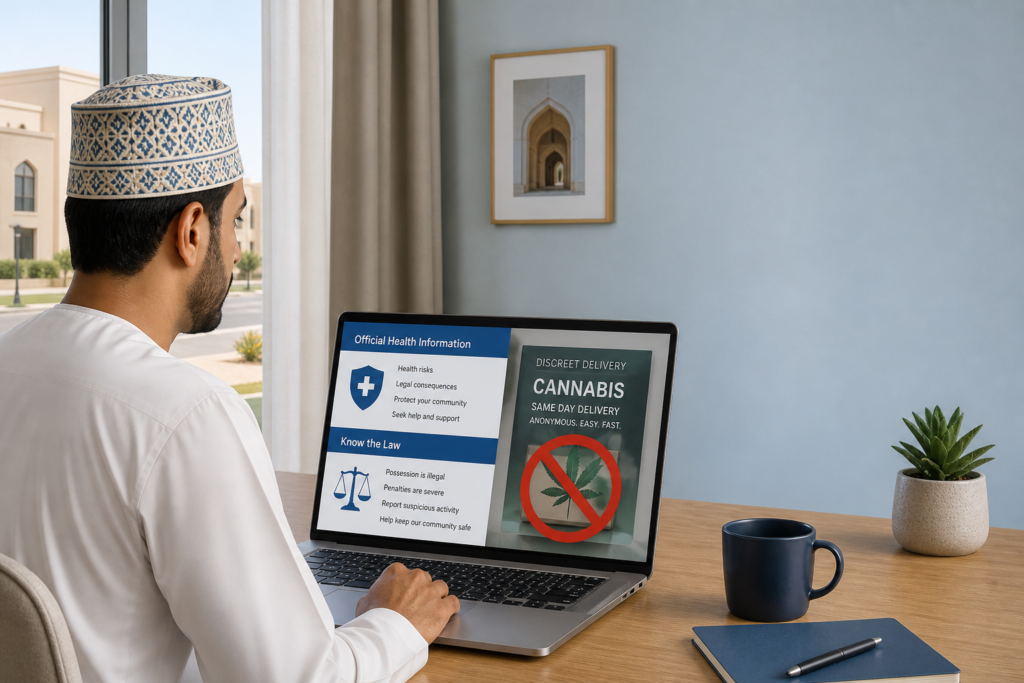
Because laws and enforcement procedures can change, legal questions should be directed to a qualified Kuwait-based lawyer or the appropriate official authority. The Kuwait Ministry of Interior is an appropriate starting point for official public-safety and legal information. Do not rely on anonymous forum posts or seller assurances when the consequences may be significant.
Visitors and residents should also remember that bringing cannabis products across borders can create additional risks. Products that are permitted in one country may remain prohibited when entering Kuwait. This can include dried plant material, oils, edibles, concentrates, and some products marketed as hemp or cannabidiol. Product names and packaging do not determine legal status by themselves.
How to identify misleading cannabis offers
When researching cannabis in Qusour, the safest approach is to recognize warning signs rather than investigate sellers by making contact. Common indicators of an untrustworthy or illegal offer include:
- Requests for cryptocurrency, gift cards, prepaid vouchers, or unusual transfers before any confirmed service.
- Pressure to act immediately because a product or delivery slot is supposedly limited.
- Promises of guaranteed quality, guaranteed effects, or complete legal immunity.
- Requests for passport copies, banking credentials, one-time passwords, or unnecessary personal details.
- Unverifiable claims that a product is prescribed, licensed, laboratory tested, or approved by a health authority.
- Accounts that repeatedly change names, locations, payment instructions, or contact numbers.
- Offers to conceal products in ordinary packages or to bypass customs and official screening.
Do not send identification documents, financial information, intimate images, or additional payments to recover money from a suspected scam. Preserve messages and transaction records if you have already been contacted, then seek advice from your bank, the relevant platform, and an appropriate official authority.
Health risks from unregulated cannabis products
Even where cannabis is legal, product quality depends on testing, labeling, storage, and age controls. Unregulated products may have inaccurate potency, mold, pesticides, heavy metals, synthetic cannabinoids, or other undisclosed ingredients. Edibles can be particularly difficult to judge because effects may be delayed, encouraging accidental overconsumption.
The World Health Organization’s cannabis information summarizes recognized concerns, including impairment, dependence, and possible mental-health effects. Risks may be greater for adolescents, people with a personal or family history of psychosis, people who are pregnant or breastfeeding, and those taking medicines that can interact with psychoactive substances.
When urgent medical help is appropriate
Seek urgent medical care after suspected cannabis exposure if someone has difficulty breathing, chest pain, a seizure, severe agitation, extreme confusion, loss of consciousness, or thoughts of self-harm. Children and older adults may be especially vulnerable to accidental exposure. Do not attempt to treat a serious reaction with another substance, and tell medical staff what may have been taken if that information is available.
Safer legal options for medical concerns
People often search for legal cannabis options in Kuwait because they are trying to manage a genuine health problem. A safer route is to book an appointment with a licensed doctor and describe the symptoms, current medicines, previous diagnoses, and treatments already tried. A clinician can assess the underlying issue and discuss lawful options, including referrals or tests when appropriate.
Do not assume that a prescription or authorization from another country automatically permits cannabis possession in Kuwait. Before traveling with any medicine, confirm the rules with the relevant Kuwaiti authority and keep medicines in their original packaging with supporting documentation. A pharmacist or doctor can help clarify whether a particular product is allowed.
Questions to ask a licensed healthcare professional
- What condition might be causing the symptoms?
- Which approved treatments are available locally?
- Could the proposed treatment interact with current medicines?
- What warning signs should prompt urgent care?
- Are there non-drug options, such as physical therapy, counseling, sleep support, or lifestyle changes?
This approach may take longer than responding to an online advertisement, but it creates a documented care pathway and avoids the unknown composition and legal exposure associated with illicit products.
What to do if you have already contacted a seller
If you have only exchanged messages, stop communication and do not provide more personal or financial information. If money has been sent, contact the payment provider promptly and ask whether the transaction can be canceled or flagged. Change passwords if you shared login details, enable two-factor authentication, and monitor accounts for unusual activity.
If you received a package, do not consume or redistribute its contents. Avoid opening suspicious parcels unnecessarily, keep children and pets away, and obtain advice from the relevant authorities or a healthcare professional if exposure has occurred. If you believe you are being threatened, preserve evidence and seek immediate help from local law enforcement.
A practical decision guide for residents of Qusour
- Check the legal position first. Do not assume that a website or social-media account is licensed merely because it serves Qusour.
- Reject anonymous sellers. Avoid offers that depend on secrecy, advance payment, or promises to bypass official processes.
- Protect your information. Never send identity documents, banking credentials, or verification codes to an unverified contact.
- Use healthcare channels for health needs. Discuss pain, insomnia, anxiety, or other symptoms with a licensed clinician.
- Get help after exposure or fraud. Contact medical services for serious symptoms and financial providers or authorities after suspected scams.
Conclusion
There is no reliable basis for recommending ordinary weed shops or delivery sellers in Qusour. In Kuwait, claims of discreet, guaranteed, or medically approved cannabis sales should be treated as potential legal, financial, and health risks unless verified through an official channel. The safest response is to avoid unlicensed sellers, protect personal information, consult a qualified lawyer for legal questions, and speak with a licensed healthcare professional about medical concerns.
For anyone researching cannabis laws in Qusour, the most useful standard is simple: trust official institutions and licensed professionals, not anonymous listings or seller promises.

The Ziklane Editorial Team is dedicated to providing accurate, well-researched, and up-to-date information on cannabis laws and regulations around the world. Our content is created through careful research of publicly available legal sources, government publications, and reputable references to help readers better understand local cannabis legislation. We are committed to delivering educational, factual, and regularly updated content while encouraging readers to comply with the laws of their respective countries and regions.