
People searching for online forums discussing where to buy weed in Rawda may encounter anonymous posts, private groups, and direct messages that claim to connect buyers with local sellers. These discussions can appear helpful, but they are often unreliable, risky, and difficult to verify. A post that looks like a recommendation may be an attempt to steal money, collect personal information, or expose someone to legal trouble.
This guide does not provide sources for buying cannabis. Instead, it explains how to assess forum content responsibly, why claims about weed in Rawda should be treated with caution, and what safer lawful alternatives exist for people seeking health information or support. The legal position can depend on the country and jurisdiction in which Rawda is located, so readers should confirm current rules through official authorities rather than relying on anonymous comments.
Why people turn to forums for cannabis information
Forums are attractive because they seem more personal than formal websites. Users may describe their experiences, answer questions quickly, or claim to know a trusted contact nearby. For someone unfamiliar with local services, this can create the impression that a community has already tested the information.
However, online identity is easy to manipulate. A commenter may be a seller posing as a customer, a scammer using copied photographs, or someone repeating an unverified rumor. Even genuine users cannot guarantee the quality, origin, strength, or legality of a product mentioned in a post. Forum activity therefore should not be treated as proof that a seller is legitimate.
Common claims that deserve skepticism
- Promises of guaranteed delivery, complete privacy, or “no-risk” transactions.
- Requests for advance payment through gift cards, cryptocurrency, or unusual payment services.
- Photographs presented as proof of quality without independent testing or traceable packaging.
- Claims that a product is legal because it is described as herbal, natural, or medical.
- Pressure to move immediately from a public forum to an encrypted chat or private account.
- Requests for identity documents, home addresses, workplace details, or compromising photographs.
These warning signs do not establish that a particular person has committed a crime, but they indicate that the information should not be trusted or acted upon. A legitimate health service will not normally ask a stranger to arrange an illegal purchase through an anonymous account.
Understanding cannabis laws in Rawda
Before interpreting claims about cannabis laws in Rawda, identify the country and local jurisdiction that the neighborhood belongs to. The same name can refer to different places, and cannabis rules vary substantially between countries. Laws may cover possession, use, cultivation, transport, supply, advertising, and online facilitation separately.
Legal exposure can also arise without a completed purchase. Arranging a transaction, transferring money, storing a substance for another person, or sharing a seller’s contact details may carry consequences under local law. Penalties can be especially serious for visitors, residents with immigration concerns, students, and people employed in regulated professions.
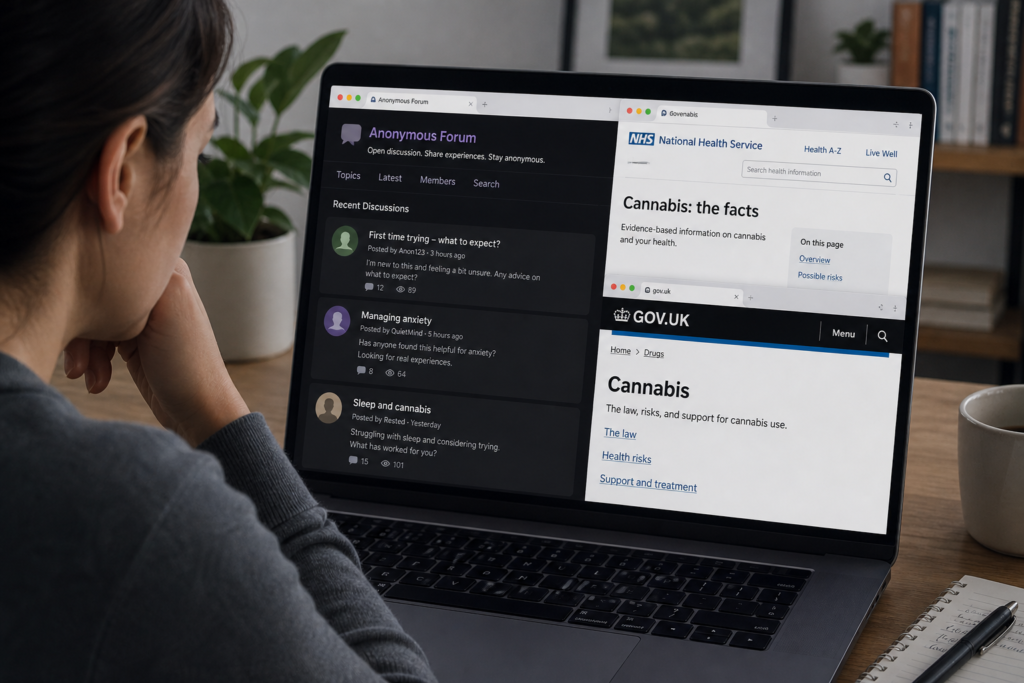
Do not rely on a forum post saying that enforcement is relaxed or that a particular amount is “safe.” Such statements may be outdated, jurisdictionally incorrect, or deliberately misleading. For general health context, the World Health Organization’s cannabis information is a more dependable starting point than anonymous marketplace discussions. For legal questions, consult the official government authority responsible for justice, interior, customs, or public health in the relevant country.
How to evaluate Rawda cannabis discussions without engaging with sellers
Readers can examine online conversations critically without responding to offers or attempting a purchase. Start by separating verifiable facts from personal claims. A user’s statement that a product is safe, strong, approved, or medically appropriate is not evidence. Look for the date, location, source of the information, and whether the claim is supported by an official institution.
Check the reliability of the conversation
- Review the account history. Newly created accounts, repetitive promotional language, and several accounts praising one contact may indicate coordinated advertising.
- Look for independent confirmation. A single comment is not meaningful corroboration. Even multiple comments may come from connected accounts.
- Watch for urgency. Scammers often create time pressure by claiming that an offer expires or that payment must be sent immediately.
- Protect personal information. Do not share identification documents, banking credentials, location data, or private photographs.
- Do not arrange meetings. Meeting an unknown person connected through a forum creates personal safety and legal risks that online commenters cannot remove.
- Report suspicious activity. Use the platform’s reporting tools rather than confronting or publicly accusing an account.
Search engines and social platforms may also surface old discussions as though they are current. A thread can remain visible long after a seller has disappeared, a law has changed, or a scam has been reported. Date, context, and jurisdiction matter.
Health risks behind unverified cannabis offers
Products promoted online may not contain what the seller claims. They can be mislabeled, contaminated, unusually potent, or mixed with other substances. Edibles may be difficult to dose, while concentrated products can deliver much higher amounts than inexperienced users expect. Packaging that looks professional is not the same as independent laboratory testing.
Possible effects can include impaired judgment, anxiety, panic, confusion, drowsiness, and problems with coordination. Risks may be greater for adolescents, pregnant people, individuals with a history of psychosis or severe anxiety, and people taking medicines that affect the brain or heart. Combining cannabis with alcohol or sedating drugs can further impair judgment and increase danger.
If someone develops severe confusion, chest pain, difficulty breathing, a seizure, loss of consciousness, or an extreme panic reaction, contact local emergency services. Do not rely on forum users for urgent medical advice. Keep any packaging or remaining material available for clinicians if it can be done safely, and be honest with medical professionals about what may have been taken.
Medical cannabis in Rawda: use healthcare channels instead
People searching for medical cannabis in Rawda may be dealing with chronic pain, sleep problems, nausea, anxiety, or another condition. An online seller cannot diagnose the cause of symptoms, check drug interactions, or determine whether cannabis is appropriate. Claims that a product can replace prescribed treatment should be treated as particularly concerning.
A safer route is to speak with a licensed doctor or pharmacist and describe the symptoms, current medicines, and treatment goals. Ask whether approved therapies, specialist care, or regulated clinical services are available in the relevant jurisdiction. If cannabis-based medicines are permitted, a qualified professional can explain eligibility, product standards, dosing instructions, and follow-up requirements.
People who fear judgment can prepare questions in advance or ask whether the clinic offers confidential consultations. Medical concerns deserve evidence-based guidance, not a purchase recommendation from an anonymous account. The official Kuwait Ministry of Interior website may also help readers locate current government information if Rawda refers to the Kuwait City area; legal requirements should still be confirmed with the appropriate authority.
Safer online habits when researching cannabis
Responsible research begins with choosing the right type of source. Government health departments, hospitals, recognized medical institutions, and established public-health organizations are more suitable for information about effects, interactions, and treatment than informal sales threads. Read the publication date and check whether the page clearly identifies its organization and contact details.
- Use official sources for laws, licensing, and controlled medicines.
- Use medical institutions for symptoms, risks, and treatment questions.
- Use platform reporting tools for suspicious offers or impersonation.
- Keep accounts private and enable two-factor authentication.
- Do not click unknown payment links or download files from anonymous contacts.
- Save evidence of harassment or fraud only when doing so is safe and lawful.
It is also useful to distinguish information-seeking from transaction-seeking. A discussion about public policy, health effects, or personal recovery experiences is not the same as a marketplace listing. Avoid participating in threads that publish seller details, delivery instructions, or methods for evading law enforcement.
What to do if a forum interaction becomes threatening
End the conversation if a contact becomes aggressive, demands more money, threatens exposure, or claims to know where you live. Do not negotiate, retaliate, or arrange a meeting. Block the account, preserve relevant messages where appropriate, and report the incident to the platform. If money has been sent, contact the payment provider promptly and ask what fraud-recovery steps are available.
For credible threats, extortion, identity theft, or immediate danger, contact local police or emergency services. Legal and reporting procedures differ by country, so use official channels rather than advice from other forum members. If the interaction involved a health emergency or suspected poisoning, seek medical help first.
Conclusion
Online discussions about cannabis in Rawda can provide clues about what people are searching for, but they are not a reliable or safe way to find a seller. Anonymous recommendations cannot verify legality, product contents, health risks, or personal safety. The most responsible approach is to avoid arranging purchases, protect personal information, check current rules through official sources, and seek medical guidance from licensed professionals when health concerns are involved.
Readers can still use forums constructively by identifying scams, reporting unsafe content, and separating personal anecdotes from verified information. Whether the goal is to understand local policy, explore treatment options, or respond to a suspicious message, official and professional channels offer a safer foundation than informal marketplace claims.

The Ziklane Editorial Team is dedicated to providing accurate, well-researched, and up-to-date information on cannabis laws and regulations around the world. Our content is created through careful research of publicly available legal sources, government publications, and reputable references to help readers better understand local cannabis legislation. We are committed to delivering educational, factual, and regularly updated content while encouraging readers to comply with the laws of their respective countries and regions.