
If you are searching for how to find weed vendors in Shaab, it is important to pause before contacting anyone or arranging a meeting. Buying, possessing, importing, or distributing cannabis may expose you to serious legal and personal risks in Kuwait. This guide does not provide vendor names, contact methods, search tactics, or advice for obtaining illegal drugs. Instead, it explains how to assess the situation safely, check reliable information, and find lawful help for medical or wellbeing concerns.
Online listings and private messages can appear convincing, but they may involve scams, unsafe products, coercion, surveillance, or criminal activity. A safer approach is to avoid transactions entirely and use official healthcare and government channels when you need information or support.
Why searching for weed in Shaab can be dangerous
Requests for weed in Shaab can quickly lead to risks that are easy to underestimate. An anonymous seller may not be who they claim to be, and there is no reliable way to verify the contents, strength, contamination, or origin of an unregulated substance. Products sold as cannabis may contain other drugs or chemicals, creating unpredictable health effects.
There are also practical safety concerns. A proposed meeting can become a robbery, extortion attempt, assault, or pressure to provide personal information. Sharing your phone number, identification details, home address, workplace, payment information, or live location with an unknown seller can create lasting privacy and security problems.
- Do not send money, identification documents, passwords, or intimate photographs to a suspected seller.
- Do not visit a private residence, isolated location, or unfamiliar meeting point to collect a substance.
- Do not accept a package or carry an item for someone whose contents you cannot verify.
- Do not attempt to test, dilute, combine, or resell an unknown substance.
- Keep screenshots and relevant messages if you need to report threats, fraud, or harassment, but do not continue engaging unnecessarily.
Understand cannabis laws in Kuwait before taking any action
Before looking for cannabis in Shaab, check current information from official Kuwaiti authorities rather than relying on social media posts, messaging groups, or claims from sellers. Drug laws can apply to possession, consumption, transport, importation, and distribution. They may also create problems when a person is travelling with a product that is permitted somewhere else.
Rules and enforcement can change, and the legal status of a prescription or product in another country does not automatically make it lawful in Kuwait. For current official information, consult the Kuwait Ministry of Interior. If you are travelling, confirm requirements with the relevant embassy, airline, and Kuwaiti authorities before bringing any medication or supplement into the country.
Do not interpret the absence of a listing, a seller’s promise, or a product label as evidence that a transaction is legal. When the consequences may include arrest, prosecution, detention, or immigration difficulties, guessing is not a sensible way to make a decision.
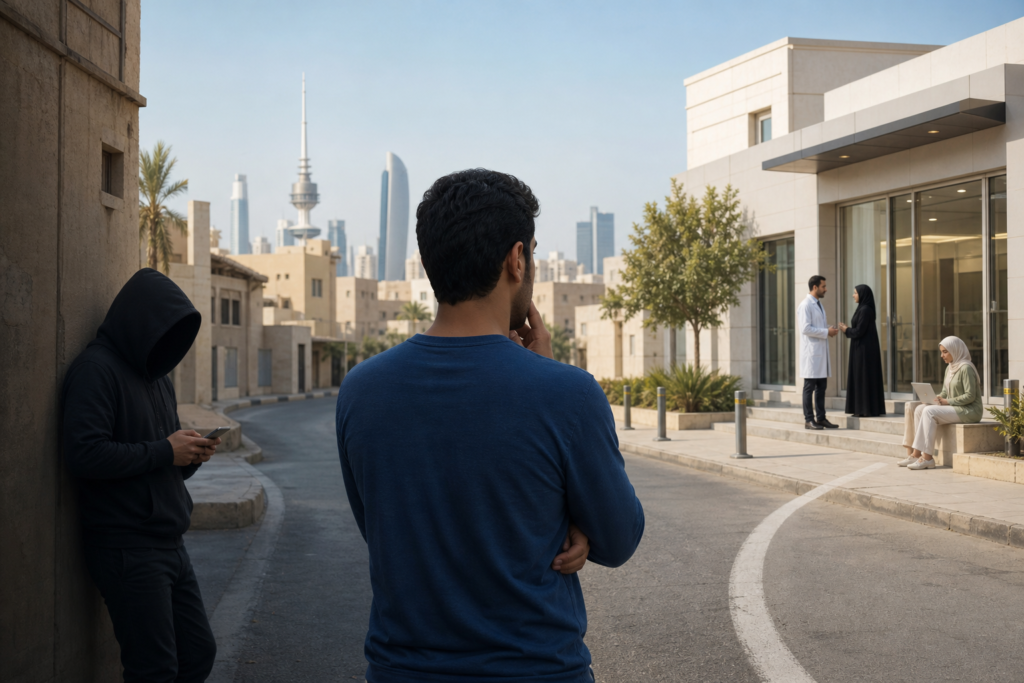
How to find legal cannabis information in Shaab
People often search for legal cannabis information in Shaab because they are trying to manage pain, sleep problems, anxiety, appetite changes, or another health issue. The appropriate starting point is a licensed doctor or established medical facility, not an anonymous vendor. Explain your symptoms, current medicines, allergies, previous diagnoses, and the result you hope to achieve.
Ask a licensed healthcare professional
A doctor can assess whether the problem may have an underlying cause and discuss treatments that are lawful and medically appropriate. Ask direct questions about side effects, interactions, dependence, driving, work safety, and what to do if symptoms worsen. If you already use cannabis or another substance, honest disclosure helps the clinician make a safer assessment; it is better to describe what happened than to conceal relevant information.
Do not assume that a doctor can prescribe every product requested by a patient. Availability and legality depend on Kuwait’s regulations, the medicine’s approval status, and the clinician’s authority. A healthcare professional can explain what options are actually available through the local medical system.
Use pharmacies and hospitals rather than informal sellers
For medicines, choose a licensed pharmacy or hospital and check that the packaging, instructions, and prescribing information are appropriate for the local market. Avoid products advertised as “herbal cannabis,” “CBD,” “THC-free,” or “legal weed” unless a qualified professional and the relevant authorities confirm their status. Marketing language is not a substitute for regulatory approval.
If your concern is mental health, substance use, chronic pain, or sleep, ask a healthcare provider about counselling, physiotherapy, approved medicines, behavioural treatment, or referral to a specialist. These options may address the underlying problem without exposing you to an unknown product or illegal transaction.
What to do if a suspected vendor contacts you
If someone messages you about selling cannabis or another controlled substance, do not negotiate, arrange a delivery, or agree to meet. Save enough information to identify the account or conversation, then stop responding and use the platform’s reporting tools where appropriate. If the person threatens you, demands money, publishes your private information, or attempts to enter your home, treat it as a safety issue rather than a normal disagreement.
- Move to a safe, populated location if you feel watched or threatened.
- Tell a trusted person what is happening and share the relevant evidence securely.
- Contact local law enforcement or emergency services when there is an immediate danger.
- Contact your bank or payment provider quickly if you sent money or disclosed financial details.
- Change compromised passwords and enable multi-factor authentication on affected accounts.
Do not threaten the sender, attempt to expose them publicly, or conduct your own investigation. Escalating contact can increase the risk to you and may complicate a formal report.
Health risks from unknown cannabis products
Even when a product really contains cannabis, its effects can vary according to potency, dose, route of administration, tolerance, and other substances taken at the same time. Unregulated products may have inaccurate labels or contaminants. The World Health Organization provides general, evidence-based information about cannabis health effects and risks, including concerns related to impairment and mental health.
Seek urgent medical help if someone has severe confusion, extreme agitation, chest pain, trouble breathing, a seizure, loss of consciousness, persistent vomiting, or thoughts of self-harm after taking a substance. Do not make the person drive. Tell medical staff what was taken, when it was taken, and whether alcohol or other medicines were involved. Accurate information can help clinicians provide appropriate care.
Common mistakes to avoid when looking for cannabis in Shaab
Several assumptions can make an unsafe situation worse. A seller’s use of professional language does not prove that the product is genuine. A recommendation from a stranger is not a safety guarantee. A delivery service, encrypted chat, or payment request does not make a transaction lawful. Likewise, a small quantity is not necessarily treated as harmless under local law.
- Do not rely on reviews: testimonials can be fabricated, manipulated, or posted by people who have a financial interest.
- Do not trust “discreet” claims: privacy promises from an illegal seller are impossible to verify.
- Do not mix substances: combining cannabis with alcohol, sedatives, stimulants, or prescription medicines can increase impairment and other risks.
- Do not drive while impaired: impairment can affect reaction time, attention, and judgement.
- Do not use another person’s prescription: a medicine suitable for one patient may be unsafe for another.
A safer decision process
If you are considering cannabis because of a specific symptom, write down what you experience, how often it occurs, what makes it better or worse, and which treatments you have already tried. Bring that information to a licensed healthcare professional. This creates a useful basis for diagnosis and avoids making an important health decision based on an anonymous advertisement.
If financial difficulty is preventing you from accessing care, ask a recognized clinic or hospital about lower-cost services, payment arrangements, or public referrals. If stress, anxiety, or substance use is driving the search, consider speaking privately with a qualified mental-health professional or a trusted person who can help you reach appropriate care.
For visitors and residents alike, the central rule is simple: do not assume that cannabis is legal because it is available elsewhere, advertised online, or described as medicinal. Check official guidance and obtain treatment through lawful channels.
Conclusion
There is no safe or responsible way to recommend weed vendors in Shaab or help arrange an illegal purchase. Unregulated sellers can expose you to legal action, fraud, violence, privacy loss, and contaminated products. If you need cannabis-related information, verify cannabis laws in Kuwait through official sources and speak with a licensed healthcare professional about lawful alternatives. If a suspected seller threatens or targets you, stop engaging, preserve relevant evidence, protect your accounts, and contact the appropriate local authorities.

The Ziklane Editorial Team is dedicated to providing accurate, well-researched, and up-to-date information on cannabis laws and regulations around the world. Our content is created through careful research of publicly available legal sources, government publications, and reputable references to help readers better understand local cannabis legislation. We are committed to delivering educational, factual, and regularly updated content while encouraging readers to comply with the laws of their respective countries and regions.