
Searching for online retailers selling weed in Bayan can produce a confusing mix of social media pages, messaging-app sellers, online marketplaces, and websites promising discreet delivery. However, an attractive website is not proof that a seller is licensed, that a product is genuine, or that ordering it is lawful. The first step is to identify which Bayan you mean and confirm the rules that apply in that exact country, province, state, or municipality.
This guide does not provide a list of unverified sellers or instructions for bypassing drug laws. Instead, it explains how to assess legality, recognize common scams, protect personal information, and find safer sources of health advice. Rules surrounding weed in Bayan may differ significantly depending on the location, and penalties can apply to possession, importation, delivery, or payment even when a seller claims that a product is legal.
Why the location matters before you search
“Bayan” is not a sufficiently precise legal location on its own. It may refer to a municipality, neighborhood, district, or place name in different countries. Cannabis regulations are determined by the relevant national and local authorities, so a search result that appears to serve one Bayan may actually operate from another jurisdiction.
Before considering any cannabis-related purchase, establish:
- The country and administrative region where the order would be placed.
- Whether adult-use cannabis is legal, decriminalized, medically permitted, or prohibited.
- Whether online sales and home delivery are specifically allowed.
- Whether a buyer needs a medical authorization, registration, or prescription.
- Whether products may legally cross provincial, state, or national borders.
Do not rely on a seller’s statement that a product is “legal everywhere.” A retailer may use that wording to avoid responsibility, while the buyer remains exposed to legal and financial risk.
Online retailers selling weed in Bayan: what legality should look like
A lawful cannabis market normally has identifiable rules for licensing, product testing, packaging, age verification, advertising, and delivery. The exact requirements vary, but legitimate operators should be able to explain which regulator authorizes them and which jurisdiction their license covers.
Signs of a potentially legitimate operator
- A verifiable business name and physical operating address.
- A license number that can be checked through a government regulator or official registry.
- Clear information about product origin, ingredients, potency, batch identification, and testing.
- Age or eligibility verification handled before a sale is completed.
- Transparent terms covering delivery areas, refunds, privacy, and customer support.
- Payment methods and invoices that match the registered business name.
These signs do not guarantee that a seller is lawful, but their absence is a strong warning. A professional-looking logo, large follower count, or positive comments can be fabricated and should not substitute for independent verification.
When no regulated retail system exists
If cannabis is prohibited where you live, there may be no lawful online retail channel to verify. In that situation, websites offering delivery may be operating outside the legal system. Ordering can create risks involving arrest, customs seizure, identity theft, financial fraud, contaminated products, and blackmail.
For readers researching cannabis in Bayan in a jurisdiction with strict prohibition, the safest approach is to avoid unlicensed sellers and seek information from a qualified health professional or the relevant government authority instead.
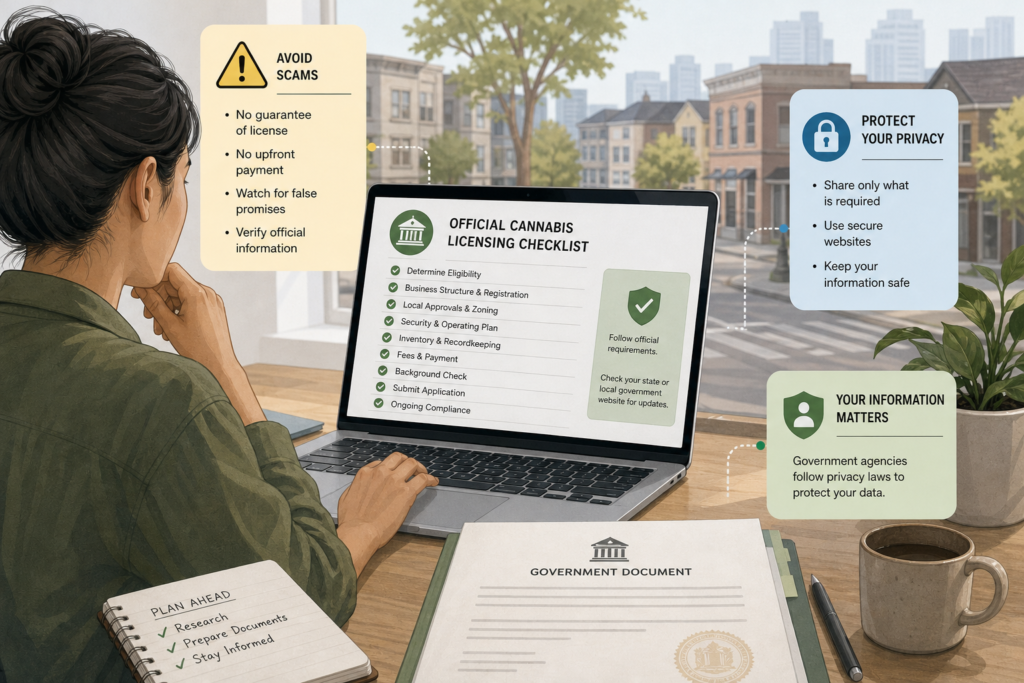
How online cannabis scams commonly work
Unverified sellers often use urgency and secrecy to pressure potential customers into sending money quickly. They may advertise unusually low prices, claim to have limited stock, or promise delivery without any age or eligibility checks. Once payment is made, the seller may demand additional “insurance,” “customs,” or “release” fees.
Common warning signs include:
- Requests for cryptocurrency, gift cards, cash deposits, or transfers to a personal account.
- Pressure to move immediately from a website to an encrypted messaging app.
- Claims that a product is guaranteed to pass drug tests or cure a serious illness.
- No verifiable license, business registration, laboratory report, or customer-service address.
- Stock photographs used as supposed proof of products or delivery packages.
- Reviews that are repetitive, unusually enthusiastic, or posted only on the seller’s own channels.
- Requests for identity documents before the business has established that it is legally permitted to sell.
- Promises of international shipping despite strict border controls.
A seller that asks for more money after an initial payment may be running an advance-fee scam. Do not send additional funds to recover an earlier payment, and preserve messages, receipts, account names, and transaction details if you need to report the incident.
Product safety risks when buying outside a regulated market
Unlicensed cannabis products may contain inaccurate amounts of THC or other cannabinoids. They may also contain pesticides, solvents, heavy metals, mold, synthetic cannabinoids, or undeclared pharmaceutical ingredients. A photograph of a lab report is not enough: the report may belong to another product, be edited, or come from a laboratory that did not test the item being sold.
Edibles create particular risks because effects can be delayed and may last for many hours. Concentrated oils, vape cartridges, and inhaled products can also carry additional concerns when ingredients and manufacturing conditions are unknown. “Natural,” “organic,” and “premium” are marketing terms, not independent safety certifications.
Questions to ask about any regulated product
- Who manufactured it, and where?
- Is the package sealed and labeled according to local requirements?
- Does the batch number match a genuine, independently verifiable test record?
- Are THC, CBD, allergens, serving size, and expiration information clearly stated?
- Are warnings provided for pregnancy, medication interactions, driving, and mental-health conditions?
If these details are unavailable, the product cannot be assessed reliably. Do not assume that a low-THC label means a product is harmless or that CBD products are automatically free from legal or medical concerns.
Medical cannabis in Bayan: safer ways to seek help
People often search for medical cannabis in Bayan because of chronic pain, sleep problems, anxiety, nausea, or another health condition. A clinician can help determine whether cannabis is appropriate, whether another treatment is safer, and whether symptoms need urgent evaluation. Cannabis may interact with medicines and can affect attention, coordination, mood, heart rate, and driving ability.
Start with a licensed doctor, pharmacist, or recognized medical service in your jurisdiction. Ask about evidence-based treatment options, potential interactions, and the legal process for obtaining any approved cannabis medicine. Do not replace prescribed treatment with an internet product without professional advice.
For general information about drug policy and national restrictions in the Philippines, consult the official Dangerous Drugs Board. The board’s information can help readers distinguish official policy from claims made by online sellers.
If you are in the Philippines or dealing with a shipment connected to that country, the Philippine Drug Enforcement Agency is another official source for public information about controlled substances and enforcement concerns. Use government sources rather than seller advertisements when checking cannabis laws in Bayan or any nearby area.
How to protect your privacy and finances
Even browsing an unverified cannabis store can expose you to tracking, malware, phishing, and data harvesting. Avoid uploading an identity document, medical record, address book, or selfie to a seller whose license and privacy policy cannot be verified. Never reuse a password on a cannabis-related website, and be cautious of files or links sent through messaging apps.
If you have already provided information or paid a suspicious seller:
- Stop communicating unless you need to preserve evidence.
- Contact your bank, card provider, or payment service immediately.
- Change reused passwords and enable multi-factor authentication.
- Watch for unauthorized transactions and suspicious account activity.
- Report fraud to the appropriate consumer-protection or law-enforcement agency.
- Seek legal advice if you are concerned about possession, importation, or delivery laws.
Do not threaten the seller or attempt to recover money through retaliation. Keep screenshots, URLs, usernames, payment records, shipping details, and dates in a secure location.
A practical checklist before taking any action
Use this checklist to separate a genuine legal information search from a risky purchase:
- Confirm the exact Bayan and the governing jurisdiction.
- Read the current rules from an official government source.
- Check whether online sales and delivery are expressly authorized.
- Verify the retailer’s license independently, not through a link supplied only by the seller.
- Confirm age, medical, packaging, testing, and labeling requirements.
- Reject sellers that promise cures, guaranteed effects, or delivery across prohibited borders.
- Do not pay by irreversible methods or send unnecessary identity documents.
- Consult a healthcare professional for medical questions.
If any part of this process cannot be completed, stop rather than treating uncertainty as permission. A lack of reliable information is itself a meaningful risk signal.
What to do instead of using an unverified seller
For nonmedical interest, first learn whether regulated adult-use access exists where you live. If it does, use only the official regulator’s list of licensed businesses and follow local purchase and possession limits. If it does not, do not attempt to import, conceal, or order cannabis through informal channels.
For health concerns, arrange an appointment with a qualified clinician and describe your symptoms, current medicines, and treatment goals honestly. A pharmacist can also help identify interactions and explain approved alternatives. If you are worried about substance use, confidential support services and healthcare providers can offer help without relying on an online retailer.
Conclusion
Finding online retailers selling weed in Bayan is not simply a matter of comparing menus or delivery promises. The decisive questions are whether cannabis is legal in the exact jurisdiction, whether online retail is authorized, whether the seller has a verifiable license, and whether the product has reliable safety information. Unlicensed websites can expose buyers to legal problems, fraud, privacy breaches, and contaminated products.
Use official authorities for cannabis laws in Bayan, seek medical advice from qualified professionals, and treat anonymous sellers, guaranteed claims, urgent payment demands, and cross-border delivery promises as serious warning signs. When legality or product safety cannot be verified, the safest choice is not to place the order.

The Ziklane Editorial Team is dedicated to providing accurate, well-researched, and up-to-date information on cannabis laws and regulations around the world. Our content is created through careful research of publicly available legal sources, government publications, and reputable references to help readers better understand local cannabis legislation. We are committed to delivering educational, factual, and regularly updated content while encouraging readers to comply with the laws of their respective countries and regions.