
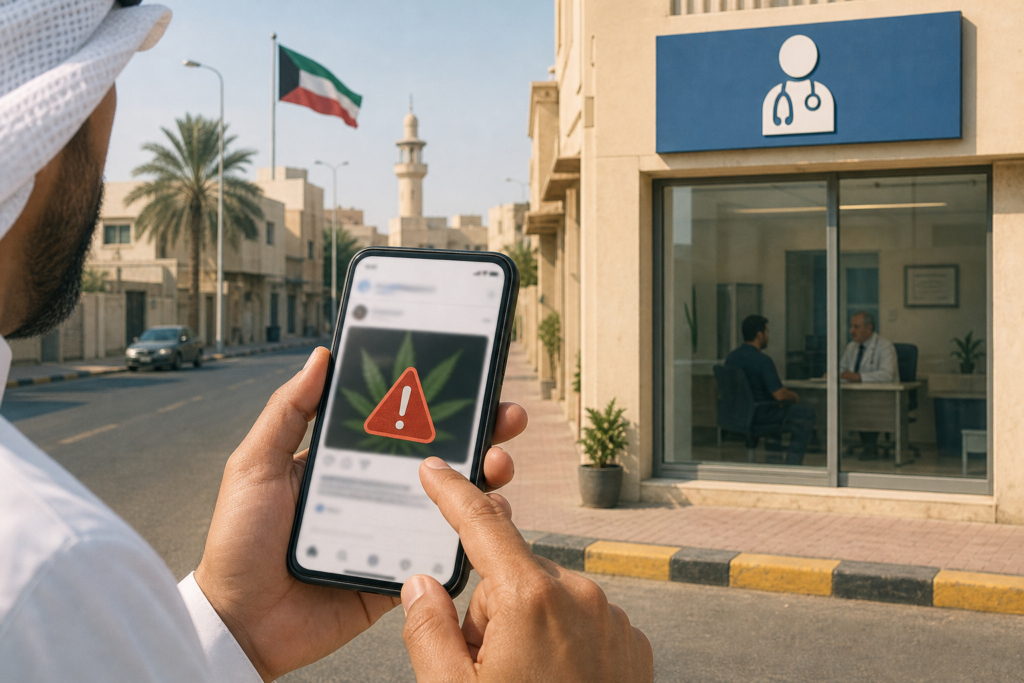
Anyone searching for weed in Abu Al Hasaniya should first understand an important reality: Kuwait does not have a legal, regulated recreational cannabis retail market. That means there are no legitimate dispensaries in Abu Al Hasaniya that can lawfully sell cannabis to the public. Websites, social-media accounts, delivery services, and private sellers claiming otherwise may expose customers to serious legal, financial, health, and personal-safety risks.
This guide explains how to assess cannabis-related information responsibly, recognize common scams, protect your privacy, and find lawful help if you are dealing with pain, anxiety, sleep problems, or another health concern. It does not provide seller names, purchasing instructions, delivery contacts, or methods for evading Kuwaiti law.
Is there a legal cannabis retailer in Abu Al Hasaniya?
There is no established legal retail system for recreational cannabis in Abu Al Hasaniya or elsewhere in Kuwait. A business cannot become trustworthy merely by using professional branding, a menu of products, customer reviews, or a promise of discreet delivery. In a regulated market, sellers operate under clear licensing rules, product testing requirements, age controls, and consumer-protection standards. Those safeguards do not make an unlicensed seller legitimate.
When people search for cannabis in Abu Al Hasaniya, they may encounter advertisements that use terms such as “premium,” “medical,” “imported,” or “pharmacy grade.” These descriptions are not proof of authorization. A seller’s use of medical language is particularly concerning when there is no verifiable connection to a licensed clinician, pharmacy, hospital, or government regulator.
Why online claims are difficult to verify
Unlicensed sellers can change names, phone numbers, websites, and payment accounts quickly. Product photographs may be copied from other websites, while reviews can be fabricated or posted by associated accounts. There may also be no reliable way to confirm what a product contains, how it was stored, or whether its stated strength is accurate.
Even when a product appears to be cannabis, it could contain a different substance, synthetic cannabinoids, contaminants, or an unexpectedly high concentration of active compounds. Edibles and vape liquids can be especially difficult to assess because their ingredients and potency are not always visible from the packaging.
Understanding cannabis laws in Kuwait
Strict drug-control rules apply in Kuwait, and cannabis-related offences can carry severe consequences. The risks may involve possession, use, importing, selling, transporting, or facilitating access to controlled substances. Penalties and procedures can depend on the circumstances, the substance involved, the amount, and other factors, so online summaries should not be treated as legal advice.
For current official government information and public-service guidance, consult the Kuwait Government Online portal. If you are travelling, working, or studying in Kuwait, you should also check the latest guidance from your embassy or consulate and obtain advice from a qualified local lawyer when a legal matter is involved.
These restrictions can apply even when cannabis was lawful in another country. Travellers should never assume that a prescription, medical authorization, or purchase made abroad automatically permits possession in Kuwait. Medication containing controlled ingredients may require separate documentation or approval, and the responsible authority should be contacted before travel.
How to identify risky cannabis offers
A seller offering weed in Kuwait outside a recognized legal framework may use pressure tactics designed to prevent careful decision-making. Watch for the following warning signs:
- Requests for advance payment through an untraceable method, cryptocurrency, gift cards, or personal bank accounts.
- Promises of guaranteed delivery, complete legal protection, or “no-risk” transactions.
- Pressure to move immediately from a public platform to an encrypted chat.
- Requests for passport images, identity documents, home photographs, location sharing, or intimate personal information.
- Unverifiable claims that a product is approved, prescribed, organic, or laboratory tested.
- Prices that change suddenly after a deposit, followed by demands for customs fees, security payments, or additional delivery charges.
- Threats, harassment, or attempts to expose a customer after the customer questions a payment or cancels an order.
If you have already contacted such a seller, stop sending money and do not share additional personal information. Preserve messages, payment records, usernames, telephone numbers, and transaction details. If you believe you have been threatened, defrauded, or blackmailed, contact the appropriate local authorities and your bank or payment provider as soon as possible.
Health risks that online sellers often hide
Unregulated cannabis products are not subject to dependable quality control. Risks may include contamination, incorrect labeling, unexpected potency, interactions with prescribed medicines, and adverse mental or physical effects. Cannabis can affect attention, reaction time, memory, coordination, and judgment. It may also worsen anxiety or trigger other mental-health symptoms in some people.
The World Health Organization provides evidence-based background in its official cannabis fact sheet. This information is useful for understanding potential health effects, but it is not a substitute for an assessment by a doctor or pharmacist who knows your medical history.
Extra caution with medicines and health conditions
Speak with a licensed healthcare professional before considering any cannabis-related product, particularly if you are pregnant, under 25, have a history of psychosis or severe anxiety, or take medicines for sleep, pain, epilepsy, depression, blood pressure, or blood clotting. Combining substances can create risks that are difficult to predict without professional advice.
Do not drive, operate machinery, or perform safety-sensitive work after using an unknown substance. If someone experiences chest pain, severe confusion, loss of consciousness, difficulty breathing, extreme agitation, or a suspected poisoning, seek emergency medical assistance immediately and provide healthcare workers with honest information about what may have been taken.
What to do if you need medical help
People sometimes search for medical cannabis in Kuwait because they are struggling with chronic pain, insomnia, nausea, muscle symptoms, or anxiety. The safer route is to make an appointment with a licensed physician, explain the symptoms and current medicines, and ask about treatments that are lawful and clinically appropriate in Kuwait.
A doctor may recommend a diagnosis, physical examination, medication review, therapy, physiotherapy, sleep support, or referral to a specialist. If you already use a medicine obtained overseas, bring its original packaging and prescription documentation to the appointment. Do not assume that a product is lawful simply because it was supplied by a clinic or pharmacy in another country.
Questions to ask a healthcare provider
- What may be causing the symptoms?
- Are any current medicines contributing to the problem?
- Which treatments are legally available in Kuwait?
- What side effects or warning signs should be monitored?
- Is a referral to a specialist, counsellor, physiotherapist, or pain service appropriate?
Safer alternatives to unlicensed cannabis purchases
For people seeking legal cannabis alternatives in Kuwait, the appropriate option depends on the underlying need. A physician or pharmacist can discuss approved medicines and non-drug treatments. For chronic pain, options may include physiotherapy, rehabilitation, medically supervised exercise, or evidence-based pain management. For sleep difficulties, a clinician can assess sleep apnea, stress, medication effects, and behavioral factors. For anxiety or low mood, counselling and psychiatric care may be useful.
General wellness products also require caution. “Hemp,” “CBD,” and “natural” labels do not automatically establish that a product is legal, safe, or free from controlled compounds. Before importing or using any supplement, verify the applicable rules with the relevant Kuwaiti authority and ask a pharmacist whether the ingredients could create legal or medical problems.
Practical steps for protecting yourself
- Do not treat a social-media account, review page, or delivery promise as proof of legal authorization.
- Do not send money or identification documents to an unverified seller.
- Do not carry cannabis or cannabis-labeled products across Kuwait’s borders without confirmed legal authorization.
- Use licensed healthcare channels for medical concerns and ask for written information about prescribed treatment.
- Keep records if you encounter fraud, threats, or suspicious advertising.
- Seek qualified legal advice if you are questioned, detained, or involved in a cannabis-related case.
Conclusion
There are no trustworthy recreational cannabis retailers to recommend in Abu Al Hasaniya because Kuwait does not operate a legal cannabis retail market. Claims made by private sellers, websites, or delivery accounts should therefore be treated as high risk rather than as evidence of a legitimate local business.
The safest approach is to avoid unlicensed purchases, protect your personal and financial information, confirm current rules through official sources, and speak with a licensed healthcare professional about any medical need. Understanding cannabis laws in Kuwait is more valuable than relying on anonymous seller claims, especially when the potential consequences involve health, travel, employment, or criminal liability.

The Ziklane Editorial Team is dedicated to providing accurate, well-researched, and up-to-date information on cannabis laws and regulations around the world. Our content is created through careful research of publicly available legal sources, government publications, and reputable references to help readers better understand local cannabis legislation. We are committed to delivering educational, factual, and regularly updated content while encouraging readers to comply with the laws of their respective countries and regions.