
Looking for weed in Beit Shemesh requires an important distinction: in Israel, access depends on whether you mean regulated medical cannabis or an unlicensed recreational purchase. The safest recommendation is to follow the legal medical route, use an authorized pharmacy, and avoid sellers who operate through social media, messaging groups, private deliveries, or informal referrals.
This guide explains how to approach cannabis in Beit Shemesh responsibly, what to check before collecting a product, and how to recognize claims that should make you walk away. Laws, product rules, and pharmacy procedures can change, so confirm current requirements with Israel’s Ministry of Health before taking action.
Understand the legal route before looking for cannabis
Israel has a regulated medical-cannabis system for eligible patients. Medical access generally involves clinical assessment, appropriate authorization or prescription documentation, and obtaining products through approved channels. It is not the same as walking into an ordinary shop and choosing recreational cannabis.
For current information about eligibility, patient procedures, product requirements, and regulatory updates, consult the Israel Ministry of Health official website. A doctor or authorized healthcare professional can explain whether medical cannabis is appropriate for your condition and what documentation is required.
Recreational buying from an unlicensed person is not a safe substitute for medical access. Products sold outside the regulated system may have unknown potency, contaminants, inaccurate labels, or an unclear origin. They may also expose the buyer to legal and personal-safety risks.
Recommendations for weed in Beit Shemesh
1. Start with medical eligibility, not a seller
If you are considering cannabis for pain, sleep, anxiety, nausea, or another health concern, begin with a qualified medical professional rather than a dealer or anonymous online adviser. Cannabis may not be suitable for everyone, and it can interact with medicines or worsen certain symptoms.
A healthcare professional can discuss alternatives, possible side effects, past medical history, age-related concerns, and whether cannabis is appropriate at all. This approach also helps prevent the common mistake of selecting a product based only on a strain name, a high THC percentage, or a recommendation from someone with different needs.
2. Use an authorized pharmacy or approved provider
Once you have the required medical authorization, confirm where it can be filled. Ask whether the pharmacy is currently authorized to dispense the relevant products and whether it has the item in stock. Availability can vary, so calling ahead may prevent an unnecessary trip.
A legitimate pharmacy should be able to explain its collection process, accepted documentation, payment options, and any limits that apply to your authorization. Staff should also provide product information in a clear and professional way without promising guaranteed medical results.
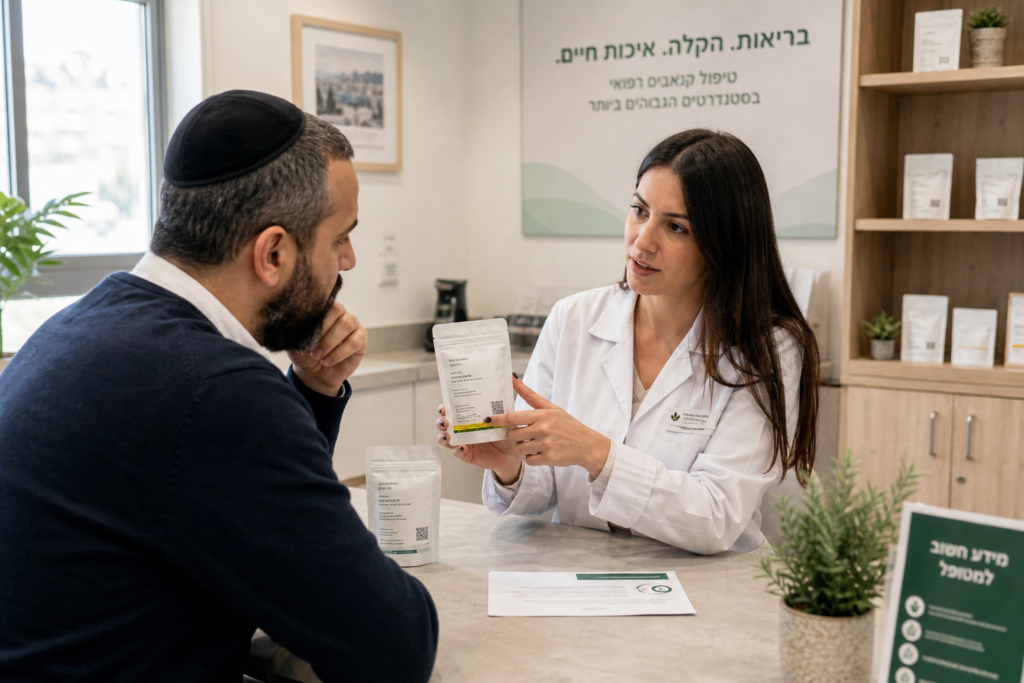
3. Check the product before leaving
Whether you are collecting flower, oils, capsules, or another authorized form, inspect the package carefully. The label should be intact and readable, and the product should come in its original regulated packaging. Check the product name, strength, batch or lot information, expiry date, storage instructions, and any patient-specific details required by the pharmacy.
- Do not accept a package that is open, damaged, leaking, or missing identifying information.
- Confirm that the product matches the authorization and the pharmacist’s explanation.
- Ask how the product should be stored and whether it requires refrigeration or protection from light.
- Keep the receipt and packaging in case you need to ask a follow-up question.
- Do not transfer the product to another person, even if they have similar symptoms.
How to evaluate medical cannabis in Beit Shemesh
Searching for medical cannabis in Beit Shemesh often produces informal advice about strains, brands, and delivery services. Treat online claims carefully. A product’s name or marketing description does not replace clinical guidance, and labels can differ between products and suppliers.
Ask the pharmacist or healthcare professional practical questions: What is the recommended starting amount? How should the product be used? How long should you wait before taking more? What side effects require medical advice? Can it affect driving, work, concentration, or other medicines?
New users should be especially cautious about impairment. Cannabis can affect attention, reaction time, coordination, and judgment. Do not drive or operate machinery if you feel impaired, and ask a healthcare professional about any restrictions relevant to your treatment.
Flower, oils, and other formats
Different formats may have different handling and dosing considerations. Flower may have a faster noticeable effect when inhaled, while oral or sublingual products can behave differently and may take longer to feel. The right format depends on the medical plan, personal circumstances, and professional advice.
Avoid changing products, strengths, or amounts simply because another person reports a positive experience. Keep a basic record of the product, amount used, timing, and noticeable effects if your clinician recommends monitoring your response. This can support a more informed follow-up discussion.
Cannabis laws in Beit Shemesh: practical points to remember
The rules applying in Beit Shemesh are part of Israel’s national legal and medical framework. Municipal location does not create a separate recreational market or a special exemption. If you are researching cannabis laws in Beit Shemesh, focus on national regulations, current Ministry of Health guidance, and advice from a qualified professional.
Do not assume that a product is legal because it is advertised openly, delivered discreetly, or described as “medical.” Do not carry cannabis across borders, share it with friends, resell it, or use someone else’s authorization. Travel and transportation rules can create additional problems, particularly when crossing checkpoints, entering airports, or leaving Israel.
For broader official government information and updates, the Israeli Government services portal is a useful starting point. When a legal question is specific or urgent, seek advice from a qualified Israeli lawyer rather than relying on an online comment or seller’s assurance.
Red flags when searching for cannabis in Beit Shemesh
A trustworthy legal process should not require secrecy, pressure, or unexplained cash payments. Be cautious if a seller makes any of the following claims or demands:
- They guarantee a cure or promise that cannabis will treat every condition.
- They refuse to identify the product, source, strength, or expiry date.
- They offer cannabis without asking about medical authorization where one is required.
- They insist on moving the conversation to an anonymous messaging account.
- They pressure you to buy a large quantity immediately.
- They provide loose product in a bag or unmarked container.
- They claim that police, pharmacy, or border rules do not apply to their customers.
- They ask for identity documents or payment details without explaining how the information will be protected.
These signs do not prove what is inside a package, but they are strong reasons not to proceed. Protecting your health, privacy, and legal position is more important than finding the fastest delivery.
Questions to ask a pharmacy or healthcare professional
Preparing questions before an appointment or pharmacy visit can make the process clearer. Consider asking:
- What documentation do I need to bring?
- Is this product authorized for my medical use and current treatment plan?
- What amount should I use, and how should I increase it if advised?
- How long might it take to notice an effect?
- What side effects should I monitor?
- Could this interact with my prescriptions, alcohol use, or other supplements?
- How should I store it safely away from children and pets?
- What should I do if the product is unavailable or causes problems?
It is also reasonable to ask about privacy. Confirm how the pharmacy handles your personal and medical information, especially if you are ordering or reserving a product through a digital system.
Safer purchasing habits after you receive the product
Keep medical cannabis in its original packaging and store it according to the label. Use a secure location that children, visitors, and pets cannot access. Avoid sharing the product, and do not combine it with alcohol or other substances unless a healthcare professional has specifically discussed that combination with you.
Monitor how you feel, particularly when beginning treatment or changing products. Severe confusion, chest pain, difficulty breathing, loss of consciousness, or another serious reaction requires urgent medical attention. For less urgent concerns, contact your healthcare provider or pharmacist rather than changing the plan based on advice from an unverified source.
If you are a visitor to Beit Shemesh, do not assume that a foreign medical document automatically permits purchase or possession in Israel. Check the current requirements before travelling with any cannabis-related product, including products purchased legally in another country.
Conclusion
The best recommendation for purchasing weed in Beit Shemesh is to avoid informal sellers and follow the regulated medical pathway when you are eligible. Begin with professional medical advice, confirm current requirements with official Israeli sources, use an authorized pharmacy, inspect the packaging, and ask questions about dosing, interactions, storage, and impairment.
Whether you search for cannabis in Beit Shemesh or compare options for medical cannabis, speed and low price should not outweigh product quality, legal compliance, and personal safety. Rules and availability can change, so verify the details at the time of purchase and choose a transparent, documented process.

The Ziklane Editorial Team is dedicated to providing accurate, well-researched, and up-to-date information on cannabis laws and regulations around the world. Our content is created through careful research of publicly available legal sources, government publications, and reputable references to help readers better understand local cannabis legislation. We are committed to delivering educational, factual, and regularly updated content while encouraging readers to comply with the laws of their respective countries and regions.