
Searching for online retailers selling weed in Sakhnin can produce delivery advertisements, social-media accounts, messaging-app offers, and websites that appear professional but provide little evidence of legal authorization. Before placing an order, it is important to understand the difference between licensed medical cannabis, unauthorized sales, and ordinary online retail.
This guide explains how to evaluate cannabis-related offers in Sakhnin, what information a legitimate provider should disclose, why delivery claims need careful scrutiny, and how Israeli medical-cannabis rules affect local buyers. It does not recommend a particular seller or provide instructions for bypassing the law. The safest approach is to confirm eligibility through recognized medical channels and verify every claim before sharing money or personal information.
What online retailers selling weed in Sakhnin may actually be offering
The phrase “online retailer” does not automatically mean that a seller is licensed. In practice, an online cannabis offer may refer to several very different arrangements:
- Licensed medical-cannabis supply: Products supplied through an authorized framework to a patient who has the required approval, prescription, permit, or other documentation.
- Unlicensed local delivery: A seller accepting orders through a website, social account, or messaging service without clearly showing a legal license or traceable business identity.
- CBD or hemp products: Items marketed as non-intoxicating or low-THC products. Their legal status can depend on the product, ingredients, labeling, and applicable Israeli rules.
- Scams and impersonation: Accounts using medical language, copied product photos, fake reviews, or promises of guaranteed delivery to obtain payment or identity documents.
These categories can look similar in search results. A polished website is not proof of authorization, and a local phone number does not establish that a seller can legally possess, sell, or deliver cannabis.
Understanding cannabis in Sakhnin under Israeli rules
There is no separate set of cannabis laws in Sakhnin that replaces Israel’s national framework. Local buyers should therefore assess any offer against Israeli regulation, not only against the seller’s description of its service. Rules and administrative procedures can change, so current information should be checked with official authorities.
Israel’s medical-cannabis system is distinct from an unrestricted adult-use retail market. A person may need an approved medical indication, authorization from the relevant health authorities, and supply through an approved channel. The exact process can depend on the patient’s condition, treating clinician, and current Ministry of Health requirements.
For general public-health information, consult the World Health Organization’s cannabis information. For Israeli procedures, patients should also review the cannabis information provided through the Israeli government’s official cannabis portal rather than relying on an anonymous seller’s explanation.
Medical cannabis is not the same as casual online ordering
Someone searching for medical cannabis in Sakhnin should begin with a qualified healthcare professional. A clinician can assess whether cannabis is medically appropriate, discuss potential interactions and side effects, and explain what documentation is required. A seller cannot replace that assessment by promising that every customer will qualify.
Be cautious of websites that offer approval without a consultation, guarantee a specific medical outcome, or claim that a permit is unnecessary. Medical products should have clear labeling, identifiable supply information, and instructions that match the patient’s authorization. If an offer depends on secrecy or asks the buyer to misrepresent their condition, it is a serious warning sign.
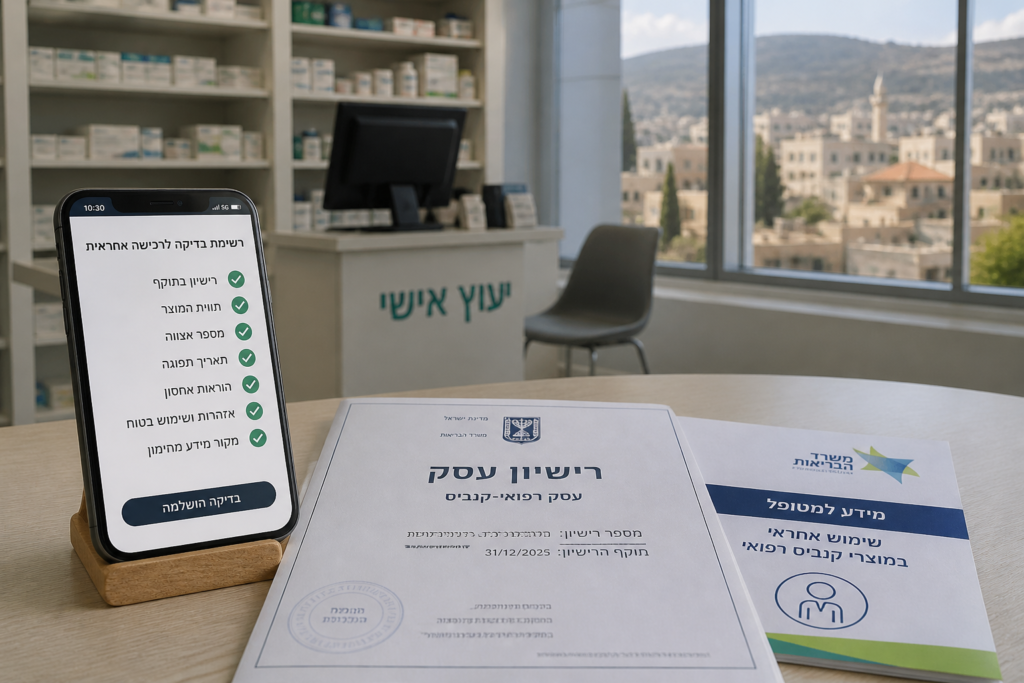
How to evaluate a cannabis delivery claim in Sakhnin
People looking for weed in Sakhnin often focus first on price, delivery time, or product names. Those details matter less than whether the transaction is lawful, traceable, and medically appropriate. Use the following checks before engaging with any online provider.
1. Check the seller’s identity
A legitimate business should make its legal identity reasonably clear. Look for a registered business name, physical address, customer-service contact, privacy policy, and terms that explain the service. A seller that operates only through a disappearing social-media account or insists on moving immediately to an encrypted chat gives buyers little accountability.
Do not treat a logo, professional design, or a claimed connection with a clinic as evidence. If a business names a clinic, pharmacy, producer, or government agency, verify that relationship independently using the organization’s official contact details.
2. Ask what authorization covers the sale
A credible provider should be able to explain whether it supplies medical cannabis, CBD products, or another category. It should also explain what customer documentation is required. Vague phrases such as “fully legal,” “government approved,” or “safe for everyone” are not enough.
A request for a medical document is not automatically proof that a provider is legitimate. Fraudulent sellers may collect identity documents and use them for identity theft. Share only the minimum information required through a secure, verified channel, and never send a passport, identity card, or medical record to an account that cannot be independently authenticated.
3. Review product and packaging information
Products intended for medical use should have useful information about the product, dosage or strength, batch identification, storage, expiry, and responsible supplier. Missing labels, handwritten packaging, unexplained capsules or oils, and products with no ingredient information should all be treated as high risk.
Photos are not reliable evidence of what will arrive. The product shown online may not match the delivered item, and appearance alone cannot establish potency, contamination, or composition. Do not assume that a familiar strain name or a high THC claim means a product is safe or authentic.
4. Examine payment and delivery practices
Pressure to pay immediately, use unusual payment methods, or transfer money to a personal account is a common warning sign. Some fraudulent sellers demand an additional “customs,” “insurance,” or “release” payment after the original order. A genuine customer-service process should explain prices and fees clearly before payment.
Be equally careful with delivery promises. Claims such as “undercover packaging,” “no questions asked,” or “guaranteed police-proof delivery” suggest an attempt to evade scrutiny rather than provide a lawful service. A delivery offer that cannot explain its legal basis is not made safer by arriving quickly.
Red flags when searching for weed in Sakhnin
Several warning signs commonly appear in online cannabis advertisements. One sign alone may not prove fraud, but multiple signs should lead you to stop contact and avoid payment.
- Guaranteed delivery regardless of a buyer’s age, medical status, or documentation.
- Claims that the seller is “licensed” without naming the licensing authority or providing verifiable details.
- Pressure to pay before answering basic questions about the product or business.
- Unusually low prices, miracle health claims, or descriptions that promise no side effects.
- Reviews that are identical, overly general, or hosted only on the seller’s own website.
- Requests for unnecessary identity documents, banking credentials, or one-time security codes.
- Products supplied in unmarked bags or containers without batch, ingredient, or expiry information.
- Instructions to conceal the purchase from a doctor, pharmacist, family member, or authority.
Health and safety issues to consider
Even where cannabis is obtained through a lawful medical route, it may cause side effects or interact with other substances. Possible concerns include drowsiness, impaired attention, dizziness, anxiety, changes in heart rate, and problems with coordination. Risk can be higher for people with certain psychiatric, cardiovascular, neurological, or substance-use conditions.
Do not drive, operate machinery, or perform safety-sensitive work while impaired. Cannabis can also be especially unsuitable for children, adolescents, pregnant people, and individuals who have been advised by a clinician to avoid it. Combining cannabis with alcohol, sedatives, or other medicines can increase impairment and other risks.
A healthcare professional or pharmacist can help assess the product, dose, timing, and interactions. If someone experiences severe confusion, chest pain, difficulty breathing, loss of consciousness, or another emergency symptom, seek urgent medical help rather than relying on the online seller for advice.
Safer steps for people seeking medical cannabis in Sakhnin
- Start with a medical consultation. Discuss symptoms, existing diagnoses, current medicines, and previous treatments honestly.
- Confirm the applicable authorization. Use official Israeli government information to understand whether you need a permit, prescription, or other approval.
- Use a recognized supply channel. Ask how the provider is authorized to dispense or deliver the product and verify the answer independently.
- Check the product at receipt. Confirm the name, strength, batch details, expiry, packaging, and storage instructions.
- Keep records. Save receipts, authorization documents, product labels, and provider contact details in case a problem arises.
- Report suspicious activity. If money, personal information, or potentially contaminated products are involved, contact the relevant financial, consumer-protection, health, or law-enforcement authority.
How local buyers can avoid common online scams
Search results are only a starting point. Compare information across independent sources, check whether contact details are consistent, and pause when a seller creates urgency. A provider that refuses reasonable questions is not entitled to your trust simply because it advertises delivery to Sakhnin.
Use a separate, strong password for health or shopping accounts, enable two-factor authentication where available, and avoid sending sensitive documents through unverified messaging accounts. Do not click payment links received unexpectedly by text or direct message. If you have already paid a suspicious seller, contact your bank or payment provider promptly and preserve messages, receipts, account names, and website addresses.
Consumers should also remember that online reviews can be manipulated. Look for specific, independently verifiable information instead of relying on star ratings or testimonials. The absence of complaints does not prove that a seller is legal, while a large number of positive comments may simply reflect promotional activity.
What a trustworthy service should communicate clearly
A responsible cannabis provider should be transparent about its business identity, product category, legal requirements, ordering process, delivery limitations, privacy practices, and customer support. It should not promise universal access, conceal the source of its products, or discourage medical advice.
For patients, the most useful questions are straightforward: Who is the authorized supplier? What documentation is required? How will the product be labeled and stored? What happens if the package is damaged or the product is unsuitable? Which professional can answer medical questions? If the provider cannot answer these questions clearly, look for a recognized alternative.
Conclusion: choosing a safer path in Sakhnin
Finding online retailers selling weed in Sakhnin is easy; determining whether an offer is lawful, authentic, and safe is much more difficult. Search listings and delivery promises do not establish authorization. Buyers should distinguish medical cannabis from unregulated products, verify Israeli requirements, protect personal information, and avoid sellers that rely on secrecy, pressure, or unsupported health claims.
For anyone seeking cannabis for a medical reason, the most reliable path is a qualified clinical assessment followed by an approved supply process. Taking a few extra steps before ordering can reduce the risk of scams, unsafe products, legal problems, and avoidable health complications.

The Ziklane Editorial Team is dedicated to providing accurate, well-researched, and up-to-date information on cannabis laws and regulations around the world. Our content is created through careful research of publicly available legal sources, government publications, and reputable references to help readers better understand local cannabis legislation. We are committed to delivering educational, factual, and regularly updated content while encouraging readers to comply with the laws of their respective countries and regions.